




Is Google I/O 2026 an Existential Threat to DTC Traffic? (And How to Pivot)
Google I/O 2026 brings AI Search & Universal Cart. What do these changes mean for UK D2C brands? Discover hard stats, expert GEO strategies, and data to pivot.
Google I/O 2026 has brought a major shift to users all over the internet. Rightfully described as the greatest change to Google Search in over 25 years—a shift to AI Search—is just one of them. From Gemini Spark and Omni, to Google Antigravity and Universal Cart, just to name a few, we can safely say, without sounding ominous, that the changes will disrupt entire industries.
In this piece, however, we will focus solely on those that will affect D2C brands, such as AI Search and Universal Cart.
Search, Discover and Shop Directly in Google
Google no longer seems to be focused on bringing users to your website. With all the latest changes, it is now the storefront itself—or, at least, it aims to be it. For a while now, we have been discussing zero-click purchases, but with this latest update, Google is taking it to the next level. A level that D2C brands need to be prepared for if they want to stay visible to their target audience.
AI Search
Google’s AI Mode has reached more than 1 billion monthly users [1]. While AI Mode was a separate mode within Google Search (optionally leading users further into a conversation), the newly announced AI Search, unveiled at Google I/O 2026, merges the existing AI Mode, AI Overviews, and, most importantly, traditional search into a single automatic experience.
For some time now, we have been distinguishing between users using LLMs for their research and those who research using traditional keywords within search bars. Now, it seems that this is starting to blend into a single thing, with more and more users preferring the conversational kind of search.
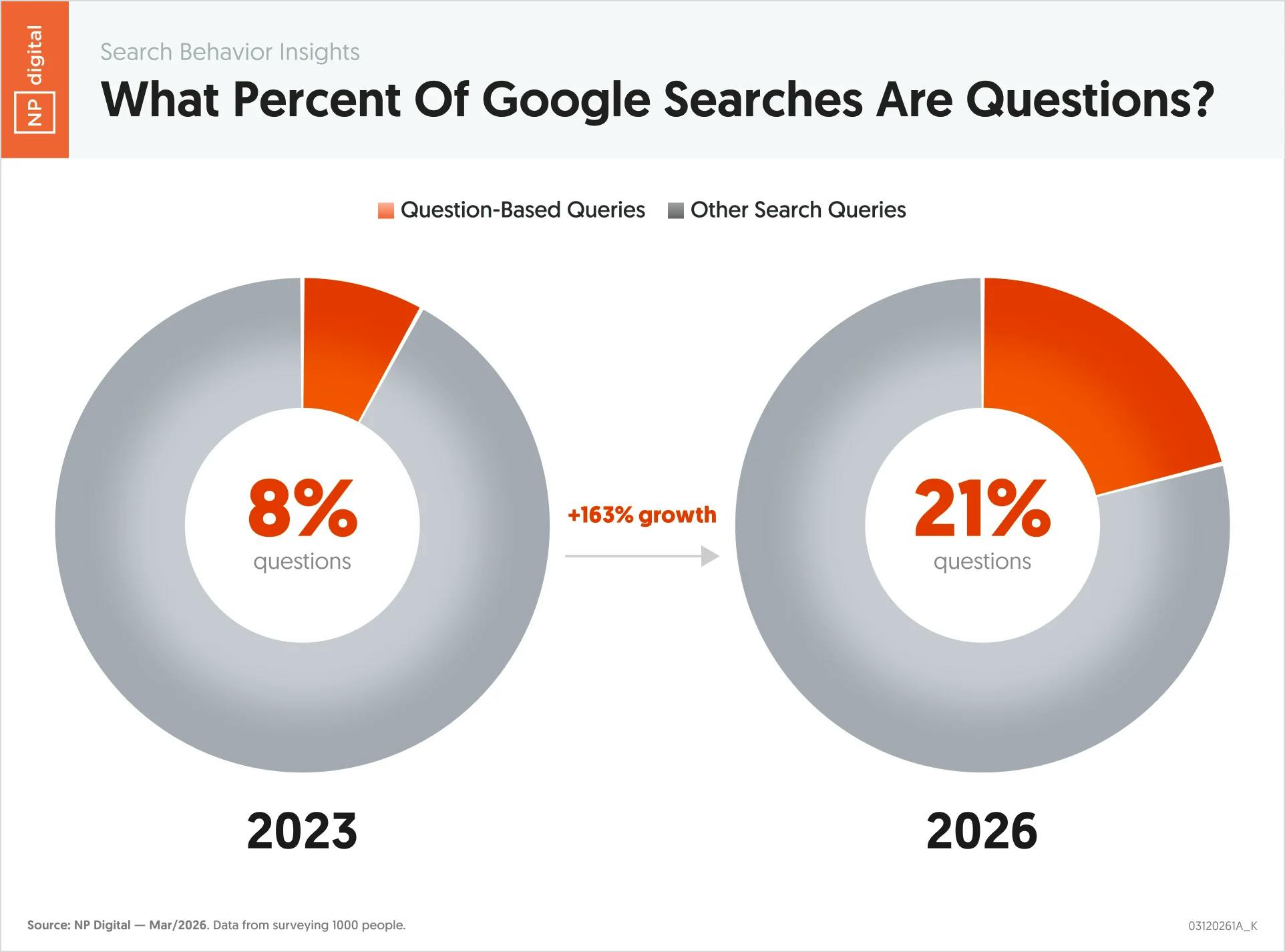
Image 1: Search queries percentages, Source: NP Digital
Google recognised this shift and, after more than 25 years, fundamentally redesigned the way Search works. As users increasingly choose conversation for research, asking complex, nuanced questions, triple the length of a traditional search query, instead of typing simple keywords, Google has adapted to meet those changing behaviours.
What does Google’s AI Search mean for D2C brands?
As part of these changes in research behaviour, people also no longer want to sift through multiple websites, compare dozens of sources, and piece together answers themselves. They expect instant, comprehensive responses that help them understand topics, evaluate options, and make decisions within a single interface, which is exactly why AI Mode (along with LLMs) has seen such a major rise in popularity over a short period of time.
In many cases, a significant portion of the research journey now happens without leaving the search experience at all. For D2C brands, this represents a fundamental change in how consumers discover products and interact with brands online. Visibility is no longer determined solely by rankings and clicks, but by whether AI systems (and not just Google’s) can understand, trust, and recommend your content and products as part of the answers they generate. This is where you should introduce GEO/AEO as part of your optimisation strategies and marketing campaigns.
SEO vs. GEO Debate
As one of Google’s recent additions was also their instructions on how to stay AI-visible, which has caused a lot of confusion and debate among experts. Simply put, Google joined the optimisation discussion and stated that “GEO/AEO is SEO.”

Image 2: AEO, GEO and SEO, Source: Google Developers
Google’s stance is simple: create quality content valuable to your target audience, and the rest will come naturally.
Inside the Google ecosystem, that makes sense because their AI Overviews rely heavily on traditional Search infrastructure. But for D2C brands looking at the broader digital landscape, treating generative optimisation exactly like traditional SEO is a critical mistake. ChatGPT, Claude, and Perplexity are not Google, and large-scale data reveals that their AI engines behave with entirely different retrieval priorities:
- The ranking vs. citation disconnect: A comprehensive 2026 cross-engine analysis found that the overlap between organic Google top 10 search rankings and URLs cited by LLMs is surprisingly low, averaging just 12% across major AI tools, and dropping to a tiny 8% overlap for ChatGPT [4]. Ranking #1 on Google no longer guarantees your product will be the one recommended in a chatbot thread.
- The freshness premium: Data compiled by Ahrefs Brand Radar across 16.9 million AI-cited URLs reveals a dramatic contrast in how engines value age. While Google’s AI Overviews display a clear preference for older, established pages, ChatGPT citations are, on average, 458 days fresher than traditional organic search results [5]. LLM-native platforms heavily prioritise real-time updates and recently published content.
- Deep Crawling vs. Sparse Citation: Research into search-enabled LLMs shows that these systems scan a massive amount of surface text compared to what they actually show the user. For instance, Perplexity's standard quick search scrapes roughly 10 relevant web pages per query, but condenses them down to cite only a tiny handful of sources in the final text response [6].
Autonomous Information Agents
Information Agents were announced as 24/7 agents working in the background, searching for up-to-date information on anything and everything the user finds interesting: from shopping to the most recent news updates.
Google’s Information Agents not only seem strangely practical but also open a chasm of opportunities for users. Even if users are not yet completely ready for a fully autonomous shopping experience, i.e. letting AI shop on its own, they do prefer AI to do their research for them.
According to Adobe, there has been a 4,700% YoY growth in AI-referred traffic to US retail sites [2], meaning buyers are letting AI research the web for them and suggest specific websites and brands. These free-roaming agents will take AI research to the next level, working for the user in the background until they find precisely what they need.
If current preferences are to be used as predictions of future consumer behaviour, then we can safely assume that Information Agents will be used.
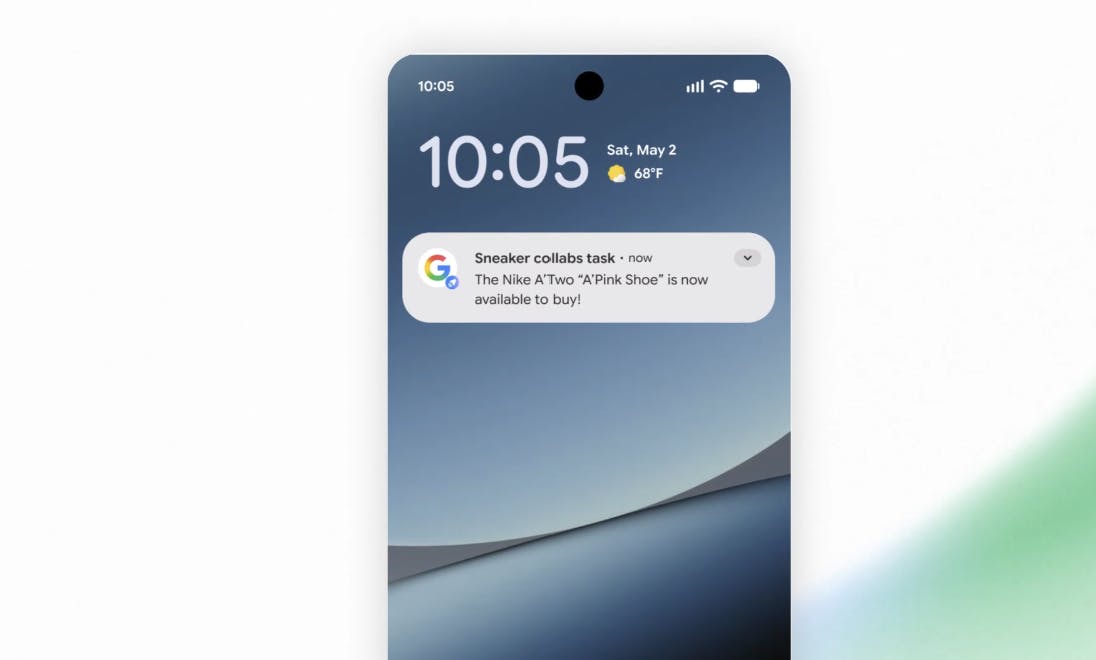
Image 3: Information Agent, Source: Google
What do Google’s Information Agents mean for D2C brands?
With the traditional marketing approach, brands relied on having a human as their target user. If a bot is visiting your website instead of a human, flashy images, meaningless copies, superficial text hooks—all lose importance.
A bot needs concrete, informational, structured data that will allow it to quickly and positively match user prompts.
What brands need to do precisely:
- Deploy "Conversational Attributes" in Merchant Centre: Move beyond basic operational feed data (Price, SKU, GTIN). You must populate Google's new conversational attribute schema with deeply descriptive product properties that match how humans describe problems to agents (e.g., specific skin-type suitability, structural dimensions for exact human sizing, care guidelines, and fabric weave detail).
- Enforce cross-platform parameter harmony: Background agents continuously cross-reference information across your product information management (PIM) systems, third-party marketplaces (like Amazon or eBay), and your core website text. If an agent detects mismatched descriptions or conflicting material specifications across these surfaces, it drops your product from its recommendation loop due to low trust signals.
Universal Cart and Universal Commerce Protocol
What makes Google's Universal Cart truly "Universal" is the fact that it works natively across all the different Google tools and platforms, like Gmail, YouTube, or directly from within the search interface. It allows users to complete their purchases quickly and with as little effort as possible, rather than just using Google for initial product research.
Google's Universal Cart not only allows you to shop from anywhere within their Google ecosystem, but it also works directly as your shopping assistant. This means it proactively finds deals for you, automatically compares prices, and actively suggests better options to what you originally chose if it finds a superior match.
While it is still not available in the UK, Google has confirmed it is currently planned for implementation here by the end of 2026. Data from early rollouts shows that this AI-driven approach is accelerating fast, with McKinsey estimating the broader agentic commerce market could reach $5 trillion globally by 2030.
Even though Google claims that your brand remains the "merchant of record" for these transactions, this is still a dangerous new territory that does not necessarily work in your favour and that of your brand.
The Universal Cart takes your target audience even further away from your brand—i.e., your actual website—by making it possible for them to shop from anywhere. As a result, your brand loses direct customer touchpoints, pixel-tracking visibility, first-party cookie data collection, and the crucial ability to trigger native on-site post-purchase upsells. McKinsey highlights that some retailers are already experiencing up to a 30% drop in traditional site traffic as users pivot to these off-site agent queries.[3]
What does Google’s Universal Cart mean for D2C brands?
While naturally not everyone will use the Universal Cart immediately (just as not everyone is currently using Gemini) you cannot rely on focusing only on those traditional users who will visit your website in the old-fashioned manner. You have to prepare your brand and pivot when it comes to users who prefer this kind of autonomous, agentic commerce.
To handle this shift, you have to keep your product data highly structured and updated so that the Google crawlers visiting your website are able to seamlessly provide this updated, informational content to your target audience within the cart. On the other side of the strategy, you have to prepare your own website and make sure it offers robust, on-site AI options as well, matching the conversational sophistication users are getting used to elsewhere.
To remain viable in this machine-mediated landscape, a dual-pronged strategy is required:
- Optimise for external machine legibility: Brands must enforce flawless data hygiene, keeping product graphs, pricing matrices, and inventory feeds continuously structured and updated, as mentioned. If your server-side data feeds aren't pristine, the background web crawlers and autonomous information agents feeding the Universal Cart will simply bypass your catalogue.
- Deploy internal AI infrastructure: On the defensive side, merchants must upgrade their native web properties with robust, on-site AI features, such as semantic site search, autonomous shopping assistants, and highly dynamic product recommendations. This will ensure that when a customer does choose to visit your website directly, the on-site discovery experience matches the seamless, conversational sophistication they now expect from Google.
Conclusion: Adapt or Fade Out
The era of building a UK D2C brand purely on the back of traditional keyword SEO and traffic arbitrage is officially over.
Surviving 2026 (and on) will be about treating AI engines as a critical business-to-business distribution channel, optimising your entire ecosystem for machine legibility, and building a distinct brand identity powerful enough that users ask for your items by name, even when talking to an autonomous agent
FAQ
Frequently Asked Questions
[1] S. Shivani Mohan. "How AI Mode is changing the way people search in the U.S.". Google Product Blog. 2026. https://blog.google/products-and-platforms/products/search/ai-mode-us-insights/
[2] Adobe Digital Insights. "2026 Q2 AI Traffic Report: Sourced Traffic Insights and Retail Trends". Adobe for Business. 2026. https://business.adobe.com/resources/sdk/2026-q2-ai-traffic-report.html
[3] Thomas Macaulay. "Google launches Universal Cart and updates AP2 at I/O 2026". The Next Web. 2026. https://thenextweb.com/news/google-universal-cart-agent-payments-shopping-io-2026
[4] Alexander Rus. "Answer Engine Optimization (AEO): AI visibility in 2026". Evergreen Media. 2026. https://www.evergreen.media/en/guide/answer-engine-optimization/
[5] Ahrefs Data Team. "Do AI Assistants Prefer to Cite Fresh Content? An Analysis of 16.9M URLs". Ahrefs Blog. 2026. https://ahrefs.com/blog/do-ai-assistants-prefer-to-cite-fresh-content/
[6] Index.dev Editorial. "Perplexity AI Features and Scaling Retrieval Statistics". Index.dev Blog. 2026. https://www.index.dev/blog/perplexity-ai-features-statistics
[7] John Mueller. "Optimizing your website for generative AI features on Google Search". Google Search Central. 2026. https://developers.google.com/search/docs/fundamentals/ai-optimization-guide
[8] Liz Reid. "How Google AI Search merges AI Mode, AI Overviews, and traditional search interfaces". Google Keyword Blog. 2026. https://blog.google/innovation-and-ai/technology/ai/google-ai-updates-may-2026/
[9] Google Merchant Center Engineering. "Universal Commerce Protocol (UCP) Technical Integration and Reference Guide". Google Developers. 2026. https://developers.google.com/merchant/ucp
[10] Shopping Team. "How we're helping retailers thrive with new Universal Commerce Protocol features and AI tools on Google". Google Product Blog. 2026. https://blog.google/products-and-platforms/products/shopping/shopping-updates-google-marketing-live/
[11] Kimberly Gedeon. "Google and OpenAI announce big expansion of SynthID digital watermarks at I/O 2026". Mashable. 2026. https://mashable.com/article/google-openai-synthid-google-io-2026
[12] Sundar Pichai. "I/O 2026: Welcome to the agentic Gemini era". Google Keyword Blog. 2026. https://blog.google/innovation-and-ai/sundar-pichai-io-2026/
[13] Redefine ROI Insights. "AI SEO vs GEO: The New Search Optimisation Strategy in 2026". Redefine ROI. 2026. https://redefineroi.com/blog/ai-seo-vs-geo-search-optimization-strategy/
[14] WP Engine Editorial. "SEO vs GEO: Understanding the Core Differences in 2026". WP Engine Blog. 2026. https://wpengine.com/blog/seo-vs-geo/
[15] IMPACT Learning Center. "SEO vs. GEO: What to Know About Getting Found in 2026". IMPACT Plus. 2026. https://www.impactplus.com/learn/seo-vs-geo
[16] Tech Desk. "Google AI Mode rolls out Search agents that track the web for you in real time". Indian Express. 2026. https://indianexpress.com/article/technology/tech-news-technology/google-ai-mode-rolls-out-search-agents-that-track-the-web-for-you-in-real-time-10737846/