



How to Get Your Product Recommended by ChatGPT in 90 Days
Learn how to optimise your website to get your brand cited and your products recommended by ChatGPT, ultimately increasing your conversion rates.
ChatGPT now has about 900 million users, and AI-referred visitors convert far harder than classic Google traffic. This guide is a 90-day plan to make your product pages and brand content citable, so ChatGPT can name your products and send high-intent buyers to your site.
We start with ChatGPT because it still carries most AI shopping traffic. The same foundations also help you show up in Gemini, Claude, and Perplexity later. Firney builds this citation stack for D2C brands: schema, page structure, freshness, and third-party proof.
Importance of ChatGPT Recommendations
When making a case to put ChatGPT as a part of your marketing strategy, we are not talking only about the impressive volume of users that visit it on a daily basis. The 900 million number would mean nothing if it ultimately did not result in any traffic leading to your website, or in having traffic that does not convert.
However, that is not the case.
AI traffic converts at 14.2%, which is almost five times more than traditional organic traffic [2]. Additionally, AI-referred visitors spend 38% longer on websites and bounce 27% less than other visitors [2]. This suggests that users are arriving with much higher intent, which makes sense because the AI has already helped them narrow down their choices, with all that is left being the final click. These are statistics no D2C brand can ignore.
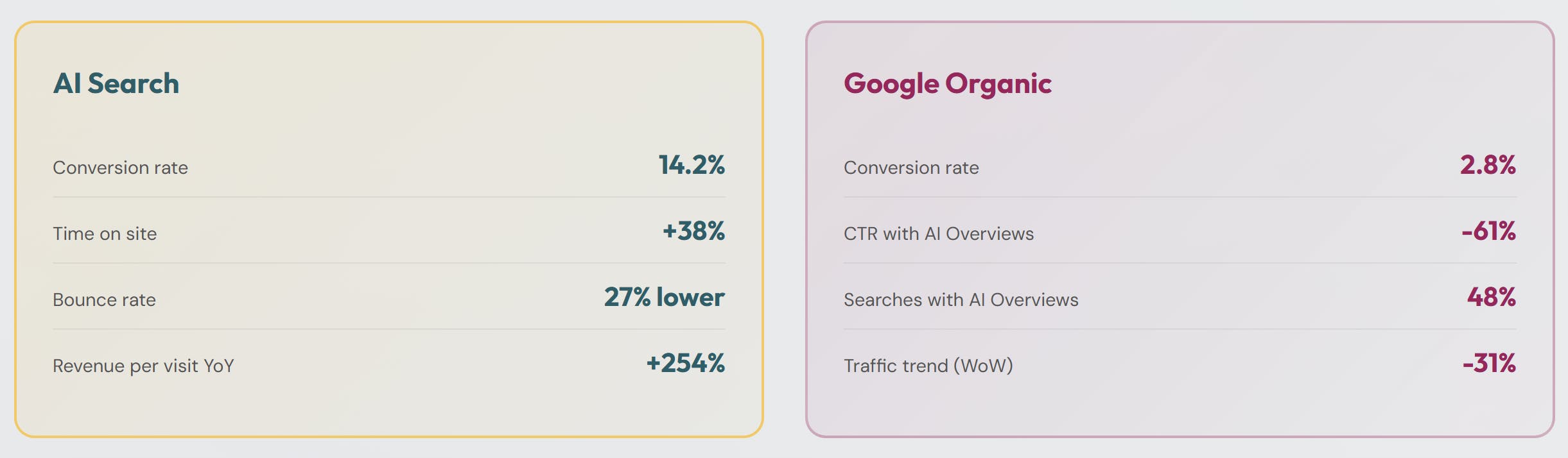
Image 1: AI search vs Google organic traffic comparison
As the traditional organic traffic is decreasing, and a total of 59% of websites are seeing their traffic decline in 2025 [3], becoming citable by LLMs is the new must for all D2C brands.
We see that 86% of AI citations come from brand-managed sources. 44% of these citations come from websites, and 42% come from listings [4]. This means we have a high degree of control over how AI perceives and recommends our products.
We can influence these recommendations by focusing on five specific citation signals. These include structured data, content architecture, content freshness, authority signals, and platform-specific behaviour.
ChatGPT vs Other LLMs
Each AI model that is currently available has its own way of functioning and deciding on where to pull data from and what sources it finds viable. We will now identify several factors that are specific to the ChatGPT ecosystem. Focusing on these unique signals will help you ensure your brand appears in its recommendations.
Unique Sourcing
ChatGPT relies on the Bing search index rather than the Google index. It uses a consensus model, which means it prioritises what the wider internet agrees on over what a brand says about itself.
This is a major reason why third-party citations are critical for this platform. Approximately 48.73% of ChatGPT citations come from third-party sites like review platforms and directories [4].
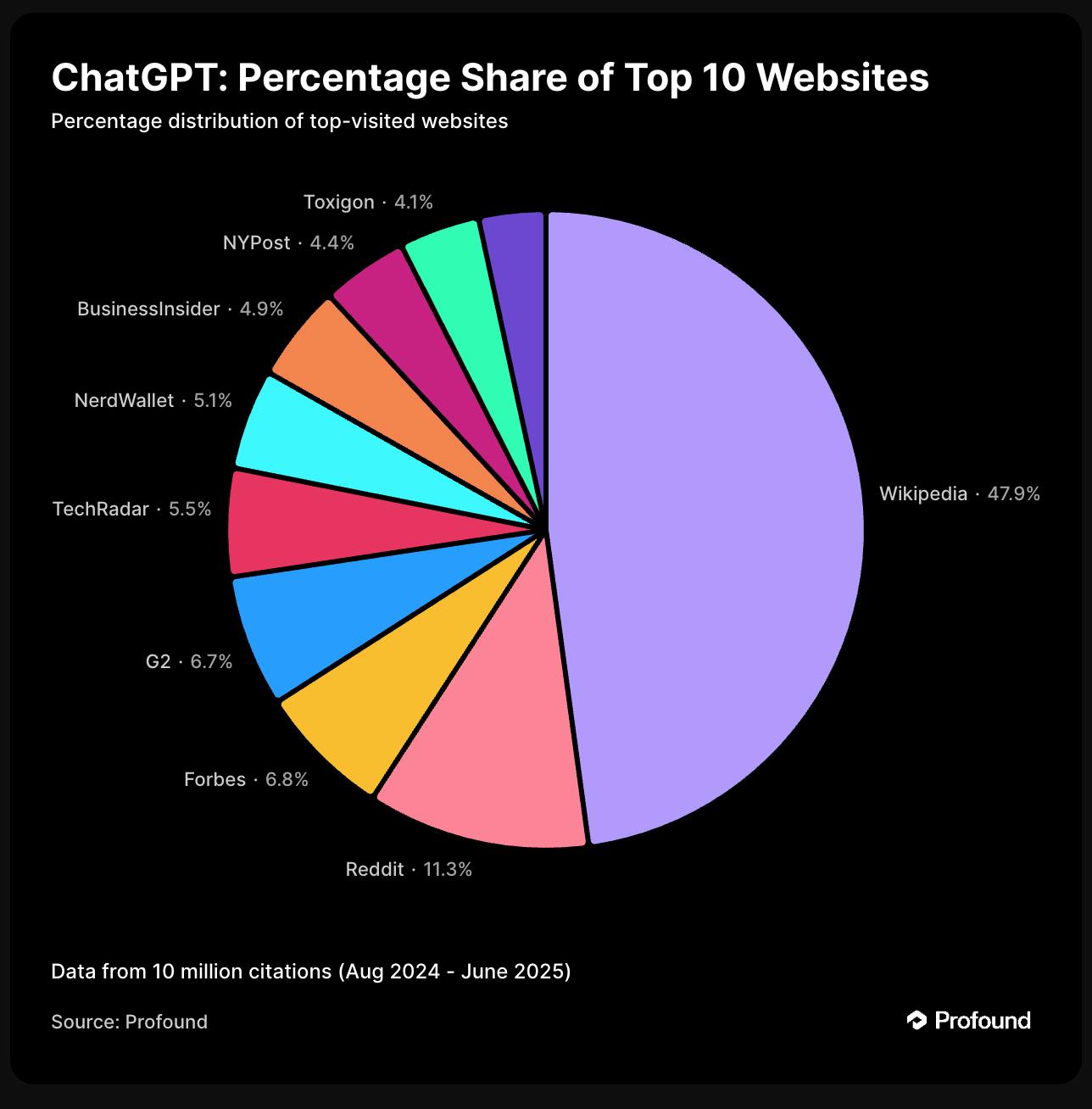
Image 2: ChatGPT sources overview, June 2025 data, Source: Profound
This behaviour is different in Gemini, where over half of the citations come from the primary brand website.
Specific Content and Structure Preferences
ChatGPT has a strong preference for high-quality training data. Wikipedia accounts for 47.9% of its total citations.
It also has structural requirements for citations. A total of 68.7% of ChatGPT citations follow a strict logical heading hierarchy of H1 to H2 to H3 [5].
ChatGPT also prefers content that is between 393 and 458 days newer than the content found in traditional Google results.
Commercial and Transactional Behaviour
The commercial performance of ChatGPT is unique among all AI tools. It delivers a conversion rate of 15.9%, which is the highest in the market [2].
At the beginning of 2026, they also announced specific fee structures for their shopping features. Using the Shopify integration for ChatGPT can include a 4% transaction fee on completed purchases. However, in recent weeks, they have also scaled back their agentic commerce efforts, recognising that users are still not ready for fully autonomous AI shopping, and are rather focusing on the discovery phase.
Content Freshness Requirements
Content updated within 60 days has a 76.4% citation rate on the platform. This requirement is less aggressive than, for example, Perplexity, which requires a 30-day update cycle for its highest citation rates.
These metrics help us create a strategy that is specific to the ChatGPT model.
The 90-Day Action Plan
Only 11% of cited domains overlap across different AI models [4], which means that each model uses its own distinct citation universe. In this plan, we will start by building the foundation and your initial visibility, starting from the model that is currently the lead one on the market.
The second part will include focusing on diversifying strategies to address the unique ranking factors of other LLMs.
Phase 1: Foundation (Weeks 1–4)
The goal of the first phase is to make your website visible and parseable for ChatGPT (and other LLMs).
It is focused on introducing or fixing the following:
- Schema: Implement Product, Offer, Review, and FAQ schema on every product page to earn 3.1 times higher citation rates.
- Heading hierarchy: Every page should include a strict H1, H2, H3 hierarchy as this allows AI to effectively chunk, separate and understand your content.
- Content: It needs to be easily readable and reusable by LLMs, which means it has to contain useful, concrete, context-free information.
- Site speed: Just like with human users, AI favours websites loading under 200ms.
Schema
Schema markup is the primary way of communicating the meaning of our content to AI. By not using schema, AI will have a harder time understanding your products, which will increase the chances of it providing the user with misleading information.
To provide AI with a complete picture of the product, you should include Product, Offer, FAQ, and Review Schema on the same page. Product pages with stacked schema earn 3.1x higher citation rates when compared to pages with single or no schema [6].
Schema Type | AI Visibility Impact | Key Requirements |
Product | High | Name, Brand, SKU, GTIN |
Offer | High | Price, Currency, Availability |
Review | Medium | AggregateRating, ReviewCount |
FAQPage | High | Question and Answer pairs |
Table 1: Markup Schema Impact and Requirements
Product schema is crucial as it identifies the specific item we are selling. It includes the name, image, description, and brand, all of which allow AI to describe your product in detail and help the user be correctly informed.
Offer schema goes into even more detail. You have to make sure you are always up to date: price, currency, and availability.
Your schema markup has to be the same as the visible website content. If you change the price of a product or its availability, it has to be reflected in the schema as well, or the AI will see the data as unreliable and will not recommend your product [7].
Review schema provides social proof, which is particularly important for ChatGPT. Product pages that have positive reviews in their schema tend to have a 74.1% lift in CTR [6].
Pages with FAQ schema have a 64% citation rate, as AI can simply reuse the content you created (the questions your potential users have) to answer inquiries without having to search for the information they need, or risk giving incorrect answers [8].
We recommend using JSON-LD as your schema format. It sits in the <head> of your HTML as a <script> tag, which means it is completely separate from your visible page content. This makes it far easier to implement and maintain without a developer having to touch your actual page layout.
Heading hierarchy
Pages with organised heading hierarchies are 2.8 times more likely to earn AI citations, and 68.7% of cited pages follow this logical structure [5].
Organising your content in such a logical hierarchy means you are creating a roadmap that an LLM can easily follow. AI search engines use headings as boundaries which help them separate the text into semantically meaningful chunks. Heading-based semantic chunking delivers 85%+ retrieval accuracy compared to 45–60% for generic character-count splitting [5].
Content
When writing content, focus on five key factors: overall text length, chunking text into digestible sections, providing concrete and citable definitions, writing context-independent sentences, and using specific proper nouns.
- Length and structure
Pages with 20,000+ characters receive 4.3× more citations than shorter ones, but length alone won't get you cited [9]. Structure and quality matter equally, if not more. Aim for sections between 120 and 180 words, which is the sweet spot for AI extraction.
Place your most important information in the first 30% of your text. Research shows 44.2% of all citations are pulled from this opening section [9], so lead with your strongest, most specific claims.
- Heading content
Format your H2s as direct questions that your audience would actually search. ChatGPT treats them as prompts and favours sources that directly answer a question without requiring it to rewrite the response. Your H1 should be product-specific and concrete: Firney Website Audit beats Our Audit every time.
- Specificity over generality
ChatGPT includes proper nouns such as names of people, products, brands, places, and tools in 20.6% of its answers [9]. Vague copy like "Our services help small businesses succeed" gets skipped because it gives AI nothing to extract. Instead, be direct and specific from the first sentence: "Our platform helps construction companies organise their projects and deadlines."
- Tables
Comparison tables increase your chances of being cited by 180% [10]. Because tables are semantically structured, they make data extraction highly reliable, often outperforming standard paragraphs when AI is pulling factual comparisons.
❌ Poor description | ✅ AI-ready description | ||
Product description | The Ultimate Velocity Running Jacket Get ready to revolutionise your run with the best waterproof jacket on the market! Whether you are hitting the pavement or hiking the trails, this super lightweight, ultra-breathable coat will keep you dry all day. It's packed with innovative features and has a sleek blue design that looks amazing. Don't let the rain stop you. Buy the ultimate velocity jacket today and experience the magic for yourself! | Velocity Pro Men's Waterproof Trail Running Jacket The Velocity Pro is engineered specifically for high-intensity trail running in heavy rain. Waterproofing: 20,000mm hydrostatic head rating with fully taped seams. Breathability: 15,000 g/m²/24h moisture vapour transmission rate (MVTR). Weight: 185g (Size M) – packs down into its own chest pocket. Material: 100% recycled ripstop nylon with a PFC-free DWR coating. Fit & Compatibility: Slim athletic fit, designed to sit comfortably underneath standard hydration vests without chafing. | |
ChatGPT reasoning | Zero factual specificity: "Super lightweight" and "ultra-breathable" are subjective marketing terms that AI cannot quantify. Vague use cases: Saying it's for running, hiking, and walking means it doesn't solve a specific problem well. Keyword stuffing: It's written to rank for "best waterproof jacket" and to sound "salesy," but it offers no proof as to why it is the best. | Hard data: If a user asks an AI, "What is a good running jacket under 200g?" or "Which jackets have a 20,000mm waterproof rating?" the LLM has exact data to pull and cite. Extreme specificity: It clearly states the exact material (recycled ripstop nylon) and chemical makeup (PFC-free). Contextual compatibility: Mentioning that it fits under hydration vests gives the AI a perfect talking point when a user asks for "gear for ultra-marathons." |
Table 2: Bad vs Good Product Description Example
Site speed
How quickly your website loads affects both your human and your AI visitors. For humans, if your website doesn't load in less than 2 seconds, they will leave. Every additional second of load time costs conversions.
When it comes to AI, website speed is a sign of a trustworthy website and a source it can use in its recommendations. Sites with a time to first byte (TTFB) under 200ms deliver 40–60% higher AI citation rates [11]. A 0.1-second improvement in mobile speed delivers 8.4% more conversions [11]. This is a quick win that benefits both your human visitors and your AI visibility simultaneously.
Phase 2: Amplification (Weeks 5–8)
The second phase should focus on building up your foundation, primarily through content that AI platforms actively want to cite as authoritative sources.
Citable content
We have already covered how to structure your content for AI readability. Phase 2 is about creating new content worth citing in the first place.
Articles over 2,900 words earn 59% more ChatGPT citations [9]. It means building genuinely comprehensive guides that cover a topic so thoroughly that an AI has no reason to look elsewhere.
For each of your core product categories, create a definitive guide. Structure it with clear H2 questions and H3 subheadings, include original statistics with cited sources, and use comparison tables wherever you are evaluating options. Content with citations, statistics, and expert quotations gets 30–40% higher AI visibility [12].
The answer-first framework applies here too. Every section should open with a direct one or two-sentence answer, then expand with supporting detail. This mirrors how AI actually reads and extracts content: it is looking for clean, self-contained answers it can lift and reuse.
Third-party presence for ChatGPT
Because ChatGPT draws 48.73% of its citations from third-party sources [4], Phase 2 is also the time to build your presence off your own website.
Get your brand reviewed on platforms AI already trusts: Trustpilot, G2, Capterra, and any industry-specific directory relevant to your category. Brands with multiple review profiles on these platforms earn 4.6 to 6.3 times more citations [13]. Beyond review platforms, pursue coverage in vertical trade publications. News and established publishers dominate AI citations across all platforms [4], and a single mention in a relevant industry outlet can do more for your AI visibility than a dozen blog posts.
When pitching to journalists, lead with definitive claims and quantified proof points. Generic quotes do not get cited by AI. Specific, attributable statements do.
Content freshness as a system
Content updated within three months is twice as likely to be cited as older content [14]. Phase 2 is the right time to set up a freshness system rather than treating updates as an afterthought.
AI systems detect and ignore cosmetic refreshes like simply changing a publish date [14]. Substantive changes are required: adding new statistics, refreshing examples, updating pricing or product details, or adding a new section of 500 or more words. Build a quarterly update schedule for your top 20 pages and put it in your content calendar now.
Content Tier | Update Frequency | AI Visibility Impact |
High-value product guides (Tier 1) | Every 30–90 days | Critical |
Category pages (Tier 2) | Every 6 months | High |
Foundational brand pages (Tier 3) | Annually | Moderate |
Table 3: Content Freshness Importance
Phase 3: Diversification (Weeks 9–12)
Phase 3 is where most brands stop too early. If you have only optimised for ChatGPT, you have only addressed 60% of the AI search market. This phase expands your presence across the platforms that are growing fastest.
We will cover this in one of our next blog post, so make sure to stay tuned if you wish to see your products recommended in more than one LLM.
Start with a Free GEO Audit
The brands showing up in AI results right now are not necessarily the biggest or most well-known. They are the ones with the clearest data, the most citable content, and the most complete technical foundations.
The shift from keyword rankings to AI recommendations is already happening. The brands building their citation infrastructure today are the ones ChatGPT, Gemini, and Perplexity will be recommending six months from now. The ones that wait will be wondering why their competitors keep appearing and they do not.
To see exactly where your brand stands in the AI recommendation landscape, apply for a free Firney GEO Website Audit. We will review your AI visibility, crawler access, schema markup, and content citability, and give you a personalised report with a prioritised action plan, specific to your catalogue, your category, and the platforms your customers are using.
FAQ
Frequently Asked Questions
References
[1] First Page Sage. "Top Generative AI Chatbots: Market Share Report." March 2026. https://firstpagesage.com/reports/top-generative-ai-chatbots/
[2] Adobe. "AI Traffic Report: Conversion and Engagement Benchmarks." 2026. https://business.adobe.com/resources/sdk/adobe-ai-traffic-report.html
[3] Contentsquare. "Digital Experience Benchmarks Report 2025." 2025. https://contentsquare.com/insights/digital-experience-benchmarks/
[4] Yext. "AI Visibility in 2025: How Gemini, ChatGPT, and Perplexity Cite Brands." March 2026. https://www.yext.com/blog/ai-visibility-in-2025-how-gemini-chatgpt-perplexity-cite-brands
[5] AirOps. "Heading Hierarchy for AI: How to Structure Content LLMs Can Parse." 2026. https://www.amicited.com/blog/heading-hierarchy-ai-structure-content-llms-parse/
[6] GenOptima / Ziptie. "Product Schema for AI Commerce: How to Get Your Products Into AI Recommendations." 2026. https://ziptie.dev/blog/product-schema-for-ai-commerce/
[7] ALM Corp. "E-commerce Schema Markup for Rich Results: Product, Merchant Listing, Variant, and Category Page Implementation Guide." 2026. https://almcorp.com/blog/ecommerce-schema-markup-rich-results-guide/
[8] Frase.io. "Are FAQ Schemas Important for AI Search, GEO & AEO?" 2026. https://www.frase.io/blog/faq-schema-ai-search-geo-aeo
[9] ConvertMate. "GEO Benchmark Study 2026: What Actually Drives Visibility in AI Search." 2026. https://www.convertmate.io/research/geo-benchmark-2026
[10] AI SEO. "Content Structure for LLM Recommendations: Complete Optimisation Guide." 2026. https://aiseo.com.mx/en/content-structure-llm-recommendations/
[11] Am I Cited. "Heading Hierarchy for AI: How to Structure Content LLMs Can Parse." 2026. https://www.amicited.com/blog/heading-hierarchy-ai-structure-content-llms-parse/
[12] Princeton NLP Group / Aggarwal et al. "GEO: Generative Engine Optimisation." 2024. https://arxiv.org/abs/2311.09735
[13] Real Internet Sales. "Why Third-Party Sites Are The Secret Weapon In AI Marketing." 2026. https://www.realinternetsales.com/third-party-sites-ai-marketing-secret-weapon/
[14] Quattr. "AI Search & Content Freshness: Why Updates Improve Visibility." 2026. https://www.quattr.com/blog/content-freshness
[15] Google Cloud. "Knowledge Graph: Powering intelligent and context-aware search." Gemini Enterprise Documentation. 2026. https://docs.cloud.google.com/gemini/enterprise/docs/use-knowledge-graph-search
[16] Digital Applied. "Agentic Storefronts: Sell Inside ChatGPT and AI Mode." 2026. https://www.digitalapplied.com/blog/agentic-storefronts-chatgpt-google-ai-copilot-seo
[17] Loamly. "State of AI Traffic 2026 Benchmark Report." 2026. https://www.loamly.ai/blog/state-of-ai-traffic-2026-benchmark-report
[18] Whitehat SEO. "Perplexity vs ChatGPT vs Gemini: AI Citations Compared." 2026. https://whitehat-seo.co.uk/blog/ai-engines-comparison-citations
[19] SE Ranking. "AI Search Statistics: What the Data Says About LLM Citations." 2026. https://seranking.com/blog/ai-statistics/
[20] Crackle PR. "AI-Optimised PR Playbook: Win ChatGPT & Perplexity Citations." 2026. https://cracklepr.com/insights/ai-optimized-pr-playbook