




The Search Bar is Broken: Why Your Traffic is Bouncing
Gen Z doesn't browse. Learn how AI search fixes product discovery, reduces bounce rates, and boosts D2C revenue without a full site rebuild.
The traditional search bars are a thing of the past.
This seems like a bold statement, considering the sheer number of those precise traditional search bars still present in most online stores. In fact, it may be hard to find a website offering this seemingly novel experience, which seems to be in full contrast with how consumers behave today.
The last couple of years have brought about many changes for e-commerce, mostly caused by the revolution we have witnessed with the introduction of generative AI.
The problem, or the discrepancy, is between how those same users are searching elsewhere, which causes them to transfer those same expectations right to your website.
Think about the last time you used ChatGPT or Perplexity. You likely asked a complex, natural question: "Plan a 3-day itinerary for a vegetarian in Rome" or "Compare these two CRM tools for a small business." You didn't type keywords; you expressed intent.
Now, consider your e-commerce site. A user lands there, fresh from TikTok where they saw a "clean girl aesthetic" skincare routine. They type into your search bar: "routine for sensitive skin no fragrance."
If your site is running on traditional keyword-based architecture, the result is likely a "0 Results Found" page. Why? Because you don't have a product explicitly named "routine." The search engine looked for matches, found none, and gave up.
But an AI-powered search engine looks for meaning. It understands that "routine" implies a bundle of products (cleanser, toner, moisturiser), "sensitive" filters for specific ingredients, and "no fragrance" excludes others. It serves up a curated selection instantly.
The gap between these two experiences is where you are losing your customers.
The "Keyword" Era is Over
For the last 15 years, we trained customers to think like databases. We forced them to navigate logic trees: Men > Accessories > Winter > Gloves.
But Gen Z, the first generation of true digital natives, refuses to play this game. Data from late 2025 highlights a massive behavioural shift: 33% of Gen Z consumers now prefer using AI platforms for product research over traditional search engines. They are accustomed to algorithms that predict their needs.
When they arrive at your site, they bring an 8-second attention span with them. If they have to act as their own librarian, sorting through shelves to find what they want, they bounce.
This isn't just a "UX preference", it is a revenue leak. According to data from Google Cloud, bad search experiences cost retailers an estimated $300 billion annually in the U.S. alone. When a customer searches and fails, they don't just try a different keyword. What they do instead is try a different website.
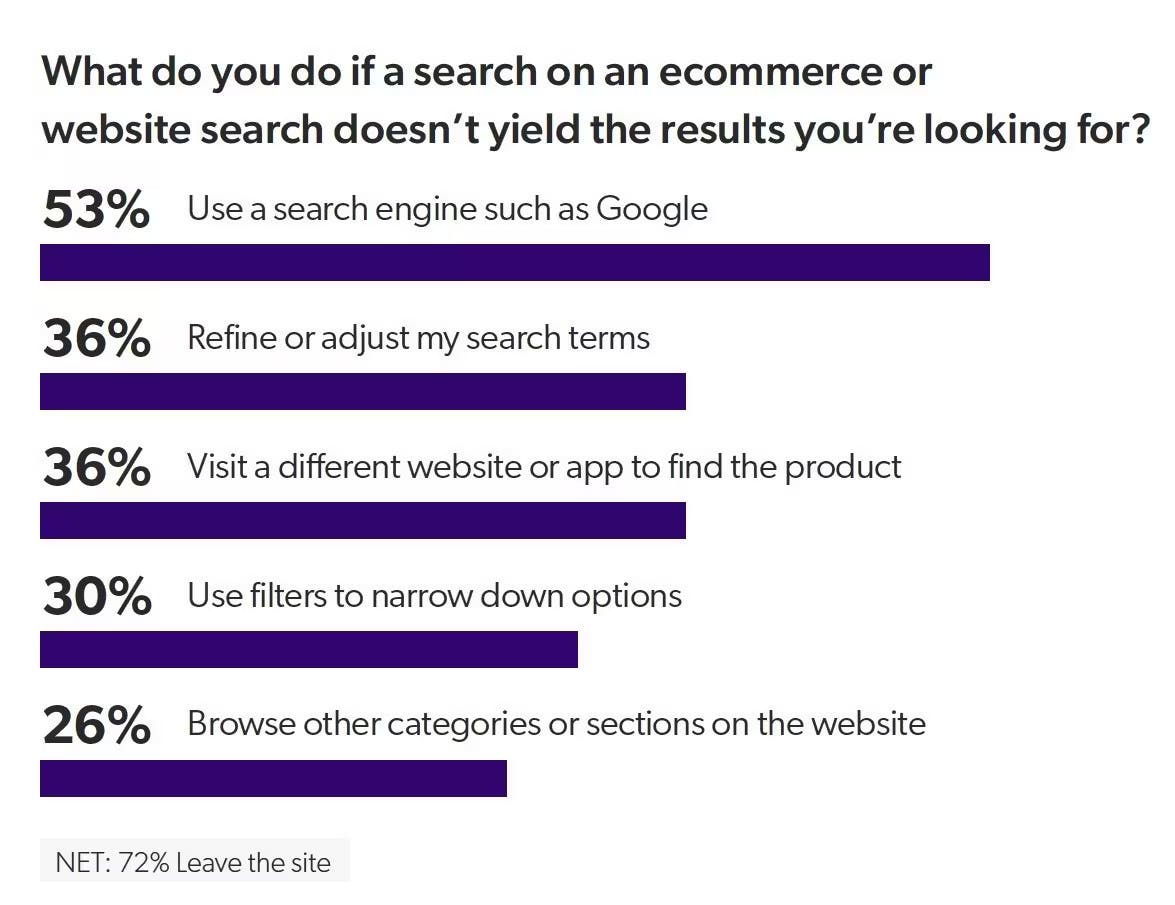
Image 1: Zero search results, Source: Coveo
From Storage Facility to Concierge
The shift to AI search represents a fundamental change in the philosophy of e-commerce.
- Traditional search (the storage facility): You store goods in digital aisles. The customer has to know exactly where to look or exactly what the item is called to find it.
- AI search (the concierge): The customer describes a problem, a vibe, or a need, and the site brings the relevant solutions to them.
This "concierge" model is critical because of how discovery has changed. A report by SimplicityDX noted that while 58% of shoppers discover products on social media, the majority still prefer to complete the purchase on the brand’s website. Even with all the latest announcements by Google and OpenAI on the option of completing a purchase directly within their AI services, it may still take time, and, more importantly, trust, for people to actually finish their purchase journey outside the original retail store.
More importantly, there is a disconnect between how people discover products and how they ultimately locate them on your website. The "vibe" they saw on Instagram doesn't translate to your rigid product categories.
AI Search bridges this gap by using Vector Search and Natural Language Processing (NLP). It allows your site to understand synonyms, typos, and thematic queries (like "outfit for a summer wedding") without you having to manually tag every single product with those keywords.
Why the Traditional Keyword Is Failing
Let's expand on this further. Your customer searches for: "gym leggings with pockets." Your merchandising team has tagged that product as: "performance running tights with storage."
A keyword engine sees zero overlap between "gym" and "performance," or "pockets" and "storage." It returns nothing. A semantic (AI) engine understands that "gym" implies "performance," and that "pockets" are a form of "storage." It closes the gap and captures the sale.
The 4 Levels of Search Maturity
If you want to move from a "storage facility" model (where customers have to hunt) to a "concierge" model (where products find them), you need to assess where your search bar sits on the maturity model:
- Level 1: Basic (The Foundation) This is simple keyword matching. If the customer spells it wrong, they get nothing. If they use a synonym, they get nothing.
- Level 2: Enhanced (The Standard) You have visual autocomplete (showing thumbnails in the dropdown) and basic typo tolerance. This is the minimum requirement for 2026.
- Level 3: Intelligent (The Goal) This is where NLP (Natural Language Processing) comes in. The search bar understands "problems" (e.g., "shampoo for curly hair no sulfates"). It parses the query to understand that "shampoo" is the product, "curly hair" is the attribute, and "no sulfates" is a negative filter.
- Level 4: Conversational (The Future) This includes voice search, visual search (uploading a photo to find a product), and seamless handoffs to chat widgets.
The "Context" Problem
To understand why AI search is necessary, look at two common scenarios we see in D2C data:
- Scenario A: The Context Win
A user searches for "laptop for video editing."
Dumb search: Returns every laptop you sell, sorted by price or popularity.
Smart search: Recognizes "video editing" as a technical constraint. It prioritises machines with high RAM, dedicated graphics cards, and 4K screens. It understands the use case, not just the product category.
- Scenario B: The Volume Fail
A user searches for "quiet dishwasher for open plan kitchen."
Dumb search: Returns all 50 dishwashers in your catalogue, forcing the user to click into each one to check decibel ratings.
Smart search: Identifies "quiet" as a specific attribute (e.g., under 44dB) and instantly filters the results to show only the relevant models.
Visual & Voice Search: The Untapped Opportunity
While we focus heavily on text, the input method is also shifting. 62% of Gen Z and Millennials now prefer visual search capabilities over other new retail technologies.
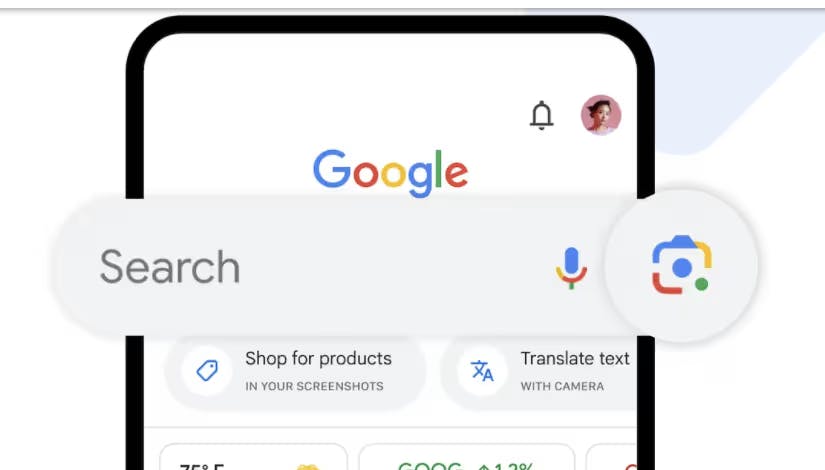
Image 2: Google visual and voice search, Source: TechTips
Yet, in our recent market analysis, we found that 0% of the sites tested offered visual search.
If a customer is standing in a competitor's store, takes a photo of a lamp, and wants to check if you sell something similar, can they? Or do they have to describe it in words? This seems to be an uncharted territory, and a great opportunity to take a stance against the competition.
The Metric That Matters: Intent
As Marketing Managers and Heads of Digital, we are often guilty of obsessing over traffic. But traffic is a vanity metric if it doesn't convert. A lot of visitors may come to your website, but the discrepancy they encounter with the shopping experience you provide will likely cause them to bounce.
The most valuable users on your site are the ones who use the search bar.
Historically, site searchers convert at 2x to 3x the rate of browsers. They have high intent, they have a wallet in hand. They are looking for something particular, not just browsing the sale section, looking for cheap things they may need without even knowing it.
If your search bar is "dumb," you are essentially ignoring your most motivated customers.
By implementing AI search, you aren't just "improving functionality." You are unlocking:
- Reduced zero-result pages: Even if you don't have the exact item, AI can suggest: "We don't have 'blue suede shoes,' but here are our navy loafers that match that style." While the zero-result page may cause the visitor to bounce instantly and try looking for what they need with another retailer, a smart AI working on your website can direct them to something else you offer and provide a solution they did not think of in the first place.
- Higher Average Order Value (AOV): By understanding intent, AI can bundle products (e.g., suggesting batteries with a toy) more effectively than static "Frequently Bought Together" widgets. AI understands what your user is buying and what they actually need with it, not just random suggestions.
- Hyper-personalisation: If a user has been clicking on eco-friendly materials, the search results for "t-shirt" should prioritise organic cotton. AI does this in real-time, providing an essential aspect that the new generations are expecting.
How to Audit Your Experience
You don't need a technical team to see if your site is failing the new generation of customers. While Gen Z is leading the way, the older generations are expecting you to update your customer journey as well. You can do it yourself right now:
- The "vibe" check: Go to your site and search for an occasion, not a product. Type in "date night" or "camping trip." Do you get products, or a blank page?
- The typos test: Type a misspelling of your best-selling product. Does the site self-correct, or does it fail?
- The mobile scroll: On your phone, try to find a specific product using only the search bar. Is it seamless, or are you fighting with filters?
If you failed any of these, your navigation was designed for 2015, not 2026.
Fixing the Discovery Process
The fear for many D2C brands is that fixing this requires a migration or a full site redesign. It doesn't. AI search layers on top of your existing catalogue, acting as the intelligent nervous system for your storefront.
We are seeing a massive bifurcation in the market. Brands that treat search as a utility are stagnating. Brands that treat search as a conversation are winning.
If you are seeing strong traffic but struggling to convert it, specifically among younger demographics, this is likely your bottleneck.
Join the Conversation
We are hosting a dedicated webinar this week for Heads of Digital to dive deeper into this audit. We will cover:
- Why traditional navigation patterns fail with Gen Z.
- A live walkthrough of how to audit your site experience.
- Practical, low-lift changes to improve discovery immediately.
Make sure to join us: Wednesday, Jan 28, 11.00 AM GMT

Frequently Asked Questions (FAQs)
1. Is AI search difficult to integrate with my current e-commerce platform? No. Most modern AI search solutions are "headless" or API-first, meaning they layer on top of platforms like Shopify, Magento, or BigCommerce without requiring a platform migration. Implementation can often be done in a matter of weeks, not months.
2. Will AI search negatively impact my SEO? On the contrary. While this technology powers your internal site search (which Google doesn't index), it improves User Experience signals (like time on site and dwell time), which are critical for SEO. Furthermore, creating dynamic landing pages based on search trends can actually generate new SEO opportunities.
3. Do I need a massive product catalogue for AI search to be worth it? Not necessarily. While AI thrives on data, the ability to understand natural language benefits stores with as few as 50-100 SKUs. If you have a niche product, users might use varied terminology to find it. AI ensures they all land on the right page.
4. Is this just for Gen Z customers? While Gen Z drives the trend (expecting intuitive, "TikTok-like" discovery), the benefits are universal. Older demographics also appreciate not having to guess the exact product name. While they may be more open to adjusting to the traditional experience since they have already been using it for longer periods of time, they are now quickly becoming more and more accustomed to the way they communicate with generative AI tools. Reducing friction helps every customer, regardless of age, get to the checkout faster.
5. What is the difference between "Keyword Matching" and "Semantic Search"? Keyword matching looks for exact words (e.g., matching "sneaker" to "sneaker"). Semantic search uses Vector Search to map the meaning of words. It understands that "sneaker," "trainer," "kicks," and "running shoe" are all semantically related, ensuring users find products even if they use different terminology than your merchandising team.
6. Does this help with "Zero Results" pages? Significantly. Brands like Everlane have reported reducing "No Results" rates by 45% after implementing intelligent search. Instead of hitting a dead end, the AI can understand the intent and suggest "visually similar" items or smart alternatives (e.g., mapping a search for a competitor's brand to your own equivalent product).
7. Is visual search actually used by customers? Yes, particularly on mobile. With the rise of Google Lens and Pinterest/TikTok visual discovery, younger demographics expect to search with images. Implementing a camera icon in your search bar reduces the friction of trying to describe a visual item with text.