




A Guide to Capturing High-Value AI Referral Traffic across the Web
Firney does marketing engineering audits so D2C brands earn citations across ChatGPT, Gemini, Perplexity, Claude, and Copilot — not one engine alone. AI referrals often convert harder and stay longer than classic search visits, and engines rarely recommend the same products for the same ask. This guide is the multi-engine checklist that follows our ChatGPT 90-day plan: Merchant Centre, Merchant Program, reviews, robots, Bing, and answer-first copy.
For the longest time, brands have solely been focused on SEO, since ranking at the top of search results meant getting those valuable clicks and ultimately conversions.
Today, the discovery process has changed drastically. Numerous studies into how users search and discover in 2026 have shown that AI is slowly but safely rising to the top as the primary choice. In fact, AI tools now generate 45 billion monthly sessions globally. [1] Gartner predicts that traditional search engine volume will drop by 25% by the end of 2026. [2]
What is more, a year ago, non-AI traffic was worth 51% more than AI traffic. Today, AI referrals convert 31% higher than their non-AI counterparts. [3] Visitors arriving from AI search tools are now 4.4 times more valuable than regular search visitors. They spend 68% more time on websites than people from traditional search. [4]
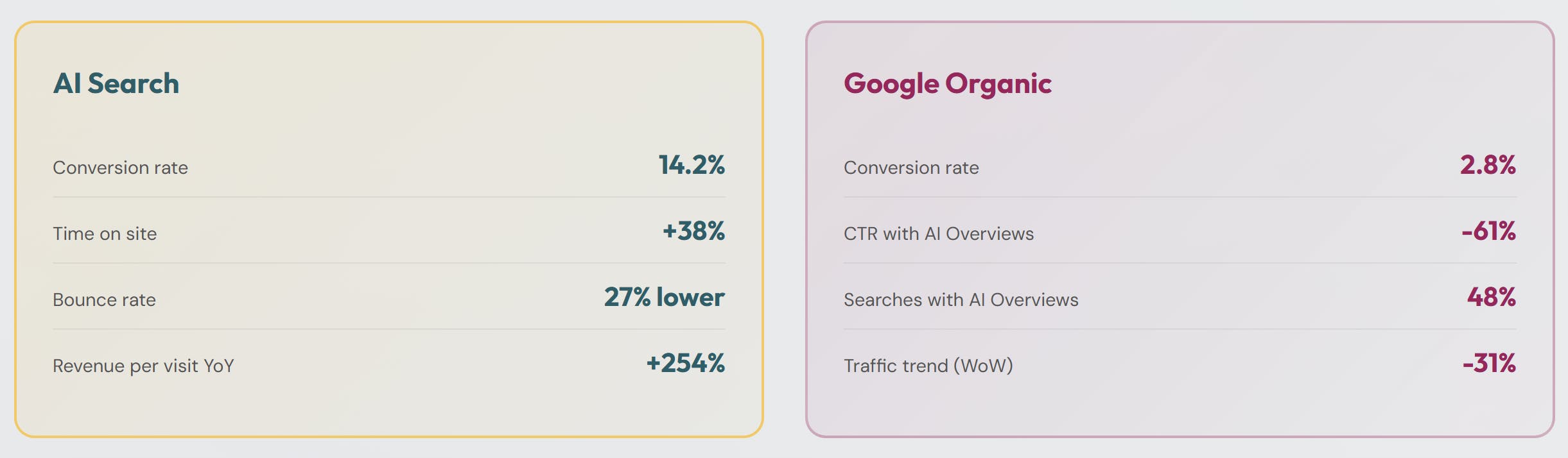
Image 1: AI search vs Google organic traffic comparison
If you want to have your product discovered in AI search, you have to change your strategy. For the marketing leader at a D2C brand, this shift requires a move from Search Engine Optimisation (SEO) to Generative Engine Optimisation (GEO), or rather, a combination of both.
We define GEO as the practice of structuring digital content and product data specifically to be retrieved, understood, and cited by large language models.
Importance of Optimising for LLMs
Optimising for AI in general includes a lot of different strategies, all under their own acronyms: AIO (Artificial Intelligence Optimisation), GEO (Generative Engine Optimisation), and AEO (Answer Engine Optimisation).
Each of these optimisation strategies has its own set of actions you can take to be successful at it and to achieve the goal it focuses on.
Your focus, if you want to be recognised by LLMs, should be GEO. Traditional search engines prioritise websites based on keyword matches, but generative engines prioritise information based on its authority and semantic fitness for a specific user prompt.
GEO uses tactics the goal of which is to be recommended and cited by ChatGPT, Gemini, Claude, Perplexity, and others. While we already covered being recommended by ChatGPT, in this blog post, we will explain why you cannot focus only on a single LLM, as well as how each LLM requires you to adapt your approach.
Being Recognised by Different LLMs
ChatGPT holds about 60% of all AI traffic. Compared to the other LLMs that are currently available, that is a massive percentage - almost two-thirds of all traffic.
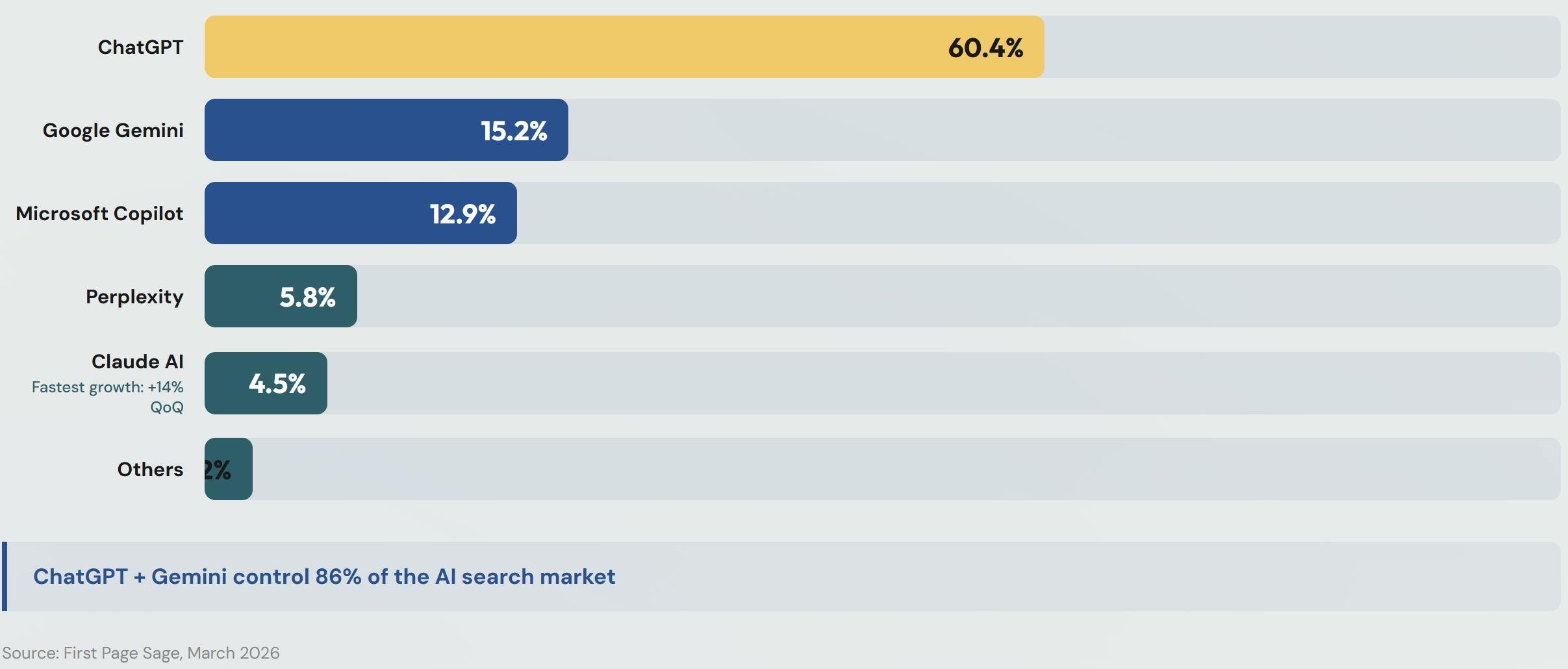
Image 2: LLMs traffic percentage
This makes ChatGPT an obvious choice for your number one priority when it comes to planning your strategy, or rather, your GEO foundation. However, focusing solely on one singular LLM could be a dangerous game.
The Importance of Diversification
If you asked different users why they use a particular LLM, you would likely get an understanding of the strengths and weaknesses of each individual model. The very simple truth is: they function differently.
This is important not only when the general population is using it for their everyday tasks (in which case you will have someone preferring, for example, Copilot for coding, Claude for writing, Gemini for research, ChatGPT for shopping discovery, etc.)
When it comes to D2C brands and their product, research into recommendation overlap shows that a multi-platform strategy is essential because these engines rarely recommend the same set of products for the same query.
There is, for example, only a 11% overlap between the recommendations provided by ChatGPT and those provided by Perplexity. [8]
This divergence means that if you optimise your website only for one engine, you are effectively invisible to the users of the other engines. And while ChatGPT is currently responsible for the majority of all AI traffic, other LLMs still receive large number of visitors on a daily basis, potentially generating revenue for your brand that could appear in their answers.
Firney’s Own Example
While Firney is not a D2C company, we will briefly mention our own example. Based on the statistics we keep track of each week, our content is currently being cited and recommended by five different LLMs. More particularly, Firney is being cited by ChatGPT, Gemini, Perplexity, Claude and Copilot.
These are not only article citations. We are getting valuable website traffic from people referred by AI. In fact, AI referral traffic is currently 14.4% of our overall website traffic.
However, for a couple of weeks, we were seeing a decline in ChatGPT traffic. While it was still holding the majority of all traffic, the decline was quite serious.

Image 3: Firney’s AI traffic
This example shows the importance of diversifying. Had we relied only on ChatGPT, the overall AI-referred traffic would have drastically decreased. This way, we still had traffic incoming from other LLMs. Additionally, not all of the LLM would use the same Firney source to recommend to people, which meant different LLMs were sending people to different pages on our websites, working together to increase our overall website traffic.
Differences between Most Popular LLMs
Since each model uses a different architecture to cite sources and recommend products, a single strategy for all engines will not successfully cover them all.
Google Gemini
Google Merchant Centre and Shopping Graph
Google Gemini functions within Google's complex ecosystem. It relies on the Google Shopping Graph, which is a real-time database containing over 50 billion product listings with detailed information. [9]
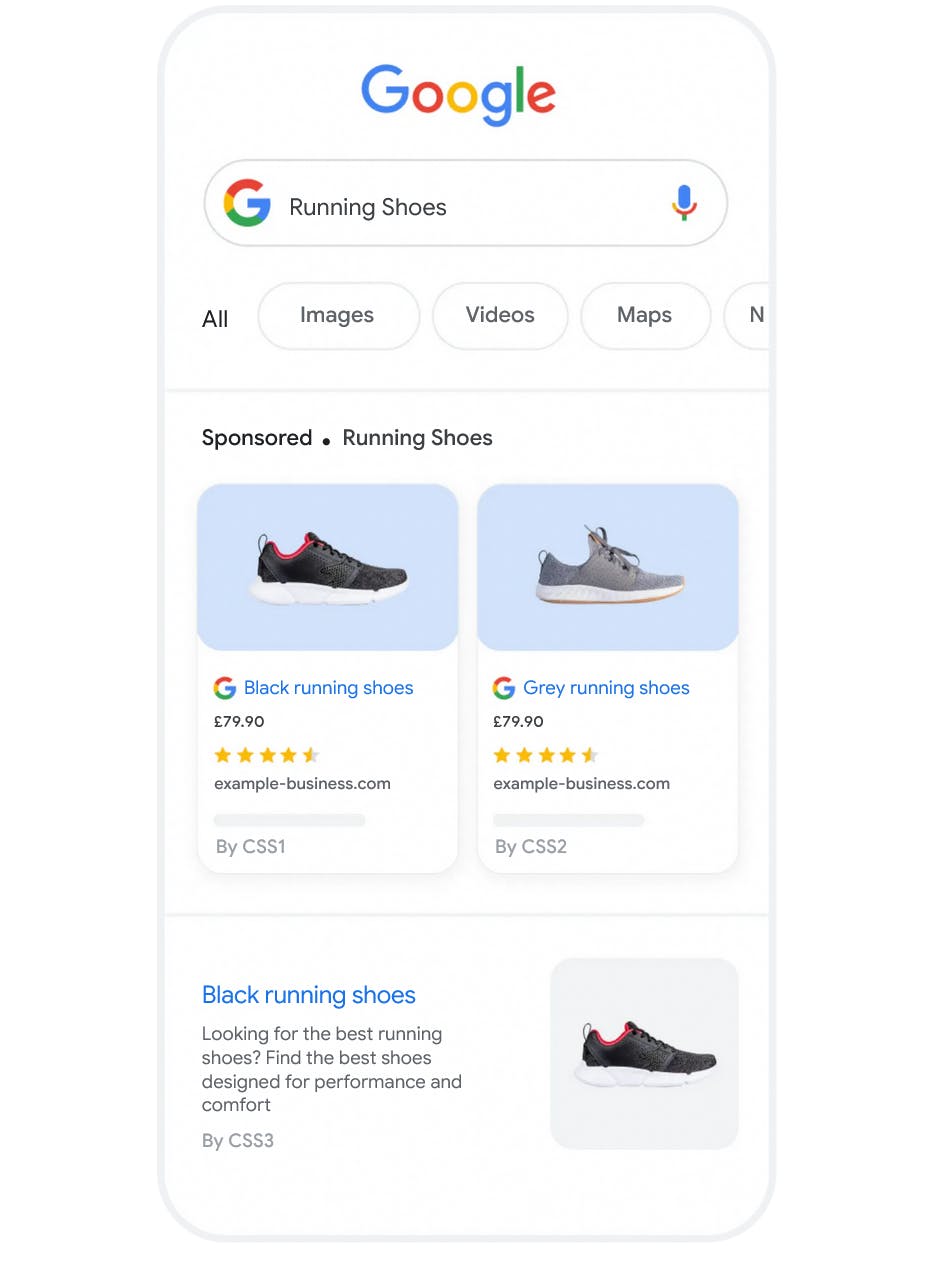
Image 4: Results on Google after using Shopping Graph
In order to maintain accurate pricing and stock status, which is crucial if their recommendations are to be trusted by their users, the engine processes roughly 2 billion data updates every hour. [10]
If your products are not present in the Graph, it is highly unlikely that Gemini will recommend them. If you want Gemini to recommend them, you need to submit your product data through the Google Merchant Centre.
The product data in the Merchant Centre needs to be up to date at all times and as detailed as possible, with rich product attributes the role of which is to help Gemini understand when to recommend a certain product.
Schema and Visuals
Providing detailed schema markup is important for all LLMs, not just Gemini, as it helps them understand and categorise product descriptions and categories. Detailed schema also means your brands will be favoured by LLMs, as using attribute-rich, fully populated schema leads to a 61.7% citation rate. Sites with generic schema see a lower citation rate of 41.6% [11].
Additionally, it is important to provide Gemini with high-resolution images and multi-angle shots to help its visual models recognise your products. Clean background shots outperform lifestyle photography for these specific computer vision tasks. [9]
Perplexity AI
While Perplexity may receive fewer traffic than other LLMs, the traffic they refer to websites is particularly valuable for D2C brands. In fact, the users they attract spend as much as 57% more per order than the average consumer. [12]
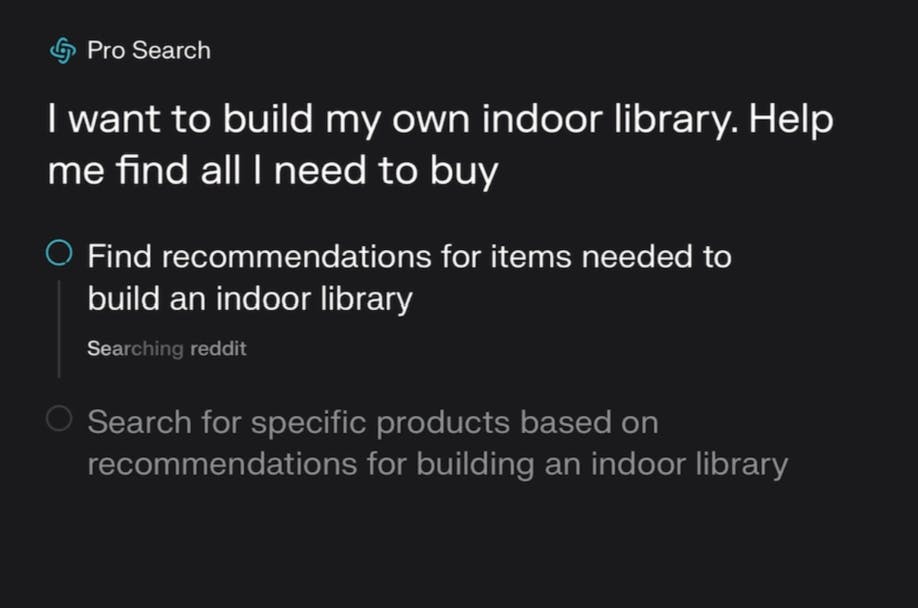
Image 5: Perplexity Shopping Experience
Authoritative sources
When it comes to recommending sources, Perplexity works on finding those that have the highest authority on the subject. This means that they favour sources with high factual density, a lot of citations and references to confirm their claims.
Additionally, it will favour those sources that provide needed information i.e. the response to the prompt within the first 50 words. For D2C brands, this means no “salesy” fluff, just concrete and useful product descriptions.
Freshness is a dominant signal for Perplexity, as with many other LLMs. More particularly, content updated within the last 2 hours earns 38% more citations than month-old content. [13] What is more, citations drop by 40% once content is older than 30 days. [14]
Merchant Program
Perplexity has its own Merchant Program, which allows D2C brands to add their product for free and thus integrate them directly into its ranking model. By adding your product to the Merchant Program, your brand's chances of being recommended will drastically increase.
Anthropic Claude
Unlike Gemini that has developed their Universal Commerce Protocol working on promoting fully agentic commerce Claude functions more as an analytical assistant that prioritises depth and technical density. It prioritises third-party validation (similar to ChatGPT) and user-generated content, both of which confirm the value of a particular product directly by its users.
Search Backend and Reputation
Claude uses Brave Search as its primary web retrieval backend. It also cites user-generated content and reviews 2 to 4 times more often than other models. [15]
In the food and beverage category, it cites user reviews nearly 10 times more often than Gemini, [15] which some users will find extremely valuable when comparing products. This is why you must ensure your brand has a strong presence on independent review sites to be cited and recommended by Claude. Additionally, it is extremely selective and reads nearly 40,000 pages for every one it cites. [5]
Model Context Protocol (MCP)
Claude uses an open standard called the Model Context Protocol to connect with external data.
This protocol allows Claude to communicate directly with your Shopify store or inventory systems. This integration enables the AI to manage products, process orders, and check live stock levels without human intervention.
LLMs Strategies or How to Get Cited
We've now covered some of the most important differences between top LLMs on the market. Seeing how each of them values sources in deciding which ones to recommend proves that a single strategy will not cover all of the models.
Based on their differences, here's a list of steps to complete to get recommended by Gemini, Perplexity, and Claude, along with ChatGPT, which we covered in our earlier blog post.
Google Gemini Checklist
- Daily syncronisation: Update your Google Merchant Center feed daily to ensure the Shopping Graph has accurate pricing and stock status, ensuring not only Gemini trusts you, but their users as well.
- Enable buying: Implement the native_commerce attribute in your feed to unlock direct purchase buttons in Gemini via their UCP.
- Audit robots.txt: Ensure the Google-Extended token is allowed to permit real-time grounding for Gemini responses.
- Populate identifiers: Complete all Global Trade Item Number (GTIN) and Manufacturer Part Number (MPN) fields, which Gemini uses to accurately categorise your products in the Shopping Graph.
Perplexity AI Checklist
- Structure content: Use the Answer-Evidence-Depth pattern for all blog and product educational content.
- Lead with answers: Place a self-contained answer in the first 50 words of every content section to improve citation and recommendation probability.
- Join the free Merchant Program: Register for the Perplexity Merchant Program to integrate your catalog into their curated recommendations and increase your chances of getting recommended.
- Increase freshness: Refresh your core content every 14 days to signal recency to PerplexityBot.
Anthropic Claude Checklist
- Brave indexing: Verify that your key product and review pages are indexed by Brave Search to ensure Claude can find them.
- Implement MCP: Use the Model Context Protocol to connect your Shopify store data directly to Claude for automated management.
- Focus on reviews: Build your brand authority on third-party review platforms that Claude uses for cross-verification.
- Chunk for extraction: Keep content paragraphs between 40 and 60 words to facilitate clean passage-level extraction.
Microsoft Copilot
- Bing Webmaster tools: Verify your domain and submit your XML sitemaps specifically to Bing. Copilot relies heavily on the Bing index, and manual submission via Bing Webmaster Tools ensures your latest product pages are prioritised.
- LinkedIn entity matching: Ensure your LinkedIn Company Page data (name, location, founded date, and industry) matches your website’s Organisation Schema exactly. Microsoft uses LinkedIn as a "trust anchor" to verify business entities.
- IndexNow Protocol: Implement the IndexNow API to notify Bing of content changes instantly. Copilot favors sites that push real-time updates over those waiting for a standard crawl.
OpenAI ChatGPT
- OAI-SearchBot permissions: Audit your robots.txt to specifically allow OAI-SearchBot. While GPTBot is for training, the search bot is what enables real-time grounding and direct citations in ChatGPT's search interface.
- Answe-first content: Place a concise, 50-word factual summary immediately following your H2 headings. ChatGPT’s retrieval model prioritises "liftable" text blocks that can be quoted directly without heavy paraphrasing.
- Information gain & facts: Aim for a high fact density (ideally one unique data point or statistic per 80 words). ChatGPT is increasingly "hallucination-averse" with trust being one of the most important factors for AI users everywhere, and prioritises sources that provide proprietary benchmarks or fresh survey data.
- Community presence: Participate in relevant Reddit communities and niche forums. OpenAI has deep data partnerships with Reddit, and ChatGPT frequently uses community consensus to verify claims made on your primary website.
Conclusion and Next Steps
In our previous article, we covered what to do to get recommended by ChatGPT, as the obvious leader in the LLM market, owning more than 60% of all AI traffic.
However, setting up your website to be crawled by ChatGPTs bots is only the foundation. While there are many similar steps equally valued by all models, there are also a lot of steps that need to be conducted separately if you want your brand to be recommended by different models and increase your chances of success.
If you want to start this process of optimising your website for different LLMs but don't know where to start, we can help guide you through by starting with our free GEO website audit, which will show you directly how LLMs see your products and what you need to do to change it.
FAQ
Frequently Asked Questions
Resources
[1] Graphite.io. "AI assistants now equal 56% of global search engine volume." 2026. https://searchengineland.com/ai-assistants-global-search-engine-volume-study-471118
[2] Gartner. "Gartner Predicts Search Engine Volume Will Drop 25% by 2026." 2024. https://www.gartner.com/en/newsroom/press-releases/2024-02-19-gartner-predicts-search-engine-volume-will-drop-25-percent-by-2026
[3] Adobe Digital Insights. "AI referrals vs. non-AI conversion rate holiday season 2025." 2026. https://www.omnibound.ai/blog/ai-search-statistics
[4] Princeton University. "Generative Engine Optimization." 2023. https://arxiv.org/html/2311.09735v3
[5] Statcounter. "AI Chatbot Market Share Worldwide March 2026." 2026. https://gs.statcounter.com/ai-chatbot-market-share
[6] Similarweb. "AI Chatbot Scorecard: Mid-2025 User Behavior." 2025. https://siteline.ai/blog/mid-2025-ai-chatbot-scorecard/
[7] Semrush. "The Citation Gap: Domain Overlap Across AI Platforms." 2026. https://whitehat-seo.co.uk/blog/ai-engines-comparison-citations
[8] Google Search Central. "Google AI Shopping 2026: Complete Guide for eCommerce." 2026. https://shinedezigninfonet.com/blog/google-ai-shopping/
[9] Mexico Business News. "Google Gemini Adds AI Shopping, Price Comparison Tools." 2026. https://mexicobusiness.news/cloudanddata/news/google-gemini-adds-ai-shopping-price-comparison-tools
[10] Growth Marshal. "730-Site AI Citation Study: The Impact of Schema Markup." 2026. https://fuelonline.com/seo/technical-seo-for-ai-crawlers-the-complete-robots-txt/
[11] Perplexity AI. "Perplexity Merchant Program: A Guide for DTC Brands." 2026. https://athoscommerce.com/blog/optimize-product-data-for-ai-shopping-engines/
[12] Ziptie.dev. "How to Optimize Content for Perplexity AI Citations." 2026. https://ziptie.dev/blog/how-to-optimize-content-for-perplexity-ai/
[13] Ferventers. "8-Step Framework to Get Cited in Perplexity AI." 2026. https://www.ferventers.com/blogs/how-to-get-cited-in-perplexity
[14] Semrush. "AI Search Statistics 2026: Traffic Quality and Conversion Rates." 2026. https://www.semrush.com/blog/ai-seo-statistics/
[15] XSeek. "Why Claude Rank Tracking is Different: Brave Search and Selectivity." 2026. https://www.xseek.io/blogs/articles/best-claude-rank-tracking-tools
[16] Profound. "Claude SEO: Understanding the Web Retrieval Backend." 2026. https://www.erlin.ai/blog/claude-seo
[17] Yext. "How ChatGPT, Perplexity, Gemini, and Claude Decide What to Cite." 2026. https://www.yext.com/blog/2026/03/how-chatgpt-perplexity-gemini-claude-decide-what-to-cite
[18] Anthropic. "Introducing the Model Context Protocol." 2024. https://modelcontextprotocol.io/docs/getting-started/intro
[19] NovaData. "Shopify AI Toolkit: Claude Code for Store Management." 2026. https://novadata.io/resources/news/shopify-ai-toolkit-claude-code-cursor-store-management-2026
[20] Google Developers. "Universal Commerce Protocol: Turning AI Interactions into Sales." 2026. https://developers.google.com/merchant/ucp
[21] Google Search Central. "Google-Extended: Controlling AI Training and Grounding." 2026. https://www.amicited.com/glossary/google-extended/
[22] The Digital Elevator. "AEO and GEO Pricing Guide 2026." 2026. https://thedigitalelevator.com/blog/aeo-and-geo-pricing-guide/
[23] WebFX. "Generative Engine Optimization Cost in 2026." 2026. https://www.webfx.com/blog/ai/generative-engine-optimization-cost/
[24] Presta. "Day 0-90: The GEO Integration Timeline." 2026. https://wearepresta.com/ecommerce-llm-the-2026-guide-to-engine-optimization-geo/
[25] Pilothouse. "DTC Scaling: Marketing Systems Integration Benchmarks." 2026. https://www.pilothouse.co/post/the-growth-bottlenecks-holding-back-scaling-dtc-brands-and-how-to-fix-them