




A D2C Website Optimisation Guide: SEO, AIO, GEO, and AEO
Search is changing. With 80% of queries ending without a click, D2C brands must pivot from SEO to a combination of GEO, AIO and AEO. Learn how to stay visible in a generative, zero-click world.
Customers are no longer clicking on your search results.
For the longest time, marketing efforts with the goal of positioning and ranking the brand as high as possible to get clicks and, ultimately, conversions, were all a part of SEO (Search Engine Optimisation).
If you wanted visitors, if you wanted customers to make a purchase, what you had to do first was take care of being among the top results in SERPs. Or at least be present on Page 1.
Now, we have a couple of new concepts along with the traditional SEO: GEO (Generative Engine Optimisation), AIO (Artificial Intelligence Optimisation) and AEO (Answer Engine Optimisation).
The three new ones have emerged and gained importance with the rise of AI. Not only LLMs, but also voice search and AI Overviews as a part of traditional organic search engines.
Their definitions, or rather, what each of them does, may sometimes seem complex to distinguish. Many professionals use them interchangeably or cover all of what they do combined by using only a single term. Some even put it all under the scope of traditional SEO.
Truth is, all of the concepts are still fairly new, and the terminology is yet to be completely defined. However, one thing is certain: they are all equally important for today's D2C brands.
You can no longer focus only on traditional SEO, since your customers’ behaviour has drastically changed in the last couple of years. In fact, we are seeing a complete overhaul of how customers discover products and how they interact with brands online. Traditional SEO, while still important, is no longer the sole driver of digital growth.
In this blog post, we will try to clearly distinguish between all of these marketing efforts, but, more importantly, we will show you why each of these requires your attention. Because, no matter what you call it, your strategy to get in front of people and become/remain visible needs to change and adapt to the changes that are already happening.
Customer Behaviour Data
In 2026, customers are no longer clicking the blue links in search results. Instead, the search results page is the final destination for 80% of your potential customers [Gartner, 2025].
This means that most shoppers get their answers or their recommendations after reading short snippets or AI overviews at the very top of search results, without ever visiting your website. The conclusion is: if you are not a part of those answers, you are essentially invisible.
Additionally, a large percentage of product discovery now happens as a part of user and LLM conversations. While, at least for the moment, agentic shopping has not fully taken over the industry (with giants like OpenAI scaling back their instant checkout effort after only six months), the users have quickly adapted to researching with the help of AI.
Changing your strategy from a strictly SEO kind of narrative is crucial. Changing the way you track metrics and the type of metrics you track also needs to change.
You will no longer focus solely on clicks, but will have to shift your focus to actual conversions. While your metrics might show more direct traffic and fewer organic traffic (as a consequence of AI Overviews or even LLMs), you will also see more conversions, fewer bounce rates and longer times spent on your website as a consequence of the traffic referred to you by AI.
This is why you have to understand what to focus on, what changes to make, why these changes matter, and what you will track after you make those changes.
Artificial Intelligence Optimisation
Artificial Intelligence Optimisation (AIO) is, in its definition, the widest of the three newly introduced strategies.
We define it as the strategic practice of making your content discoverable and favourable within all AI-driven systems. You should treat AIO as the overarching framework for managing how machines interpret your brand data.
Why is AIO important for D2C brands?
You should pay attention to AIO because, as we have already mentioned, the search results page is now a destination rather than a gateway.
AI Overviews now appear on 25.11% of all Google queries [3], and other statistics show that, because of this, over 80 per cent of searches now end without a click [2]. This zero-click reality means you must ensure your brand information is accessible to the AI systems that provide these answers to protect your brand presence, as around 38% of consumers now use tools like ChatGPT or Perplexity on a monthly basis as a part of their shopping journey [4].
How to work on AIO as a D2C brand?
We recommend a technical approach to ensure machines can read your site without errors.
- Update your robots.txt file to allow access for GPTBot, ClaudeBot, and PerplexityBot. These bots collect the data used to cite your products in AI conversations.
- Create a markdown file at your domain root (yourstore.com/llms.txt) to provide a machine-readable roadmap of your site. Include a concise summary of your business and links to your most authoritative product guides.
- Implement the Organisation schema with the sameAs property to link your official social profiles and Wikipedia pages. This helps AI systems verify your brand identity through a centralised knowledge graph.
With an engineering team in-house, this should not take too long and will have an immense impact on your AI visibility.
Updating your robots.txt file, while a fairly simple task, is often one of the most crucial steps in gaining AI visibility. Many websites have not made any updates to these files since making their first website launch and many developers have blocked these crawlers once AI started gaining on popularity to protect themselves in a way. However, for D2C brands, this is now doing more damage than protection.
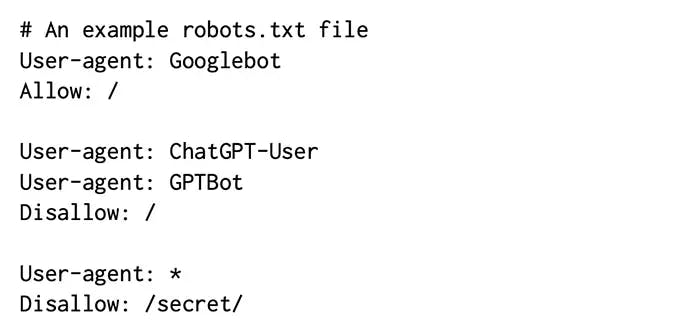
Image 1: Example of robots.txt file blocking AI bots, Source: EurekaAlert
Generative Engine Optimisation
Generative Engine Optimisation (GEO) refers to a part of optimising for generative models. We use this discipline to influence how AI systems like ChatGPT or Gemini cite and reference your brand in their generated summaries.
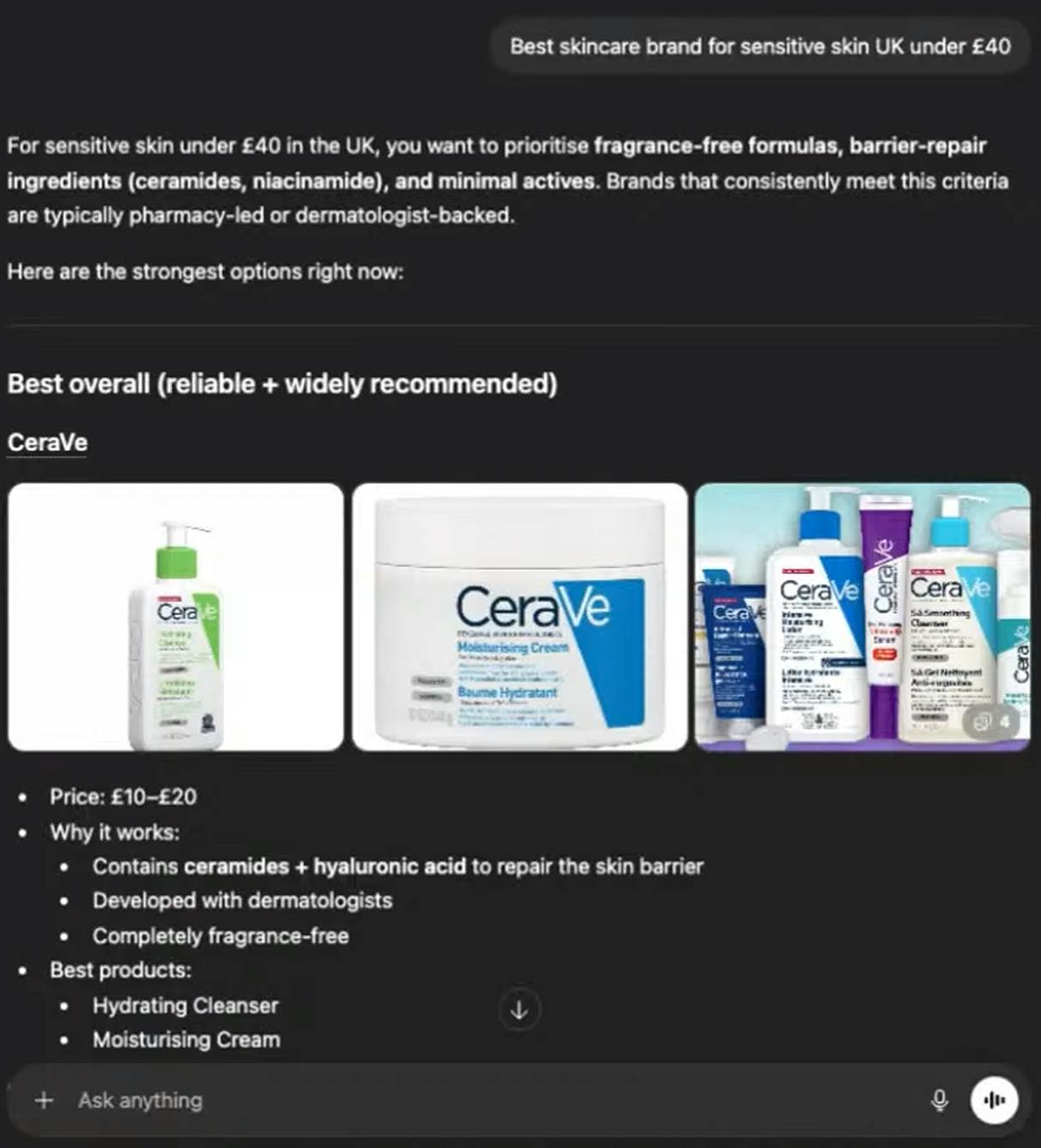
Image 2: Example of a successful GEO strategy
Why is GEO important for D2C brands?
You should prioritise GEO because it drives significantly higher quality traffic than traditional search. First, there's the volume, with AI search traffic increasing by 527% in a single year [9]. Second, there's the quality of AI referral traffic, which converts at a rate of 14.2 per cent. This is almost five times higher than the 2.8 per cent conversion rate seen in traditional organic search [3, 9].
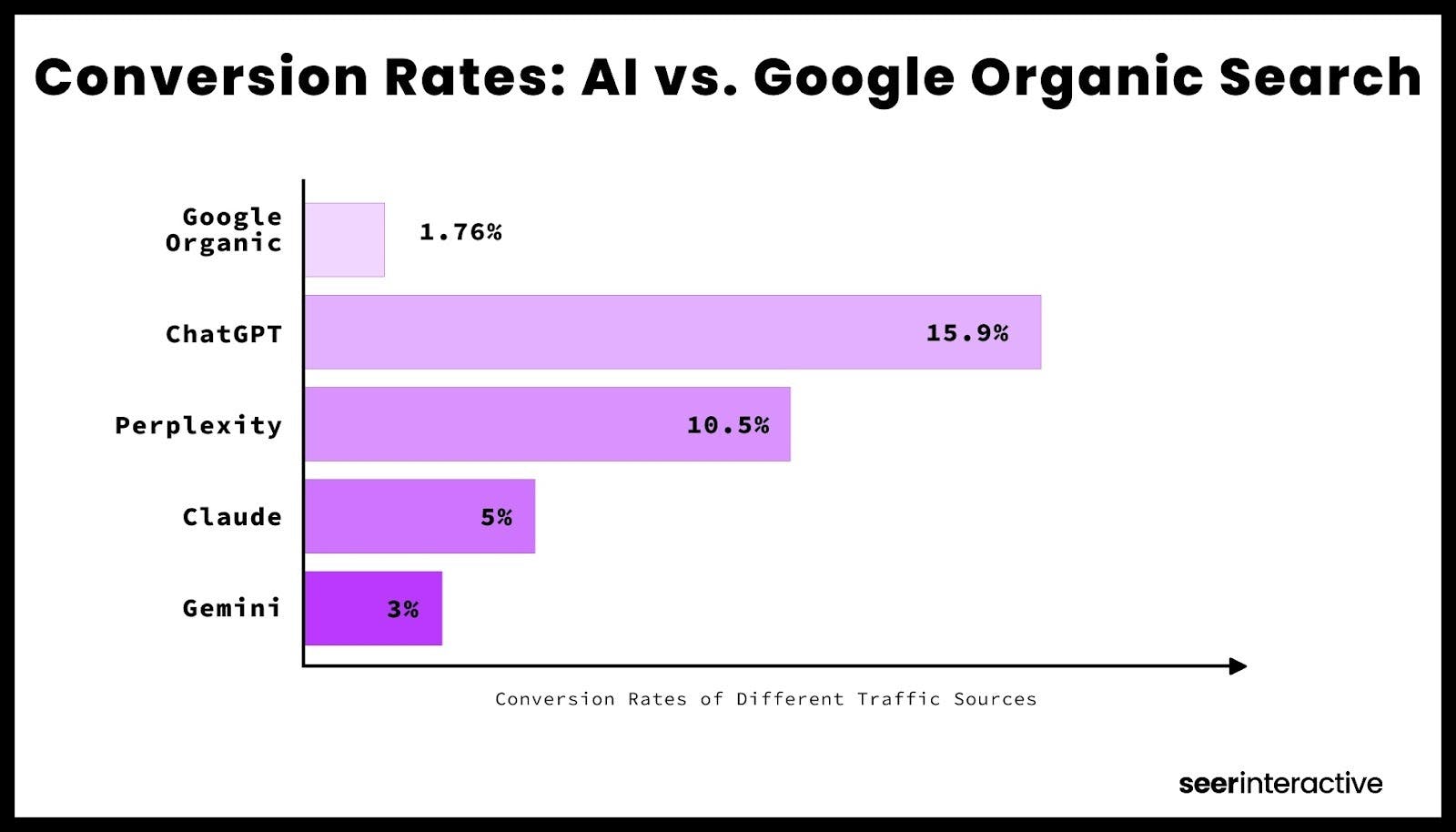
Image 3: Conversion Rates Comparison, Source: SeerInteractive
Users arriving from AI recommendations are pre-qualified and ready to act. They are way further in the funnel as their research and comparison have already been done for them. If they arrive on your website, they are more likely to convert.
You should also take into account the sheer volume of online users interacting with LLMs, with ChatGPT, which holds 60% of all AI traffic, having more than 900 million users since February [FirstPageSage, 2026].
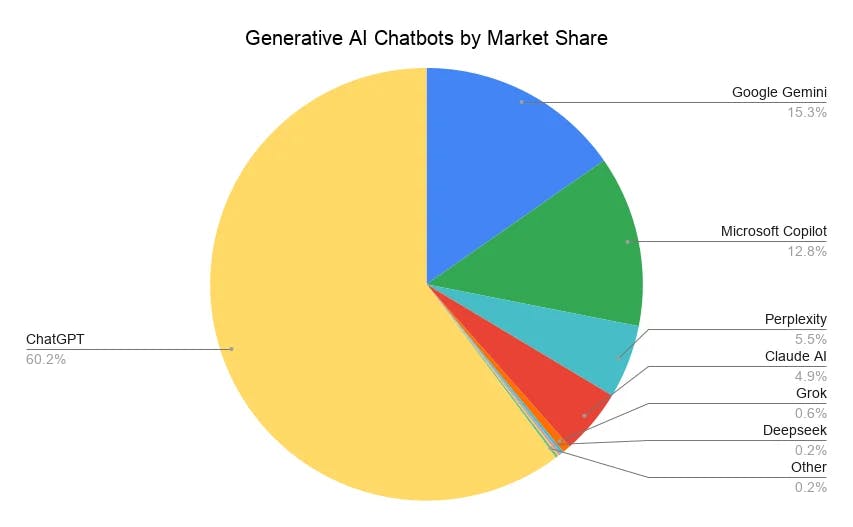
Image 4: Generative AI market share, Source: FirstPageSage
How to work on GEO as a D2C brand?
Success in GEO requires structuring your data for extraction and real-time accuracy.
- Place a concise summary of 50 to 100 words immediately after your page title. AI models weigh the content at the top of a page more heavily when they build summaries.
- Use an SFTP push model to deliver your catalogue to OpenAI. The ChatGPT product feed accepts updates every 15 minutes. This 96x increase in frequency ensures your pricing and inventory are always accurate.
- Include unique data and verifiable statistics on your pages to increase your citation probability by up to 41 percent [2, 10].
- Add the is_eligible_search and is_eligible_checkout flags to your data feed. These flags control whether your products can be discovered and purchased directly inside the chat interface.
- Use factual and authoritative language instead of marketing fluff to help AI models trust your content.
Answer Engine Optimisation
Answer Engine Optimisation (AEO) is the practice of structuring your content to be selected as a direct answer. It focuses on features like Google snippets and voice search responses from assistants like Siri or Alexa.
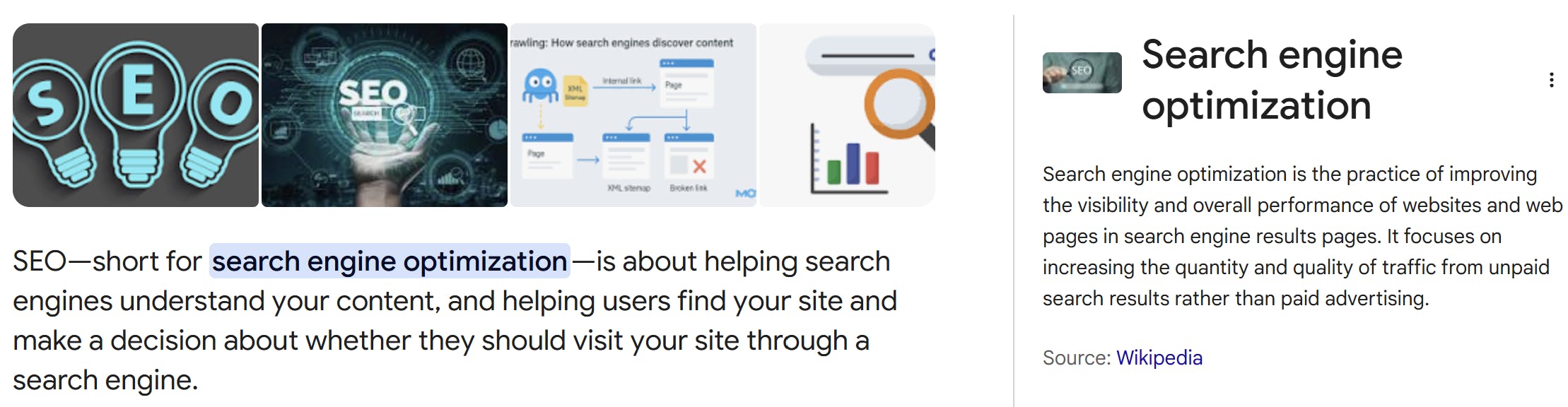
Image 5: Example of a Google Snippet
Why is AEO important for D2C brands?
You should use AEO to capture the growing number of voice-based queries. Voice search now accounts for roughly 50 per cent of all searches [1].
You should also note that featured snippets appear in over 12% of queries [1], and once they do appear, they can reduce traditional organic click through rates by as much as 58% [5].
Being the recommended answer establishes immediate trust with your audience and even increases your chances of them visiting your website after reading the snippet if there is more they need to learn about or see.
How to work on AEO as a D2C brand?
You must format your content to be easily extracted as a standalone response.
- Use JSON-LD markup to label your question-and-answer pairs. This removes the interpretive burden from the AI engine. Each page should feature five to ten questions to establish topical authority. Proper implementation of FAQ schema can increase your snippet inclusion rate by 40-60% [8].
- Limit your primary answers to 40 or 60 words. This is the ideal length for extraction into featured snippets and voice responses.
- Use H2 and H3 headings formatted as the actual questions your customers ask (e.g. the H2 above this paragraph). This alignment helps AI systems match your content to conversational search intent.
While AI is unquestionably smart, your goal is to make its job easier and help it identify and categorise different parts of your website, while at the same time making them ultimately useful for your target audience and your potential customers, which is precisely what these steps achieve
Comparison
Feature | SEO (Search Engine) | AIO (Artificial Intelligence) | GEO (Generative Engine) | AEO (Answer Engine) |
Primary Goal | Rank #1 in blue links to drive clicks. | Overarching framework for machine-readability. | Get cited/recommended in AI summaries. | Be selected as the single direct answer. |
The "User" | Human searchers browse lists. | All AI-driven systems & web-crawlers. | LLMs (ChatGPT, Gemini, Perplexity). | Voice assistants (Siri/Alexa) & Snippets. |
Key Metric | Click-Through Rate (CTR) & SERP Position. | AI Visibility & Entity Authority. | Mention Rate & AI Referral Conversions. | Snippet Ownership & Voice Query Share. |
Core Philosophy | Keyword matching & Backlinks. | Managing how machines interpret brand data. | Extraction-ready summaries & real-time data. | Intent-based Q&A & Natural Language. |
Technical Lever | Page speed, Metadata, Keywords. | robots.txt, llms.txt, Organisation Schema. | Product Feeds (SFTP) & Feature Flags. | FAQPage Schema & 40-60 word answer blocks. |
User Intent | Discovery & Comparison. | Data crawling & Brand verification. | Pre-qualified research & Synthesis. | Immediate factual resolution. |
Conv. Rate | 2.8% (Traditional Organic) | Indirect (Supports all AI discovery) | 14.2% (Highest Intent/Pre-qualified) | High (Immediate trust/brand authority) |
Table 1: Optimisation strategies comparison
How to read this table for your strategy:
- AIO is your foundation: If your robots.txt or llms.txt are wrong, the other two (GEO/AEO) cannot happen because the bots are locked out.
- AEO is your utility: This captures the 50% of users using voice or looking for a quick "Zero-Click" fact.
- GEO is your closer: This is where the high-conversion magic happens. It’s for the user who has finished "searching" and is now "deciding" based on the AI's recommendation.
- SEO is your legacy: Still relevant for volume, but no longer the leader in conversion or "Zero-Click" visibility.
Conclusion
Tracking clicks and measuring success of your strategy by focusing solely on your position within search results is a strategy inevitably leading to failure. User behaviour has changed drastically influenced by AI.
Organic traffic still matters, which means SEO should not be removed from your marketing strategies. Instead, it should be combined with all the other AI related strategies. Their names don't matter as much as their explanations or their importance. You do not need to learn to recite what each one is or be too careful when naming one or the other when presenting your new strategy to the board. What you do need to do is be able to explain how these new strategies will affect your brand's visibility and positively impact your most important metrics.
FAQ
Frequently Asked Questions
References
[1] Similarweb. "2026 Zero-Click Search Statistics: The Rise of AI Overviews". Similarweb Blog. 2026. https://www.similarweb.com/blog/marketing/seo/zero-click-searches/
[2] Fishkin, Rand. "2024 Zero-Click Search Study". SparkToro. 2024. https://sparktoro.com/blog/2024-zero-click-search-study/
[3] Muhammad Rauf. "The Zero-Click Search Apocalypse: How AI Answers Are Devouring the Web by 2026". Medium. 2025. https://medium.com/@muhammad-rauf-writer/the-zero-click-search-apocalypse-how-ai-answers-are-devouring-the-web-by-2026-3aa177cb7c26
[4] Averi AI. "10 SEO Trends for 2026 That Will Actually Impact Your Startup's Growth". Averi AI. 2026. https://www.averi.ai/how-to/10-seo-trends-for-2026-that-will-actually-impact-your-startup-s-growth
[5] ATAK Interactive. "SEO vs GEO vs AEO vs AIO: The Complete Guide to Optimization in the AI Era". ATAK Blog. 2026. https://www.atakinteractive.com/blog/seo-vs-geo-vs-aeo-vs-aio-the-complete-guide-to-optimization-in-the-ai-era
[6] Ladybugz. "The Complete Guide to SEO vs AEO vs GEO: Search, Answers & AI Optimization for 2026". Ladybugz. 2025. https://www.ladybugz.com/seo-aeo-geo-guide-2026/
[7] Streamkap. "Real-time Data for AI Agents: Why Your Agents Need Fresh Data Infrastructure". Streamkap. 2026. https://streamkap.com/resources-and-guides/real-time-data-for-ai-agents
[8] BigCommerce. "LLMs.txt is your AI translator for ecommerce". BigCommerce Blog. 2025. https://www.bigcommerce.com/blog/ecommerce-llms-txt/
[9] VortexIQ. "llms.txt for Ecommerce: Why Your Store Needs One". VortexIQ. 2026. https://www.vortexiq.ai/blog/llms-txt-ecommerce
[10] Frase. "FAQ Schema for AI Search, GEO, and AEO". Frase. 2026. https://frase.io/blog/faq-schema-ai-search-geo-aeo
[11] Princeton University. "Generative Engine Optimization: A New Framework for AI Search". Princeton Research. 2024. https://www.similarweb.com/blog/marketing/geo/what-is-geo/
[12] OpenAI. "Agentic Commerce Protocol (ACP) Open Standard". AgenticCommerce.dev. 2025. https://www.agenticcommerce.dev/
[13] Alhena AI. "ChatGPT Shopping Product Feed Guide: The 15-Minute Refresh Cycle". Alhena. 2026. https://alhena.ai/blog/chatgpt-shopping-product-feed-guide/
[14] JetherVerse. "Advanced Schema Markup and AI Optimization 2026". JetherVerse. 2026. https://www.jetherverse.net.ng/blog/advanced-schema-markup-ai-optimization-2026
[15] Checkout.com. "The Difference Between OpenAI ACP and Google UCP". Checkout.com. 2026. https://www.checkout.com/blog/openai-acp-google-ucp-difference
[16] Google Cloud. "The invisible shelf: Retail and CPG agentic commerce". Google Cloud Transform. 2026. https://cloud.google.com/transform/the-invisible-shelf-retail-cpg-agentic-commerce-how-to