



The 2026 Discovery Crisis: Why D2C Brands are Moving from SEO to GEO
Discover how Generative Engine Optimisation (GEO) can drive 14.2% conversion rates. We break down the Zero-Click search trend and provide a 4-step audit to fix your AI invisibility.
SEO (Search Engine Optimisation), GEO (Generative Engine Optimisation) and AEO (Answer Engine Optimisation) have now been co-existing for a while.
While there are numerous social media posts and articles saying SEO is now dead with the rise of GEO and AEO, we can safely say it is not the case. While all three are largely different in the way they function, and the process of being picked in each is often different as well, all are still of great relevance for D2C brands.
However, there is a growing emergence of putting GEO and AEO as a top priority within the company, in order to “rank” well in LLM answers.
What does this mean for D2C brands? It's fairly simple. It means it is time for a change of approach, a change in priorities and focus.
Why is it important? User online behaviours have changed, and the way they research and the responses they prefer have also changed drastically. This makes it crucial for your brand to be where your target audience is – and they are in the world of AI. Either searching via LLMS, or using Google search, and still ending up with an AI overview.
What Is GEO and AEO, and Why Are They Important for D2C Brands?
For years, the number one priority for most brands was to rank the highest within SERPs (Search Engine Results Pages). To have people click the link and visit your page. This was SEO (Search Engine Optimisation).
Appearing at the top would often also require brands to pay to appear as the top result when people are searching for, let's say, “top-quality hiking equipment sale”.
In recent years, or, more precisely, months, this keyword-based search has been getting replaced by an intent-based conversational search.
Users no longer think in keywords. They ask questions, and AI does all the work for them and gives them answers.
GEO (Generative Engine Optimisation) has become a fundamental discipline for brand survival. When a user does their research, a brand is either cited and offered as a solution in the AI's synthesised report – or they basically do not even exist, as they remain completely invisible.
Modern AI engines, unlike the traditional search engines, do not simply list a number of options. What they do instead is read, compare, and recommend, helping the users get quicker, more reliable, more personalised, and even simpler solutions for their inputs.
While traditional organic search traffic still tops that referred by AI when it comes to volume, it is slowly getting replaced by it. In fact, according to Semrush, results generated by AI will completely overtake organic search results by 2028.
More importantly, it is not just about being present in AI results. AI-referred visitors convert at a rate of 14.4%, which makes for an impressive (although certainly not a shocking one) increase in its importance in a short amount of time since its appearance. When it comes to organic search, the average conversion rate is 2.8% [Semrush, 2026].
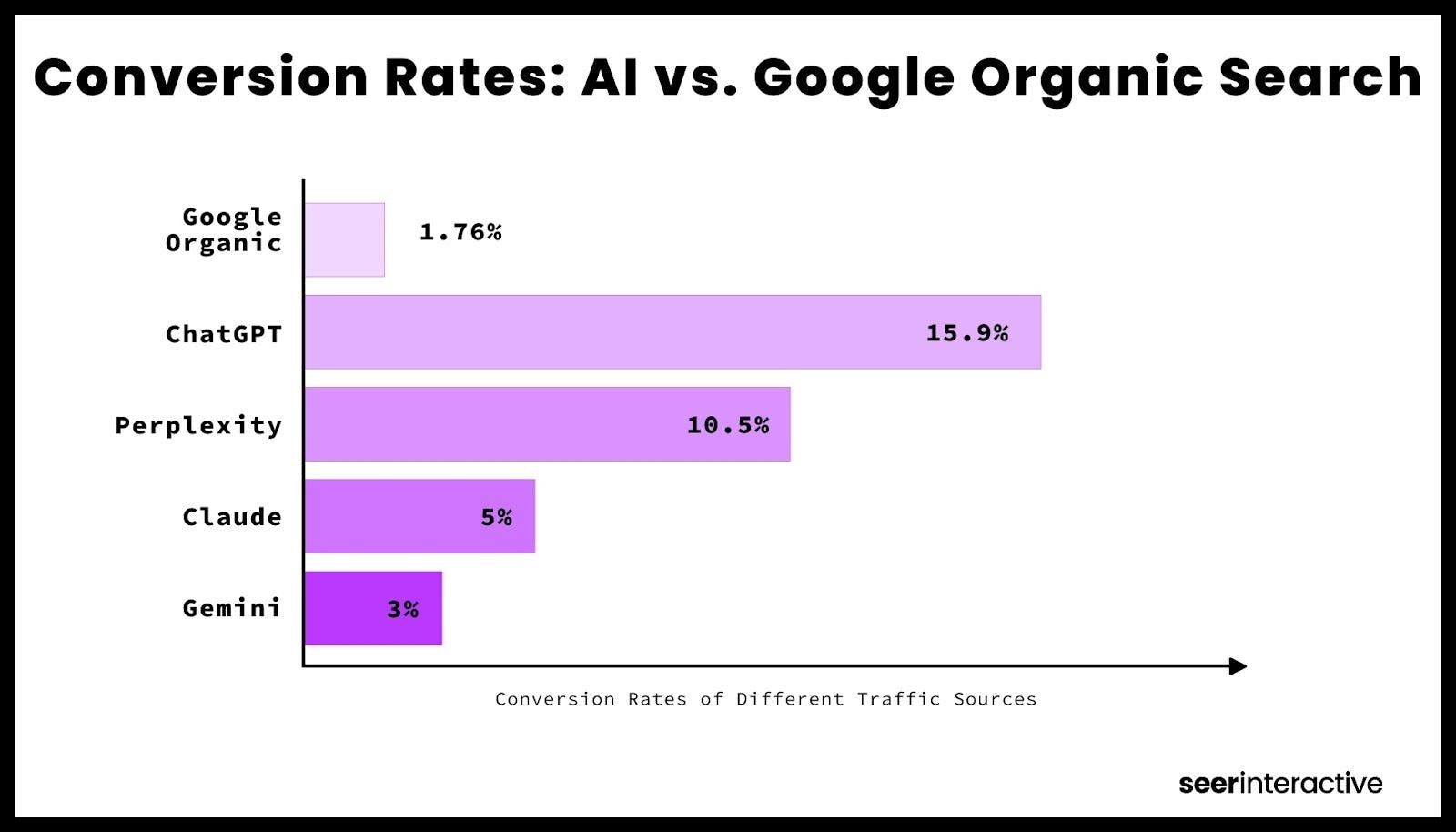
Image 1: Conversion Rates AI vs Organic, Source: SeerInteractive
This quite large difference and increase in conversions from AI-referred users is not surprising, precisely due to the type of result the user sees.
With AI answers, the research has already been done (although not by the user), which means that the result the user gets is (highly) likely a more accurate solution to their inquiry. This means that, once they visit the brand's website, their intent to convert is already higher, as they are there with a far more concrete purpose.
AEO (Answer Engine Optimisation) is focuses on optimising content to be the single, direct answer extracted by voice assistants (like Alexa or Siri) or Google’s traditional Featured Snippets. It’s about structuring data so an algorithm can easily pull an exact quote or list from your page.
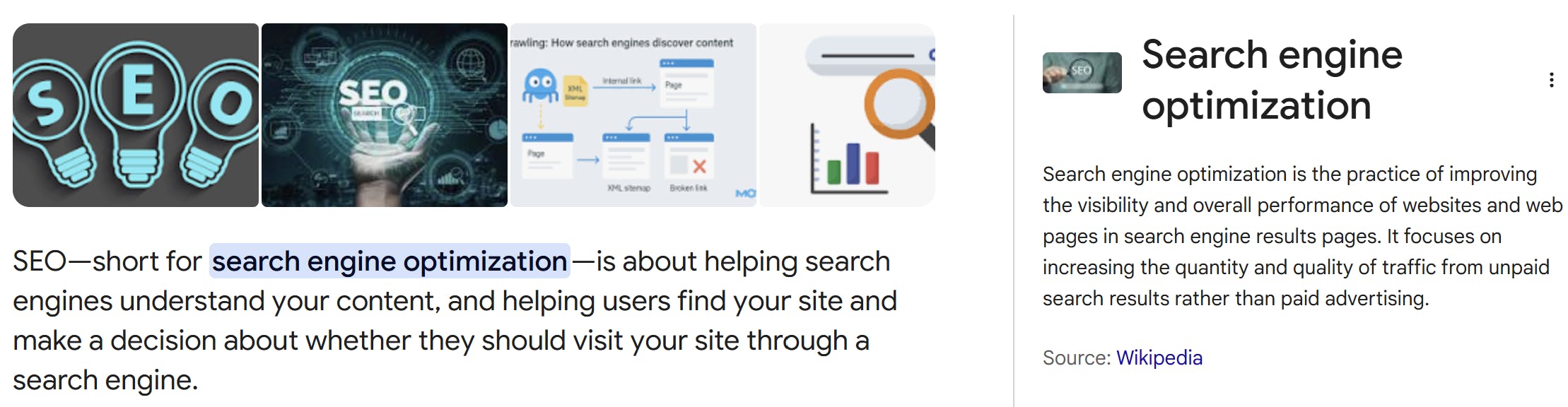
Image 2: Google Snippet
Traffic Source | Conversion Rate | Value Multiplier | Average Session Duration |
Traditional Organic Search | 2.8% | 1.0x (Baseline) | 182 Seconds |
AI-Referred Traffic | 14.2% | 4.4x | 251 Seconds |
Paid Search (Traditional) | 3.5% | 1.25x | 165 Seconds |
AI-Cited Paid Placements | 6.1% | 2.1x | 210 Seconds |
Table 1: Metrics based on traffic source
Zero-Click Search
The shift toward zero-click behaviour has transitioned from a trend to a structural reality of the search interface.
By 2026, more than 80% of all searches concluded without a single click to an external website. According to Boostability, roughly 60% of all desktop searches and 77% of mobile searches now end without a click.
For informational queries (e.g., "What is the best fabric for running?"), organic click-through rates have plummeted by 61–65% since 2024 [Fuel Online, 2026].
This phenomenon is driven by the expansion of AI Overviews, which fulfil both the informational and transactional intent directly on the Search Engine Results Page (SERP) and don't even require the user to make any further advancements. So, when an AI Overview (AIO) appears, the zero-click rate jumps to 83%.
Even though the user's first step was to enter an inquiry in the traditional search bar (although probably not with a traditional set of keywords), the information they needed was given to them as a snippet at the top, disregarding all the sponsored and top links appearing underneath it.
How Zero-Click Search Hurts D2C Brands
While the first instinct may be that the zero-click search issue does not affect D2C brands, because the users you are expecting need to make a conversion, and simply receiving information the AI overview gives them, the reality is a lot more complex than that.
Traditionally, D2C brands used informative and educational content to capture users early in their journey and then pixel them for retargeting later on.
With content such as “How to choose the right mattress,” “The best places to visit this Summer,” “The best material for babies with skin rash”, that you used to capture the interest of your audience, AI can now make all your efforts futile:
1. Losing potential users mid-funnel
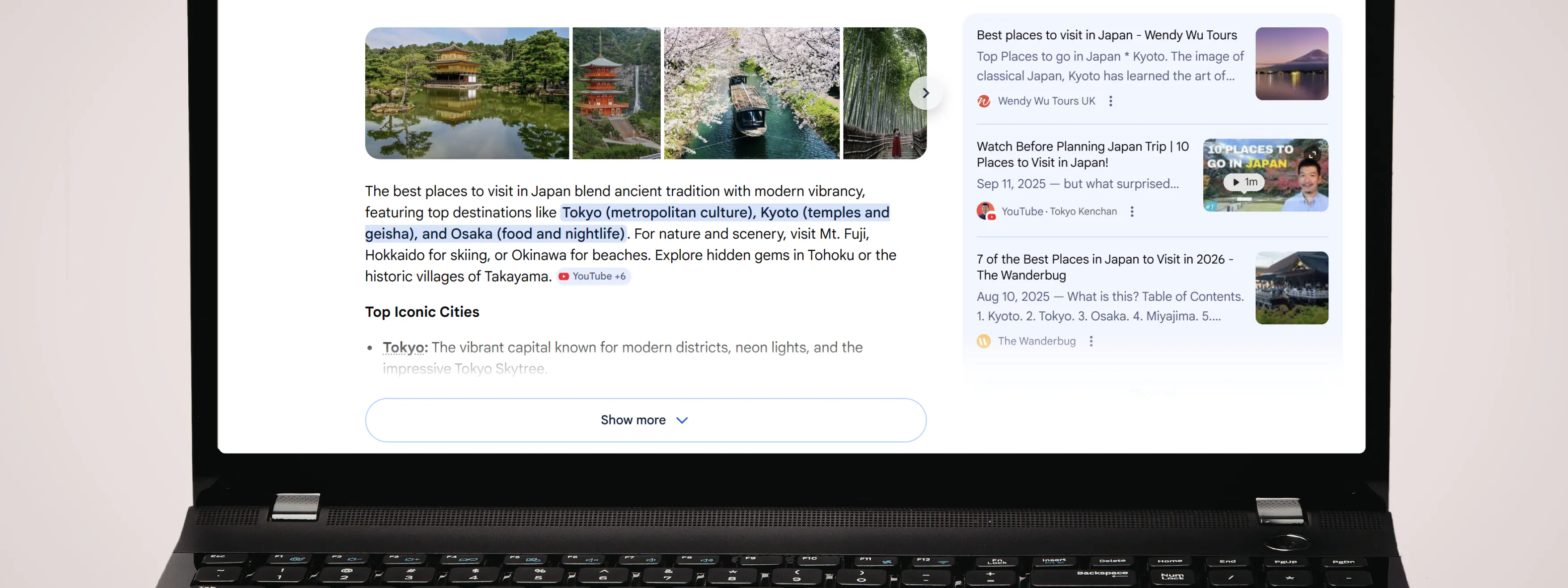
AI Overviews simply uses the information you provided and summarises it so the user never actually has to visit your website.
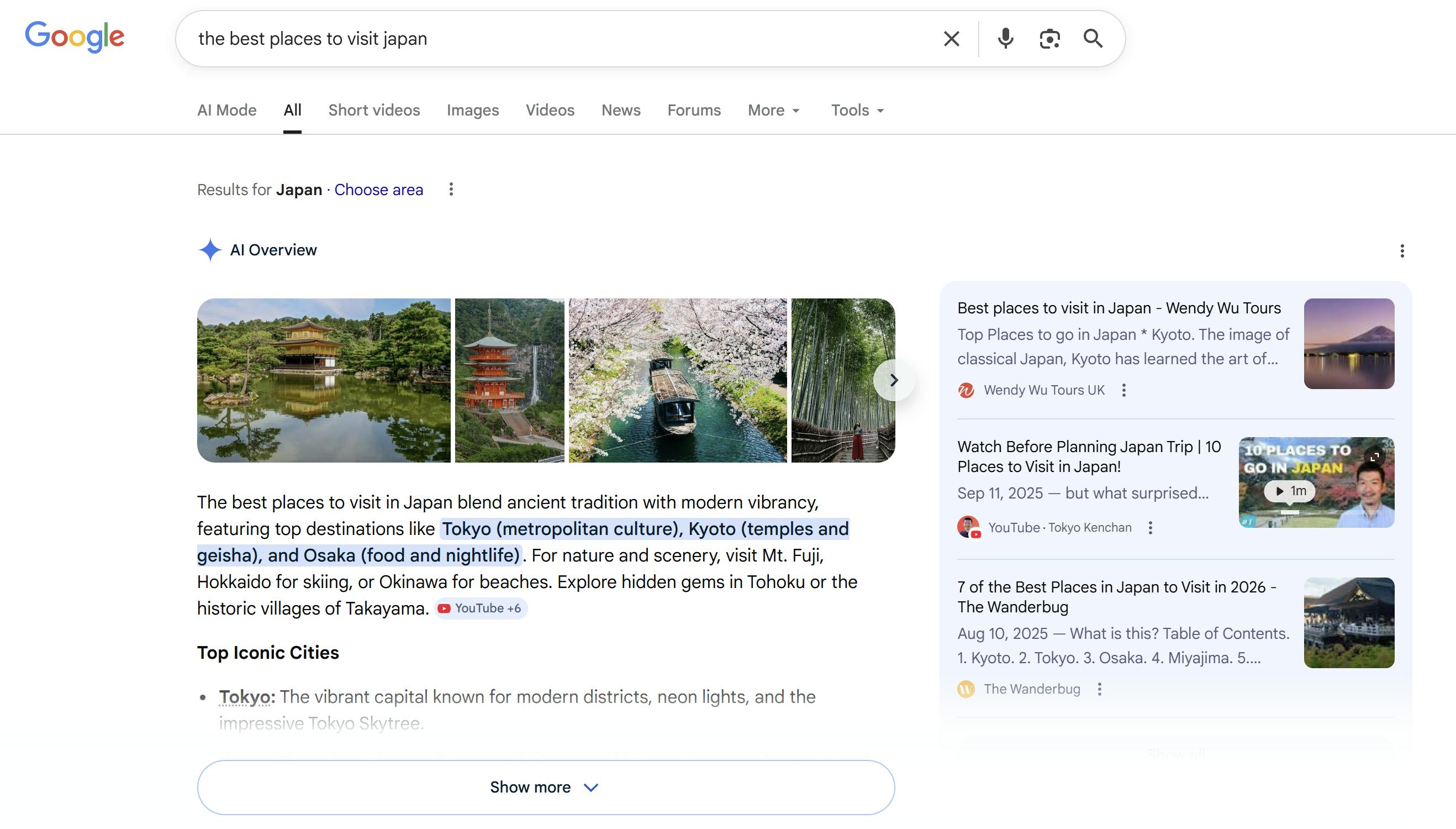
Image 3: Google AI Overview Example
You not only lose the visitor, but you also lose the chance to collect first-party data, such as cookies or emails, drastically reducing the size of your remarketing audience.
2. Losing attribution
After reading the summary provided by AI, the user might still later on visit your website by searching for you directly. However, the issue that appears here is that you will then see a surge in direct traffic, with a loss in organic traffic, which negatively impacts your marketing efforts and strategies since the data and the metric you would be presented with would not actually be true.
3. Not being a part of the comparison process
While users originally conducted their research and discovery alone, it was easy to be a part of their process of comparing and deciding on the best option.
However, if your GEO strategy is lacking and you are not appearing in AI results, you will simply not be a part of that comparison any more. If you are not there, you are invisible, losing not only the click.
Preparing for the Zero-Click Trend
Obviously, the trend cannot be stopped, so you’ve got to adapt to it. You can do the following:
1. The 134-Word Rule
AI models look for "extractable" facts. To be the one cited in a zero-click answer:
- Write a 40–60 word "definition paragraph" immediately under your H2 headers.
- Example: Don't start a post with "In the world of fashion..."; start with "A maxi dress is defined by..." This makes it easy for the AI to "steal" your text and credit your brand.
2. Optimise for "assisted conversions"
Stop measuring success by clicks and start measuring Branded Search Lift.
- If a user sees your brand cited in an AI Overview for "best hiking boots," they might not click then, but they will search for "[Your Brand] boots" an hour later. While it will cause a drop in organic search revenue, you will just have to change your approach and prioritise other metrics that do prove that your other strategies (primarily your GEO strategy) are being effective. SEO might not be working for this, but GEO is.
3. Create "un-summarisable" content
AI is great at facts but bad at lived and personal experiences.
- Instead of writing "How to style a scarf," write "How I styled our Silk Scarf for 5 different weddings—with real photos." AI can't replicate your original imagery or your founder's personal "voice," which forces a click from users who want the human aesthetic.
Impact on Shopping and Travel Queries
As a part of this shift, shopping and travel queries have been the most affected ones out of all the ones belonging to D2C brands.
AI Overviews now appear on approximately 23.2% of retail queries and 31.4% of travel-related searches. When these overviews are present, the traditional organic click-through rate (CTR) for top-ranking pages collapses, with some studies showing declines of 34.5% to 64.4% [SeoProfy, 2026].]
Query Type | Traditional CTR (Pos #1) | CTR with AI Overview | Net Visibility Loss |
Informational (e.g., Tokyo) | 32.1% | 11.4% | -64.5% |
Transactional (Linen Dresses) | 18.5% | 12.0% | -35.1% |
Commercial (Rimowa vs Away) | 24.8% | 8.9% | -64.1% |
Branded Navigational | 54.0% | 46.0% | -14.8% |
Table 2: Drop in CTR across Retail and Travel
We’ve already written about the changes brought to the travel industry with the introduction of conversational AI models, as well as AI-powered searches, which no longer rely on using simple keywords.
AI has quickly become the go-to source and destination for all the different stages of booking travel.
Journey Stage | Traditional Behaviour (2024) | AI-First Behaviour (2026) |
Discovery | Searching "Best hotels in Amalfi" | "Find me a design-forward hotel with a vinyl suite in Italy" |
Research | Reading 10 blog posts and TripAdvisor | AI Overview summarises the 5 top sources with pros/cons |
Personalization | Calling a travel agent for custom needs | Real-time AI chat routes to human support only for final confirmation |
Booking | Clicking through to Expedia/Booking | AI agent books directly via API or agentic storefront |
Table 3: Travel Booking with AI
Defining the 2026 KPIs
The distinction between Share of Voice (SoV) and Share of Model (SoM) is central to the modern marketing dashboard:
Share of Voice (SoV)
In the AI context, this measures a brand’s share of total mentions and citations within a competitive category across generative responses.1 It is a quantitative measure of visibility.
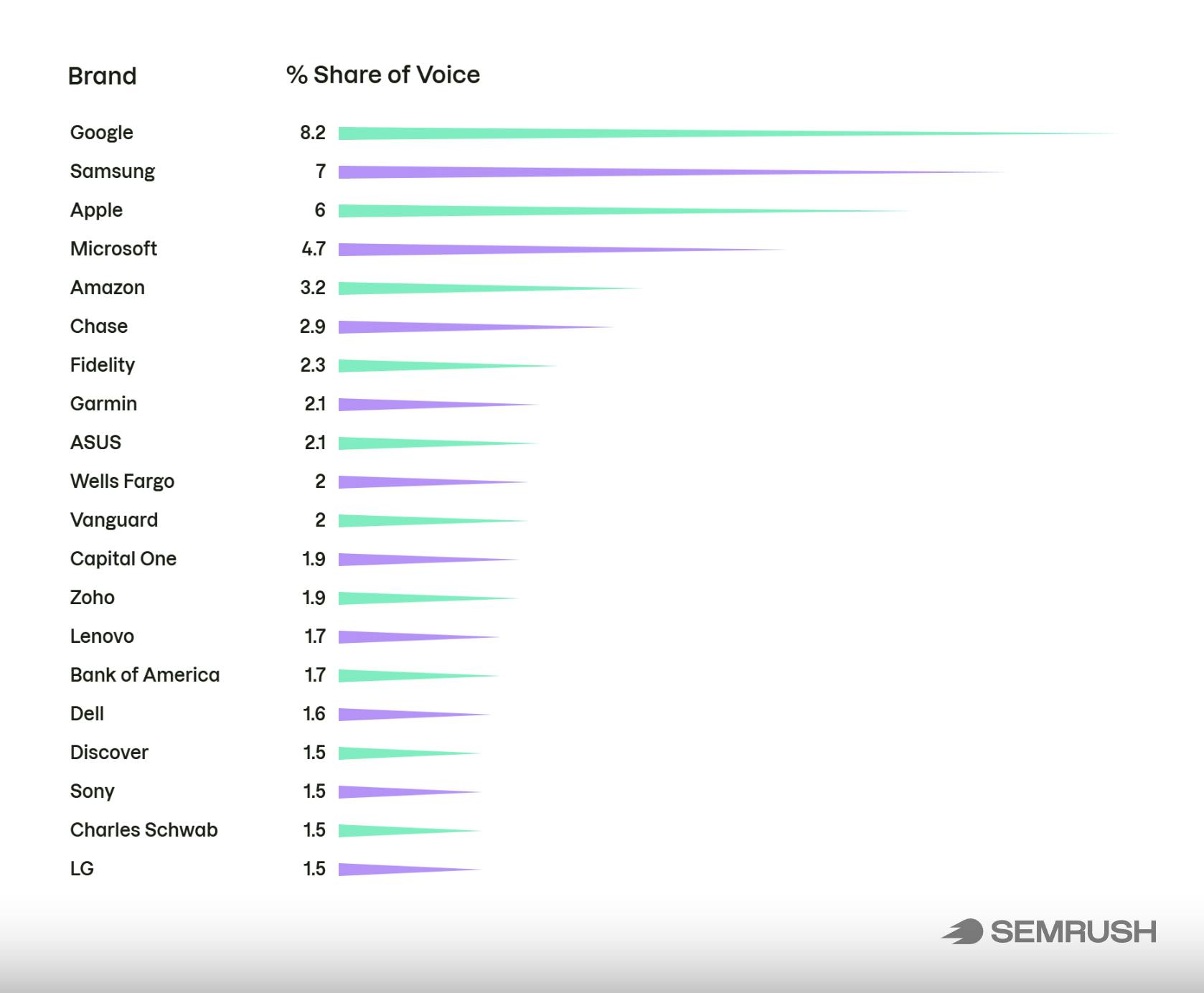
Image 4: Share of Voice Example, Source: Semrush
Share of Model (SoM)
Formally introduced by researchers at INSEAD in mid-2025, SoM measures "how often, prominently, and favourably brands appear in AI-generated responses".1 It is both quantitative and qualitative, accounting for the "Sentiment Weight" and "Entity Authority" that the model assigns to the brand.
To measure SoM, brands must track Semantic Proximity, i.e. how often the brand name appears when users search for high-intent category keywords.
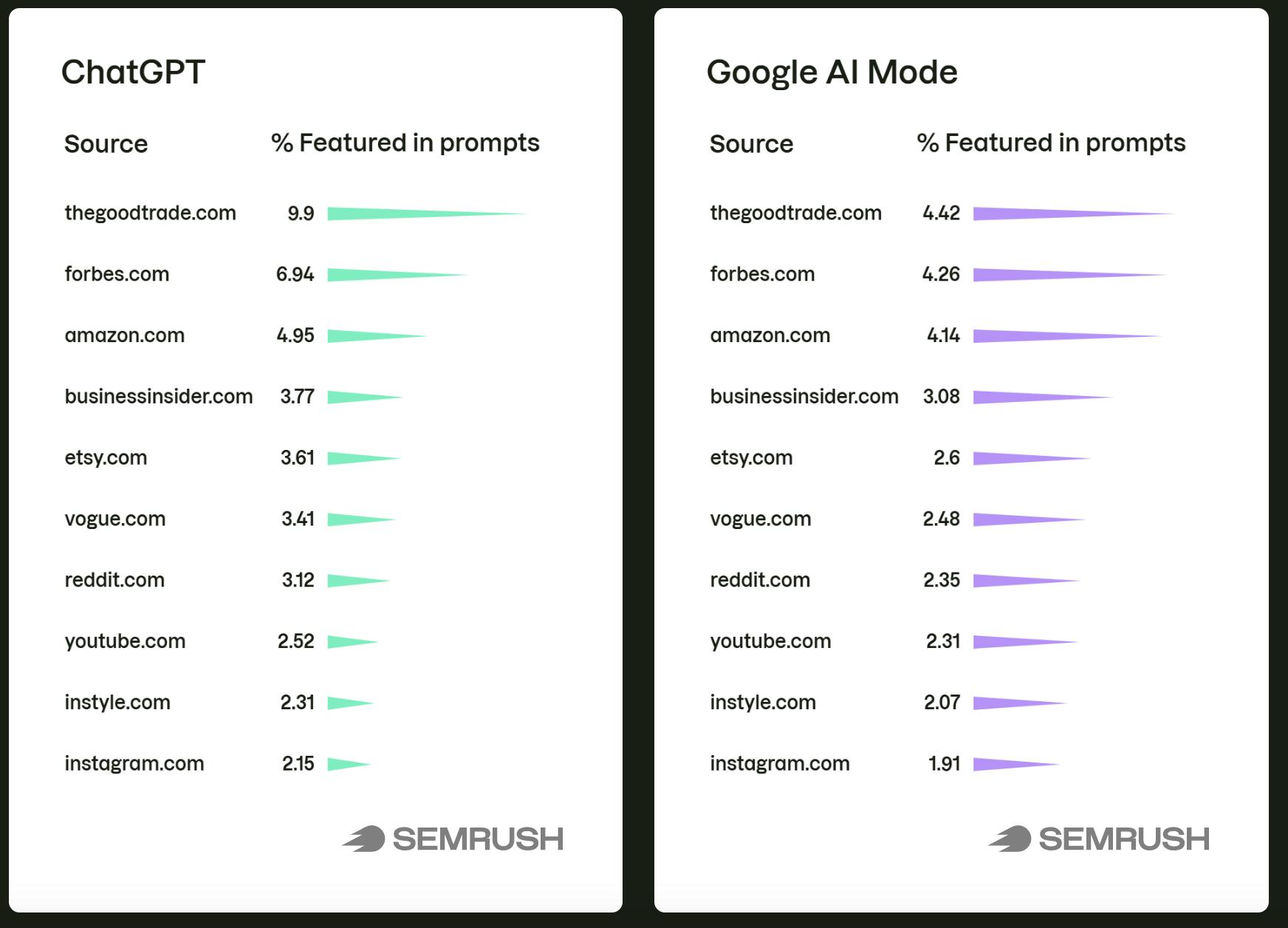
Image 5: Top Ten Brands in Fashion and Apparel, Source: Semrush
GEO Website Audit
The 4-Step GEO Gap Audit
- Test relevant prompts: Prepare a set of 30-50 prompts your ICP would ask an AI. The same approach as with SEO and keywords. Run these prompts weekly across GPT-5, Gemini 2.0, and Perplexity.
If a competitor is cited in >50% of these prompts and your brand is in <20%, there is a "Share of Model" deficit. - Analyse source attribution: When an AI cites a competitor, identify the source of that information. Is the AI pulling from the competitor’s site, a Reddit thread, a G2 review, or a news article?
This reveals the competitor’s authority Vector. If they own the narrative on Reddit, your link-building on blogs will not displace them in that particular case. - Analyse comparative sentiment : Use sentiment tracking tools to analyse how the AI describes the competitor vs. your brand.
Being cited as a "budget alternative" is a different market position than being cited as the "industry standard". - Map entity proximity: Use Ahrefs AI or similar tools to map the semantic distance between your brand name and core category entities.
If the competitor is mathematically "closer" to the entity "Eco-friendly Travel" in the model's vector space, they will win the recommendation even without a superior link profile.
Conclusion
It is clear that the traditional "click-and-convert" model has matured into a sophisticated conversational ecosystem. For D2C brands, the challenge is no longer just about appearing in a list of links, but about becoming an integrated part of the AI’s recommendation logic. While SEO provides the necessary foundation for web visibility, GEO ensures that your brand carries the authority and "machine-readability" required to win the endorsement of generative engines.
Moving forward, success will be measured not just by the volume of traffic reaching your homepage, but by your Share of Model and the depth of your entity authority. By embracing "unsummarisable" content and technical standards like structured data, brands can bridge the gap between being a mere result and being the chosen solution.
In our next blog post, we will dive deeper into the technical architecture required to turn your website into a high-performance data node for the AI-first world.
Frequently Asked Questions (FAQ)
1. Does GEO replace traditional SEO for E-commerce? No. SEO remains vital for "navigational" searches (users looking for your specific URL) and lower-funnel shopping. GEO is an additive strategy that focuses on the discovery phase where AI agents and Overviews now mediate the user's decision-making process.
2. What is the biggest technical blocker for AI visibility? JavaScript-heavy client-side rendering is a major issue. Many AI crawlers prioritise Server-Side Rendered (SSR) HTML. If your product descriptions only load after a script runs, the "Machine Eye" may see your page as blank, leading to 0% Share of Model.
3. Why is "Direct" traffic increasing while "Organic Search" decreases? This is the "Attribution Black Hole" of AI Search. When a user reads about your brand in an AI Overview and later visits your site by typing the URL or searching your name, traditional analytics often miscategorises this as Direct or Branded Search, hiding the true impact of your GEO efforts.
4. How does the "134-Word Rule" help with conversion? By keeping key definitions and value propositions under 134 words, you make it easy for LLMs to "clip" and cite your exact phrasing. This ensures that when the AI recommends you, it uses your preferred brand narrative, which pre-qualifies the user and leads to higher conversion intent.
5. Can AI "Shopping Agents" actually buy products from my site? In 2026, yes. "Agentic Commerce" allows AI assistants to use APIs or navigate simplified web structures to compare and purchase products. If your site lacks structured data or an llms.txt file, these agents cannot accurately assess your inventory or pricing.
---
Resources and Works Cited
- Semrush (2026). AI Visibility Index 2026: The State of Generative Search.
- INSEAD Knowledge (2025). Share of Model (SoM): A New Metric for the AI Era.
- Boostability (2026). The Zero-Click Reality: Mobile and Desktop Search Trends.
- SeoProfy (2026). Google AI Overviews: Impact on Retail and Travel CTR.
- Fuel Online (2026). The Organic Click-Through Rate Collapse: 2024-2026 Analysis.
- Seer Interactive (2025). Conversion Rate Divergence: AI Referrals vs. Organic Search.
- Answer.AI (2024/2026). The llms.txt Standard: Optimizing Web Content for LLM Retrieval.