




Case Study: How Conversational AI Improves UX and Lightens the Load on Customer Service
Discover how Direct Ferries used conversational AI and AI-powered search to automate 7,000 monthly inquiries. This 15-week case study reveals how to reduce support load and simplify travel discovery for a frictionless user experience.
Direct Ferries sells ferry tickets on 4,400 routes. Shoppers had to know exact port names, and support answered 7,000 questions a month. Firney built AI-powered search plus a booking assistant in 15 weeks, covering over 3,000 routes and more than 300 FAQ documents. Richard Kozma, Head of Data Science at Direct Ferries, said the AI route search handles complex queries and transformed the booking process.
Whether someone is looking for a short hop between Greek islands or a long-haul crossing from the UK to Spain, Direct Ferries provides the comparison tools and real-time pricing to make it happen.
That being said, every day, they face a large number of users interested in booking a trip. However, the problem they faced, or rather, the problem their users faced, was an experience that led to a large number of inquiries. In other words, users regularly had questions regarding their journeys, which put a strain on their customer service team, answering as many as 7,000 user inquiries on a monthly basis.
In addition to this, if they wanted to book a ferry, the users had to know the exact name of all ports to be able to check on available times and prices.
While conversational AI is most commonly mentioned in terms of e-commerce, its potential in the travel industry is immense. This was proved with the Direct Ferries case study.
The Friction Point: Why Keywords Kill Discovery
The Direct Ferries website experience was robust, but it required users to know important information in advance. If a user wanted to travel, they had to know the exact name of both ports. They could not start their research without this information.
This requirement forced the users to do additional research before entering the website. Any questions they had were answered by the customer support team or by searching FAQs. Today's users no longer accept this type of experience. There is too much friction in that process.
According to McKinsey 2026 data, 84% of travellers who use generative AI tools report a significantly improved experience. This is primarily because the technology removes the manual chore of research.
How Conversational AI and AI Search are Changing the Travel Industry
Planning a trip, no matter its size and scope, can be a complex and tiring process. In 2026, the way people research and plan travel, as much as researching anything else, has fundamentally shifted due to the impact of conversational AI technologies.
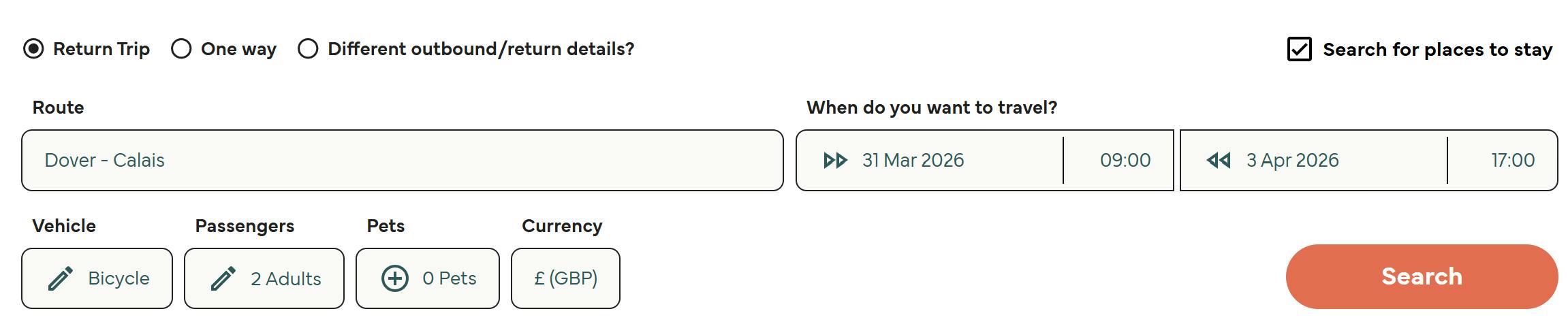
Image 1: Direct Ferries Search, Source: Direct Ferries
Users no longer want to click through endless filters or read through pages of FAQs to find out if a specific ferry allows pets or what the luggage limit is for the aeroplane ticket they want to buy.
They expect a website to understand them and talk their language, instead of the user talking the language of the computer and using distinct and very specific keywords to get the result they hope to see, or search through a number of different website links to potentially find the information they need.
According to McKinsey 2026 data, 84% of travellers who use generative AI tools report a significantly improved experience, primarily because the technology removes the manual "chore" of research.
Benefits of Conversational AI in Travel
Implementing conversational AI focuses on leading the user toward the booking of their trip by understanding intent. Instead of just answering questions, it helps users understand what it is they are looking for. This simplifies the experience.
Support Available 24/7
Smart AI chatbots and virtual agents serve both the brand and the user. Just as was the case with Direct Ferries, implementing an AI chatbot that could respond to user inquiries drastically reduces the load on the company's customer service. This helps them focus on more complex tasks. They only intervene if the conversation needs a human hand.
Smaller Load on Customer Service
By automating the most common questions, the support team can handle edge cases. This improves the overall efficiency of the company. It also ensures that customers are not left waiting for hours to get a simple answer about a ferry route.
Research in a Single Place
Users often have ten tabs open when planning a trip. They compare prices on one site and check pet policies on another. Conversational AI brings all this data into one window. This is known as zero-tab planning. Users can ask, refine, and decide in a few natural steps within a single interface.
Correct Information and Better Accuracy
AI can handle very specific queries. A user might ask which ferries from Marseille allow large dogs in cabins. Traditional filters often cannot process this specific detail. AI can search the database and provide an exact answer immediately. This reduces the time spent on manual research.
Conversational AI for Travel Planning Stages
AI supports every part of the customer journey. Each stage has different needs that the AI meets.
Pre-travel and Discovery
At the start, users are just looking for ideas. They might not know the name of the port they need. They just know they want to go to a certain island. The AI helps them discover routes based on their general needs.
The Booking Process
Once a user decides on a route, the AI guides them through the booking. It explains the differences between ticket types. It helps them add vehicles or pets to the booking without filling out long forms.
Real-time Support
During the trip, users need quick updates. They might want to know if a ferry is on time. They might need directions to the port. The AI provides this information instantly.
Post-travel Support
After the trip, the AI can help with feedback. It can also manage simple refund requests or help book the return journey.
Transforming the Direct Ferries Booking Experience
Direct Ferries partnered with Firney to solve a dual challenge. They needed to fix a broken search experience and reduce a massive manual support workload. Our solution was a hybrid system that combined AI-Powered Search with a Conversational AI Booking Assistant.
The Main Issue They Faced
The primary business challenge for Direct Ferries was a high volume of manual support inquiries. In 2024, their support teams handled over 7,000 FAQ-style questions in a single month. These questions were often simple, such as "Can I bring my pet on the ferry?" or "What is the luggage limit?"
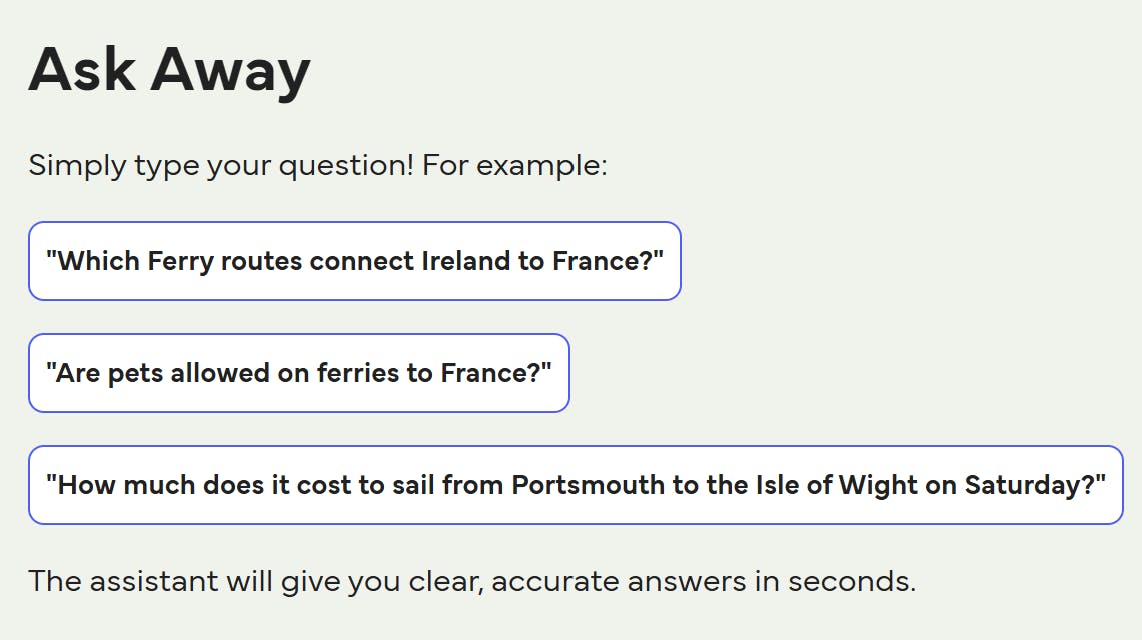
Image 2: Direct Ferries AI, Source: Direct Ferries
The high volume of these queries placed a heavy strain on company resources. It also revealed ongoing user confusion.
If a user cannot find a basic answer on a website, they either leave the site or call support. In this case, the existing FAQ pages and search filters were not meeting user needs.
Additionally, users were required to know the exact port names to see any results. This meant a user had to be an expert in ferry logistics just to get a price. This friction suppressed the intent to book and created a bottleneck for the internal support staff.
What We Did to Solve It: AI-Powered Search and Conversational AI
We addressed these challenges by deploying a production-ready system that functions as both an intelligent search engine and a personal travel assistant.
Smart Route Discovery (AI-Powered Search)
We implemented an AI-driven search layer specifically designed to simplify route discovery.
This system uses AI to expand broad user queries into hundreds of variations and localised spellings. For example, if a user types "UK to France," the search engine applies semantic matching and popularity weighting.
It automatically surfaces the correct ports and the most likely routes without requiring the user to know technical port names. This ensures that every query delivers meaningful results, even when the user is unsure of the specifics.
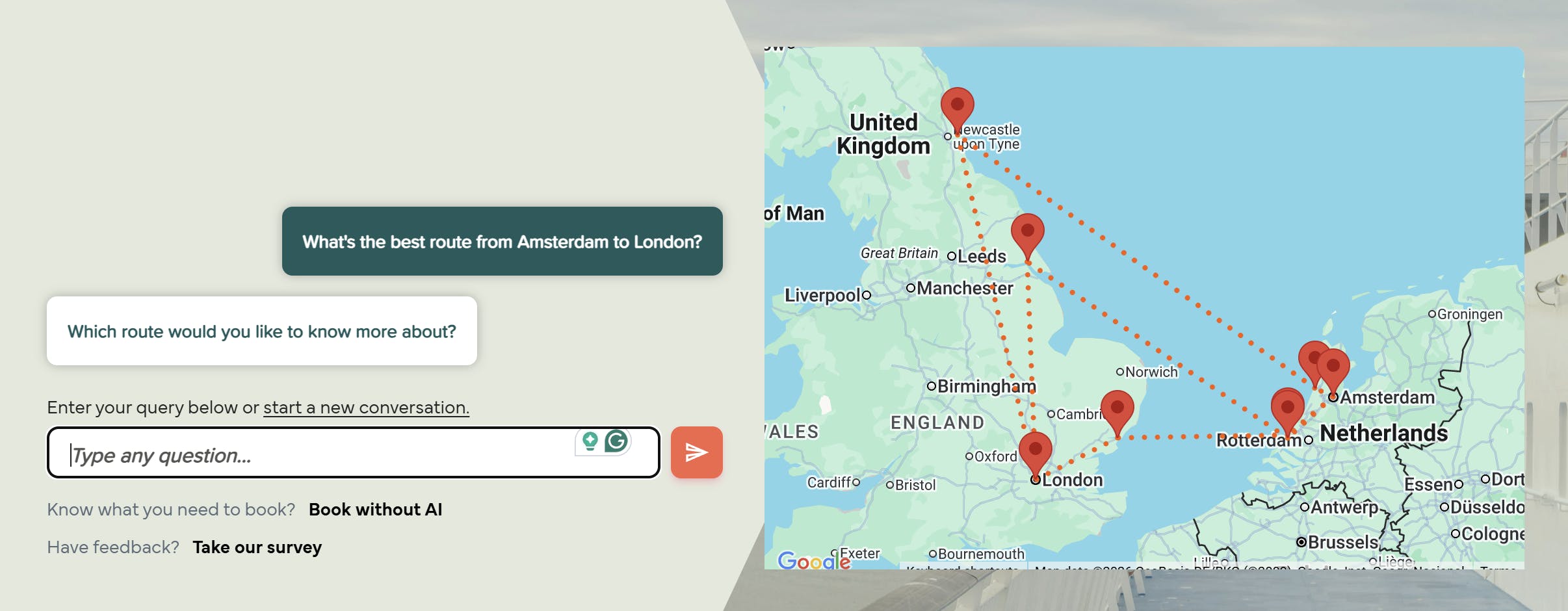
Image 3: Direct Ferries AI, Source: Direct Ferries
The Booking Assistant (Conversational AI)
Once the user identifies a route, the Conversational AI takes over to streamline the booking.
This assistant handles complex travel queries in a natural, human-like way. It processes details about passenger types, group sizes, and specific vehicle dimensions. It can compare same-day and future dates while highlighting the cheapest or fastest options. This transforms the booking process from a series of complex forms into a simple, intuitive conversation.
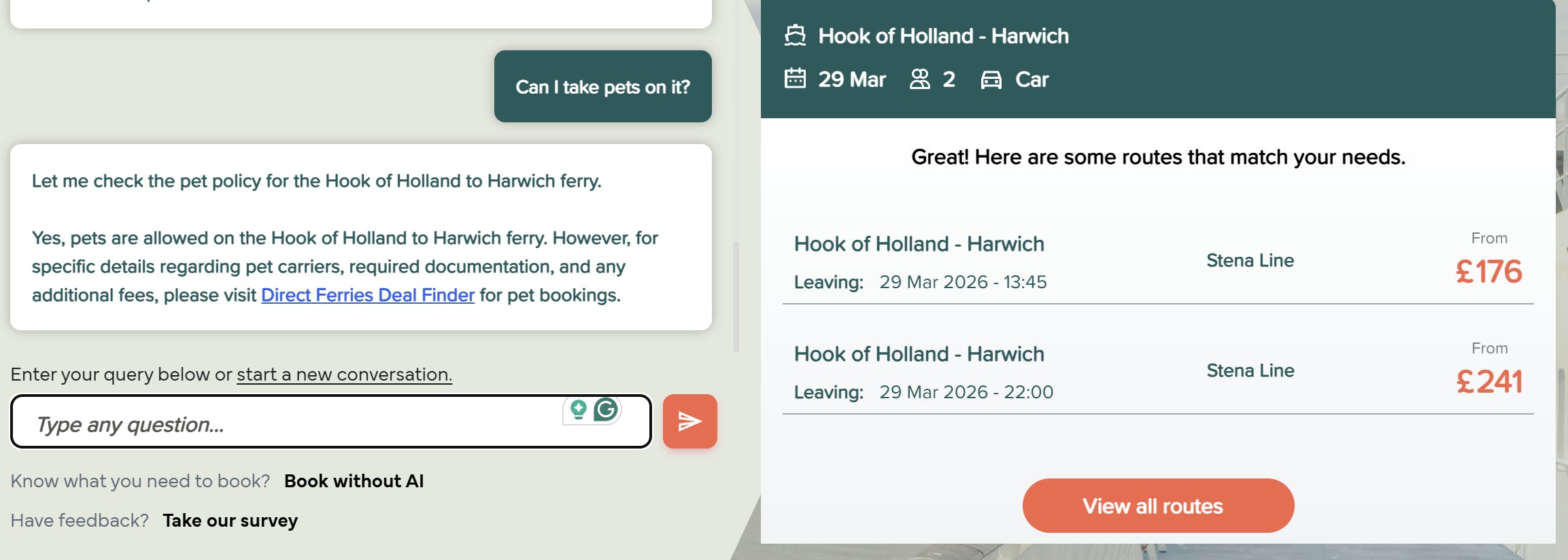
Image 4: Direct Ferries AI, Source: Direct Ferries
We also implemented a feedback loop. The system captures user behaviour and sentiment. This provides Direct Ferries with actionable insights to continually improve the booking experience based on real user interactions.
How We Did It
To ensure speed and reliability, we used a cloud-native infrastructure. The technical stack was built on Google Cloud and Google Kubernetes to allow for global scalability. We used Vertex AI and Google Gemini to power the conversational engine.
We ingested
- over 3,000 routes,
- and more than 300 specific FAQ documents into the AI's knowledge base.
This grounding process is what ensures accuracy. The AI does not guess or make up policies. It pulls directly from the ingested company information, allowing the agent to answer complex travel queries in seconds. Using company information also means there are no AI hallucinations, something many are afraid of when talking about AI.
Our engineering team focused on three core technical pillars:
- Semantic matching: This allows the search to recognise intent rather than just keywords. It recognises that "near Rome" means the port of Civitavecchia.
- Complex logic handling: The AI was trained to manage the many variables of ferry travel, including cabin types and ancillary services.
- Continuous improvement: We built the system to capture user feedback and behaviour. This generates actionable insights that Direct Ferries can use to refine the booking experience over time.
How Long It Took Us
Firney delivered this scalable AI assistant in just 15 weeks. This timeline covered the entire process from strategy and UX design to engineering and deployment.
The project moved through several distinct phases:
- Weeks 1-4: Strategy and UX design. We mapped out the common points of friction and designed the conversational flow.
- Weeks 5-10: Engineering and Data Ingestion. This involved connecting to Google Cloud and training the models on the 3,000 routes.
- Weeks 11-15: Integration and Testing. We ensured the AI worked seamlessly with existing APIs and launched it on the live site.
Impact: Transformed User Experience
The intuitive route discovery system allows customers to explore travel options effortlessly. They no longer need to conduct external research to find port names.
Richard Kozma, Head of Data Science at Direct Ferries, noted:
“The AI route search handles complex queries effortlessly, from vehicle types to finding the cheapest or fastest option. It has transformed our booking process.”
IT has turned a complex technical task into a seamless and intuitive journey for the customer.
Traditional Chatbots vs Conversational AI
It is important to distinguish between traditional chatbots and modern AI, and understand why what we built for Direct Ferries was not just a simple chatbot. Traditional chatbots were popular a decade ago. They were often frustrating and could only reply to a few pre-set FAQs. They used buttons instead of conversation.
Modern AI-powered chatbots work as virtual assistants:
- They do not just reply to FAQs.
- They guide the user through the entire process.
- They understand the context of the conversation.
- They are built to learn from every interaction.
- They understand intent even when a user makes a typo.
- They can interpret different ways of speaking.
If a user asks for a boat instead of a ferry, the AI understands. If a user makes a spelling mistake in a port name, the AI corrects it.
They offer a personalised experience that feels like talking to a human. This is why they are actually useful for conversion. Research from Zendesk shows that users now expect a digital assistant to have the same context as a human agent.
Conclusion
The Direct Ferries case study is a perfect example of how conversational AI and AI-powered search work together to remove friction. By solving the port discovery problem and automating 7,000 monthly inquiries, the brand has created a faster, smarter way to book travel.
If your website requires your customers to be experts in your products just to find them, you are losing sales. The goal of AI is to make your website talk the language of your customer.
FAQ
Frequently Asked Questions