



How to Capture Sales from AI Overviews in 2026
Learn how Google AI Overviews are transforming e-commerce in 2026. Discover why 14% of shopping queries now trigger AI summaries and how to optimise your Merchant Centre and Schema markup to protect your search traffic and conversion rates.
"Search anything, effortlessly."
This is how Google simply explains the point of their AI Overviews. First presented to the wider public in 2023, it was ultimately rebranded and launched as AI Overviews in 2024. While it was initially available only in the US, by the end of 2024, Google expanded it to over 100 countries worldwide.
While AI Overviews do not appear after every Google search, when they do, their effect on the brands can be brutal. E-commerce has been a relatively safe field by now, but the situation has been drastically changing, requiring e-commerce brands to adapt to the changes quickly.
What are AI Overviews?
When they were first launched, AI Overviews were seen as Google’s response to OpenAI’s ChatGPT, as the AI battle was only starting. Google used its position as the number one search engine and offered its users an instant AI experience right where they were - directly from the Google search bar. With LLMs being a new tool on the market, most users online still searched and researched using the traditional search bar, making AI Overviews a smart approach to the new circumstances.
AI Overviews (AIO, not to be confused with Artificial Intelligence Optimisation) function by summarising the most relevant sources on the topic of the search query, giving the user a direct answer at the top of the search results.
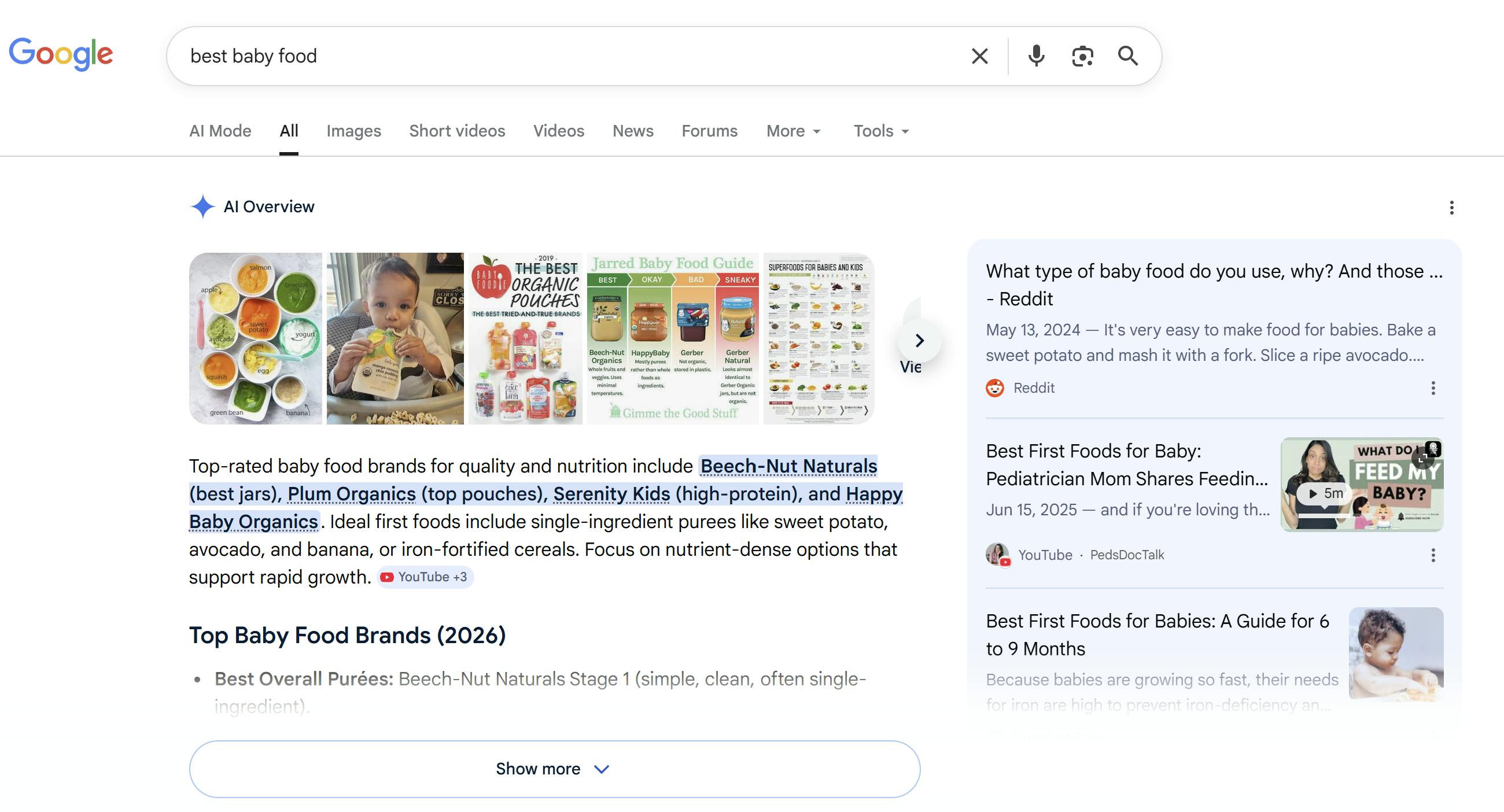
Image 1: AI Overview Example
Additionally, it gives the links of the sources used, allowing the user to continue their search and discovery elsewhere, while also prompting them to continue an AI conversation if they want to learn more about what they were initially searching for.
AI Overviews Criticism and Acceptance
In its first versions, AI Overviews had an issue with providing users with wrong and/or misleading information, e.g. telling them to put glue on pizza, providing expert advice on how many rocks to eat in a day, or not being aware of the type of content it was using as a source and using Reddit jokes as content written by experts.
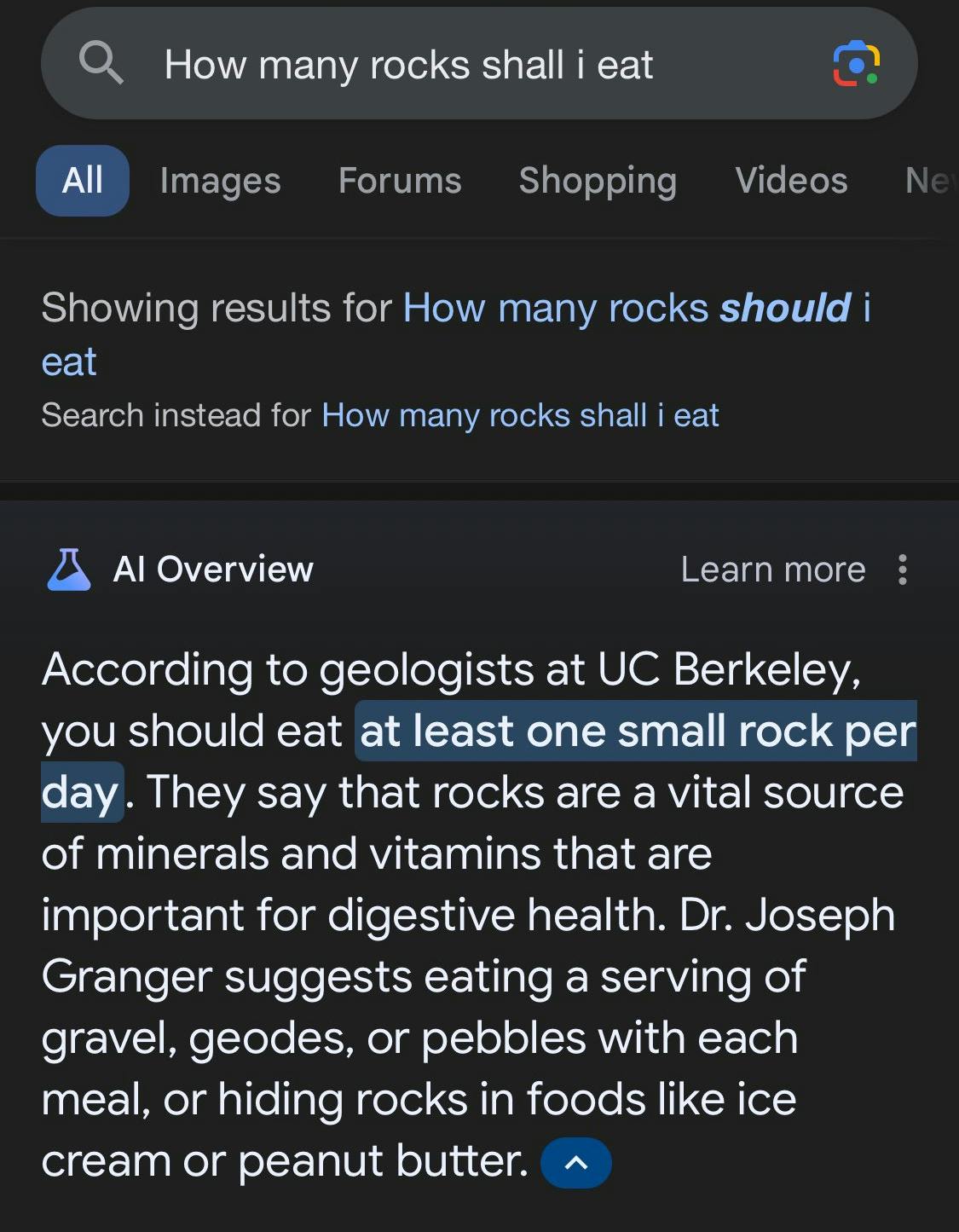
Image 2: AI Overviews giving misleading information
While this was a major flaw, just like any other AI hallucination, Google has spent efforts to fix this over the years, decreasing or managing to completely erase such occurrences.
Another issue AIOs were criticised for was “traffic stealing.” As AI Overviews appear at the very top of the SERP, even above the sponsored links, it was naturally not welcomed by brands working on their SEO or bidding for different keywords.
Initially, AIOs had the strongest impact on content-building brands that relied heavily on users clicking the links and visiting their website. Google tried to find the middle ground by still giving the users their quick answers, but also adding links to the sources it used for those answers.
It is also noticeable that today, AIOs do not always appear at the very top, but can appear after a list of sponsored results, so changes are happening that may be favoured by brands relying on users visiting their websites, while at the same time providing users with quick answers that they favour to see.
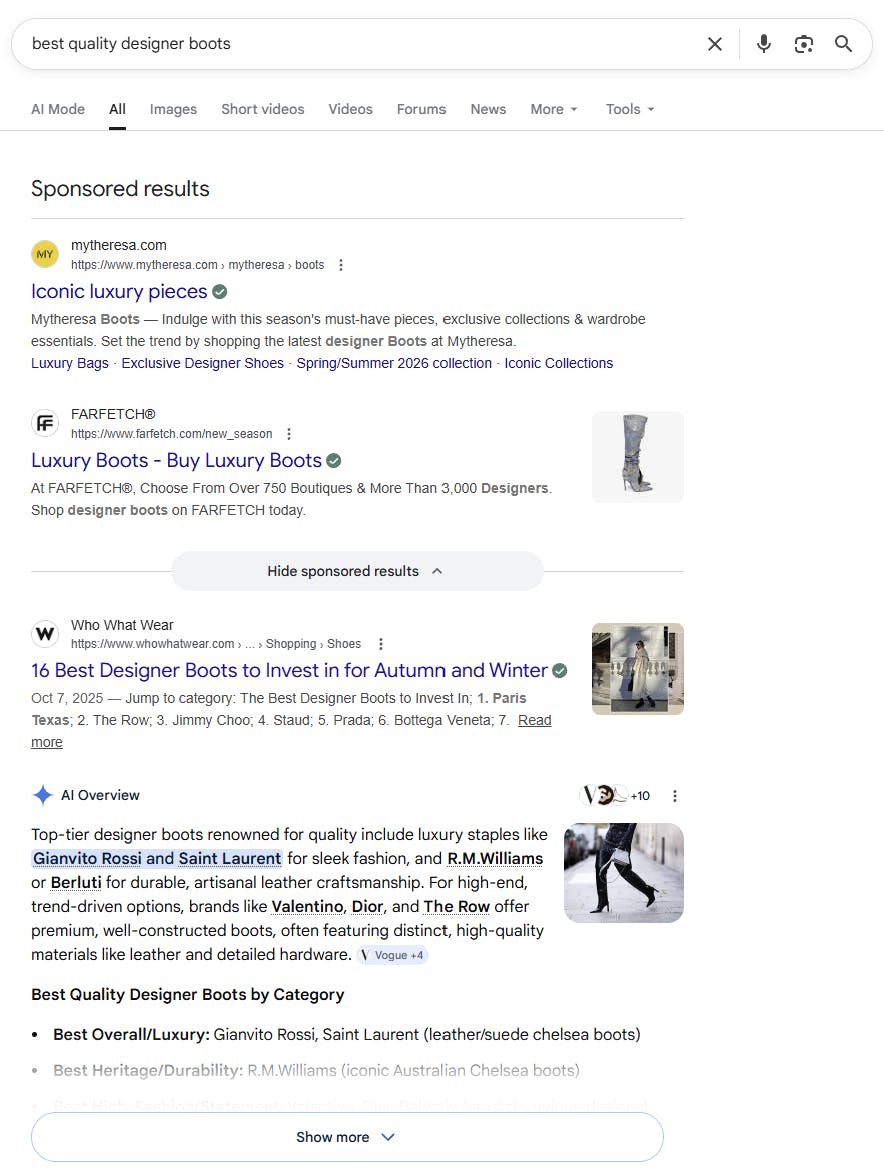
Image 3: Sponsored ads above AIO
At this stage, when it comes to e-commerce, in 91% of cases, AIOs were triggered by informational queries. Product searches would rarely result in an AIO, with Ahrefs reporting only 2.1% of transactional queries showing AIOs in late 2024. E-commerce was indeed safe, that is, up until a year later.
AI Overviews and E-commerce
As mentioned above, when they first appeared, Overviews did not really have an impact on e-commerce searches. Googling for “best products”, “jackets on sale”, etc., would still lead to a list of links, both sponsored and not.
However, there has been a major increase in the percentage of e-commerce search inquiries that now result in an AIO.
More precisely, while that number was as low as 2.1% in early 2025, now, it has increased 5.6x and is standing at 14%, according to research done by Visibility Lab on nearly 21 million shopping keywords [1]. What is more, the changes have happened in less than half a year, from November 2025 to today, meaning action needs to be taken swiftly.
While the initial numbers from 2024 were used to prove that e-commerce is safe from the zero-click trend affecting other websites, now that roughly every 1 in 7 queries shows an AI-generated summary, e-commerce brands can no longer ignore the reality and have to act upon it.
It is important to note that while this percentage is now quite high, some transactional inquiries are still staying relatively safe as Google determines whether AIO will appear based on the intent of the user.
Take a look at these two examples:
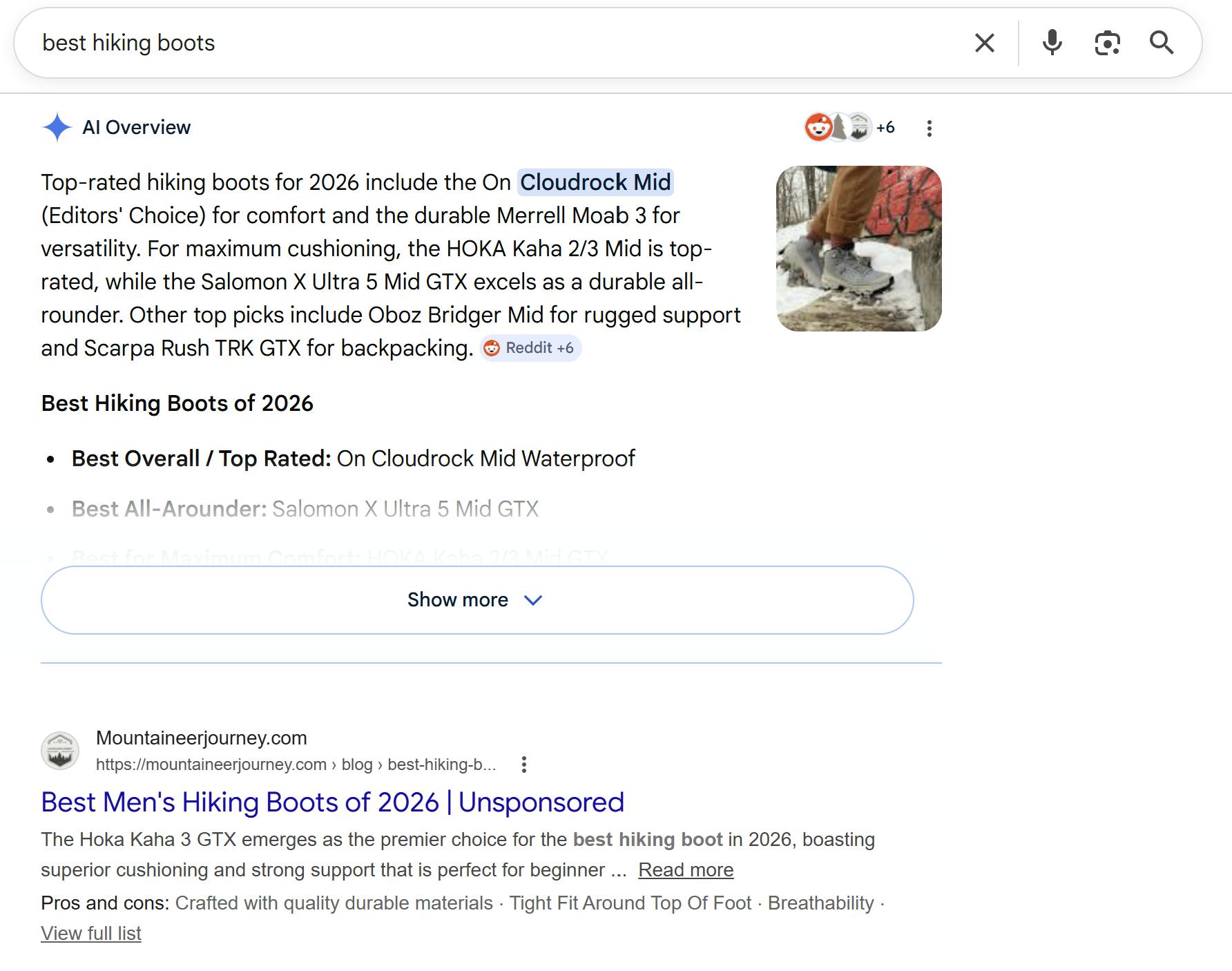
Image 4: Google results for “best hiking boots”
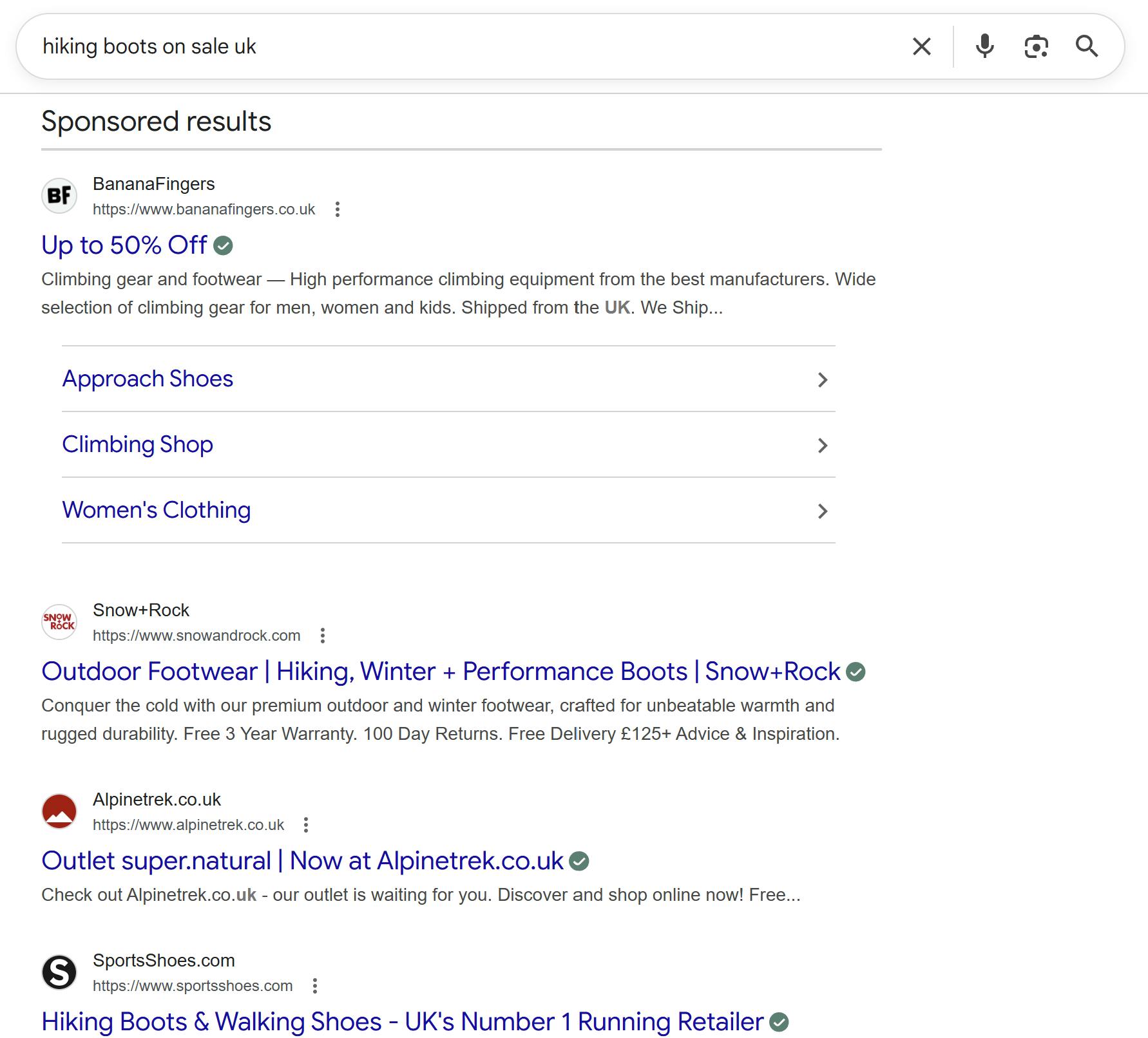
Image 5: Google results for “hiking boots on sale”
In the first example, it is way more likely Google will opt for an AI summary since it can interpret the intent of the user completely differently and see it more as an informational inquiry rather than a transactional one.
The second user is looking to buy something. The first user is looking for information AI can summarise in a quick snippet. Both can still lead to a purchase, but the users are currently at different parts of the funnel.
This was proven by BrightEdge's analysis for different query intents. Based on their research comparing late 2024 and late 2025, it is precisely the informational queries that have seen the biggest and quite an impressive increase:
Query category | Examples | AIO trigger rate |
Informational | “best hiking boots”, “top rated hiking boots” | 83% |
Product name | “hiking boots”, “Salomon hiking boots” | 14% |
Transactional | “hiking boots on sale”, “hiking boots under £60” | 13% |
Table 1: AIO trigger rate per query category
While you may have created content based on being the best in the industry, it may now all become futile as users may not even see your website, unless you are a part of the summary, either as the source of information, or the suggested products.
How AIOs Impact E-Commerce Brands
The primary threat to e-commerce brands is the rise of the zero-click purchase. In 2026, 58.5% of all Google searches now end without a single click to an external website [5]. When Google provides a full product comparison and price list within the AI Overview, the user has no reason to visit your shop until they are ready to finalise a payment. This behaviour effectively turns the search results page into a storefront.
Visibility is declining even for top-tier brands. When an AIO appears, the click-through rate for the top organic result drops from roughly 1.76% to 0.61% [2]. This represents a 61% decline in visibility for even the highest-ranking websites.
However, it is also important to note that the users who do click through are often higher quality. Recent data shows that AI-referred traffic converts 42% better than traditional traffic [3].
This means that while you may be getting fewer visitors, the ones you keep are your highest-value customers who have already completed their research with the help of AI and are now ready for the final click. This is why it is vital to optimise your website now to ensure you are the source the AI chooses to trust.
Your goal should be to appear both as a source and a recommendation during top-of-funnel informational queries, as well as at the top of the list of links after transactional queries.
The latter is your traditional SEO or paid campaigns. The former is a combination of new optimisation strategies along with SEO: GEO and AIO.
Strategies for Optimising E-Commerce Websites for AI Overviews
To maintain your presence in the Shopping Graph, you must move beyond traditional keyword density (SEO) and focus on technical data feeds.
1. Master the Shopping Graph and Merchant Centre
The Google Shopping Graph now holds over 50 billion listings and serves as the primary brain for AI Overviews.
- Data accuracy: You must maintain a match between your website price and your Merchant Centre feed. Discrepancies lead to immediate exclusion from AI summaries.
- Unique identifiers: Ensure every product has a valid Global Trade Item Number and Manufacturer Part Number. The AI uses these to group your product with relevant reviews and comparisons.
- New attributes: Starting in April 2026, Google added new attributes like handling_cutoff_time and minimum_order_value [4]. Providing this data gives you an advantage in transactional AI summaries because it allows the AI to confirm your fulfilment capabilities.
2. Implement Deep Schema Markup
Schema is the technical language the AI uses to understand your product attributes. If it can simply pull the data from your website by clearly understanding what each piece of information actually means and represents, it will favour your brand over your competitiors' who do not have schema on their websites.
- Product schema: Go beyond basic pricing. Include attributes for material, colour, size, and gender to help the AI match specific queries accurately.
- Review schema: Aggregate your customer reviews into your technical code. The AI favours products with a high volume of positive pros and cons extracted from real user feedback.
- Shipping and returns: Use specific schema for handling times and return policies. Displaying Free 48-hour Delivery in your code increases your chances of being featured in AI Overviews for shoppers in a hurry.
3. Restructure Content for AI Parsing
Large Language Models do not read pages like humans. They look for clear relationships between data points.
- Factual bullets: Use bulleted lists for all technical specifications. Avoid long paragraphs of marketing copy that the AI might struggle to summarise or categorise.
- Question and answer segments: Use headings to ask common customer questions and answer them in the very first sentence of the following paragraph.
- Comparison tables: Create tables that compare your product to previous versions or similar models. Google often scrapes these tables directly to populate the AI cards.
Conclusion and Next Steps
E-commerce brands can no longer rely on traditional organic rankings alone. While you may not favour AI Overviews, you cannot afford to simply ignore that they exist, or that the users actually prefer them as they make their research faster. The data proves this as well, as research shows that 83% of queries that trigger an AI Overview are resolved directly on the results page.
By optimising your Google Merchant Centre feeds and implementing deep schema markup, you can ensure that your products are the ones being recommended by the AI.
The goal is to stop fighting the AI and start feeding it the data it needs to sell your products.
If you want to know how your site measures up, apply for a Firney GEO Website Audit to assess your AI visibility.
FAQ
Frequently Asked Questions
Resources
[1] Search Engine Land. "Google AI Overviews now appear on 14% of shopping queries: Report." March 2026. https://searchengineland.com/google-ai-overviews-shopping-queries-report-471981
[2] ALM Corp. "Google AI Overviews & Shopping Queries: eCommerce Guide 2026." March 2026. https://almcorp.com/blog/google-ai-overviews-shopping-queries/
[3] Adobe for Business. "AI traffic grows but retail sites lag in AI search visibility." April 2026. https://business.adobe.com/blog/ai-traffic-surge-retail-sites-not-machine-readable
[4] Google Help. "Merchant Center product data specification update 2026." April 2026. https://support.google.com/merchants/answer/16989427
[5] Goodfirms. "AI SEO Statistics 2026: 58.5% Zero-Click, 83% AI SERP." April 2026. https://www.goodfirms.co/resources/seo-statistics-ai-search-rankings-zero-click-trends
[6] Click Vision. "50+ Zero Click Search Statistics for 2026: Trends & Impact." November 2025. https://click-vision.com/zero-click-search-statistics
[7] Arc Intermedia. "[CASE STUDY] Impact of AI Search on User Behavior & CTR in 2026." December 2025. https://www.arcintermedia.com/shoptalk/case-study-impact-of-ai-search-on-user-behavior-ctr-in-2026/
[8] First Page Sage. "Top Generative AI Chatbots: Market Share Report." March 2026. https://firstpagesage.com/reports/top-generative-ai-chatbots/
[9] Visibility Labs. "AI Overviews Impact Study: 20M+ Shopping Keywords." February 2026.
[10] BrightEdge. "The 2025 Generative AI in Search Report." November 2025.
[11] IndexBox. "AI Retail Traffic Soars 393% in Q1 2026." April 2026.
[12] Similarweb. "Global Search Trends and the Rise of AI Overviews." January 2026.
[13] Search Engine Journal. "How the Shopping Graph Powers AI Recommendations." February 2026.
[14] Ahrefs. "The Click-Through Rate Crisis: Search in 2026." March 2026.
[15] Marketing Brew. "Ecommerce Brands Face the New Reality of AI Search." April 2026.