




5 Examples of AI-Favoured Product Pages
As consumers swap filters and Google search for complex AI prompts, minimalist product pages are becoming invisible. Discover the exact product page frameworks, real-world examples, and data architectures that top LLMs confidently recommend to shoppers in 2026.
A modern consumer has more complex product inquiries. Sifting through an endless list of filters, which were considered to be a plus just a couple of years ago, is now considered a nuisance. If it takes a user more than one or two clicks to find what they are looking for, your chances of completely losing them increase. They now opt for a conversation, and start their journey more broadly and less proactively, via an LLM.
If ChatGPT or Gemini cannot read a spec from your product page, it will not recommend you. Spec tables, named fabrics, weights, sizes, and schema are what a model can lift. Poetic copy is not.
“A red summer dress” no longer suffices. “A red dress I can wear to a summer bachelorette party that is not too formal but not casual either under £50” is more likely how a user approaches their customer journey in 2026.
While AI traffic has been growing across all industries, retail has seen the biggest growth in the first quarter of 2026, with a +393 YoY growth [1].
A Product Page in 2026
What should a product page in 2026 look like? While before, optimising for the human eye was number one, today, it is all about data.
If a user inquiry is more complex and requires an LLM to know in detail whether something fits their desires, that same LLM will need an abundance of data to make sure what it's recommending is actually the perfect solution. If it cannot clearly conclude something from existing product descriptions on your website, it will rather avoid it, i.e. will not recommend it.
In this case, the popularity of your brand will not matter. While you might gain traffic through other traditional channels, your AI referrals will suffer.
The latest Adobe report shows that consumers truly benefit from LLMs serving as researchers in their customer journey, with 85% reporting that different AI assistants improved their overall shopping experience [1]. This just further proves that AI ensures that the data it has and the recommendations it makes are accurate and useful.
What is more, 79% of those who used AI for online shopping said they felt more confident in their purchase after the research AI conducted for them, with an additional 69% being less likely to return an item.
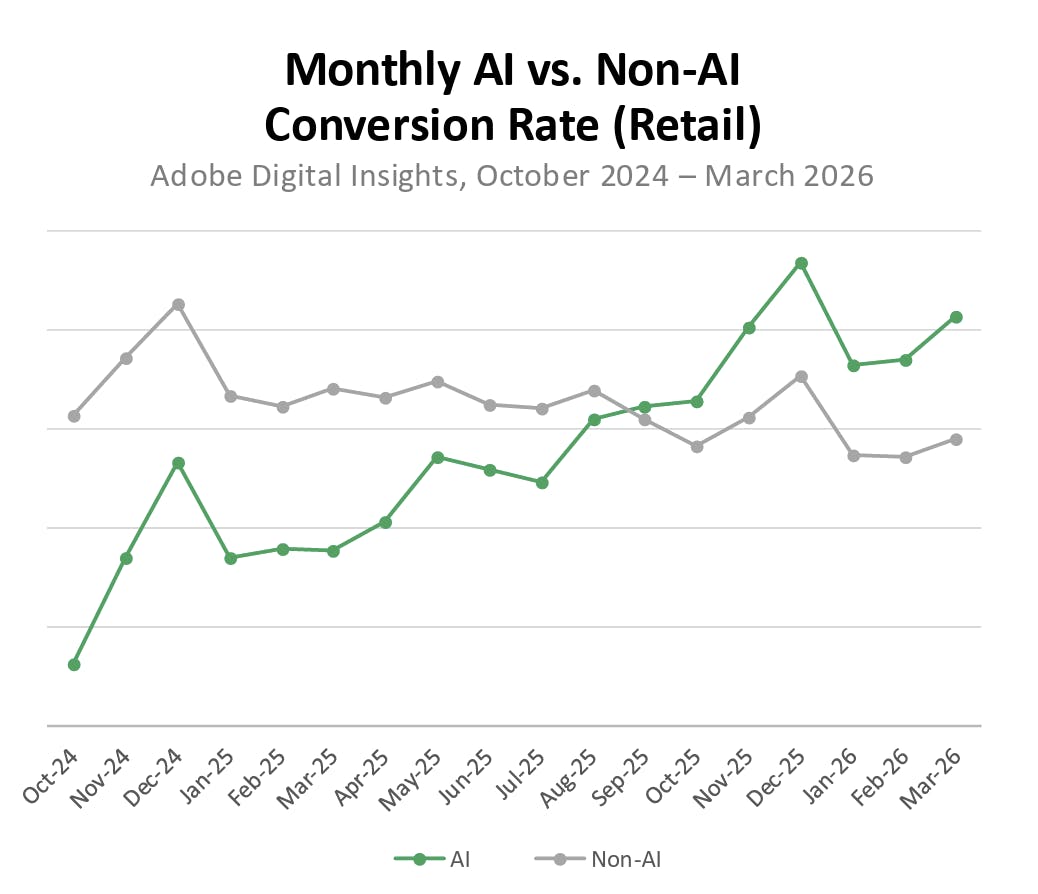
Image 1: AI vs. non AI conversion rates in retail, Source: Adobe
All these data further highlight the importance of being recommended by AI.
AI Hallucinations and Trust
When LLMs first started, one of the biggest issues was AI hallucinations. This poses a major potential issue for retail, as it is directly related to users spending money - particularly with the slow emergence of fully agentic commerce, with AI agents being completely in charge of people’s wallets.
If agentic commerce is to succeed and gain on popularity, the number one priority for AI is very simple: trust. Consumers have highlighted this in numerous studies so far, with 55% not willing to let AI complete purchases on their behalf [2].
Examples of good product pages
When an LLM makes a recommendation, it does not give an endless list of options. Instead, it has a very limited number of options - and you need to be among them. There are no pages 2 or 3 you can rely on.
Patagonia
A very simple example of how to do things right. While Patagonia already has a well-known brand, they are not relying on direct traffic or legacy customers only (even though those are worth a lot). They’ve decided to play the GEO game as well and structure their product pages the way the AI prefers to read them, providing enough useful information to make it possible to answer any question a customer might have - if they are a match.
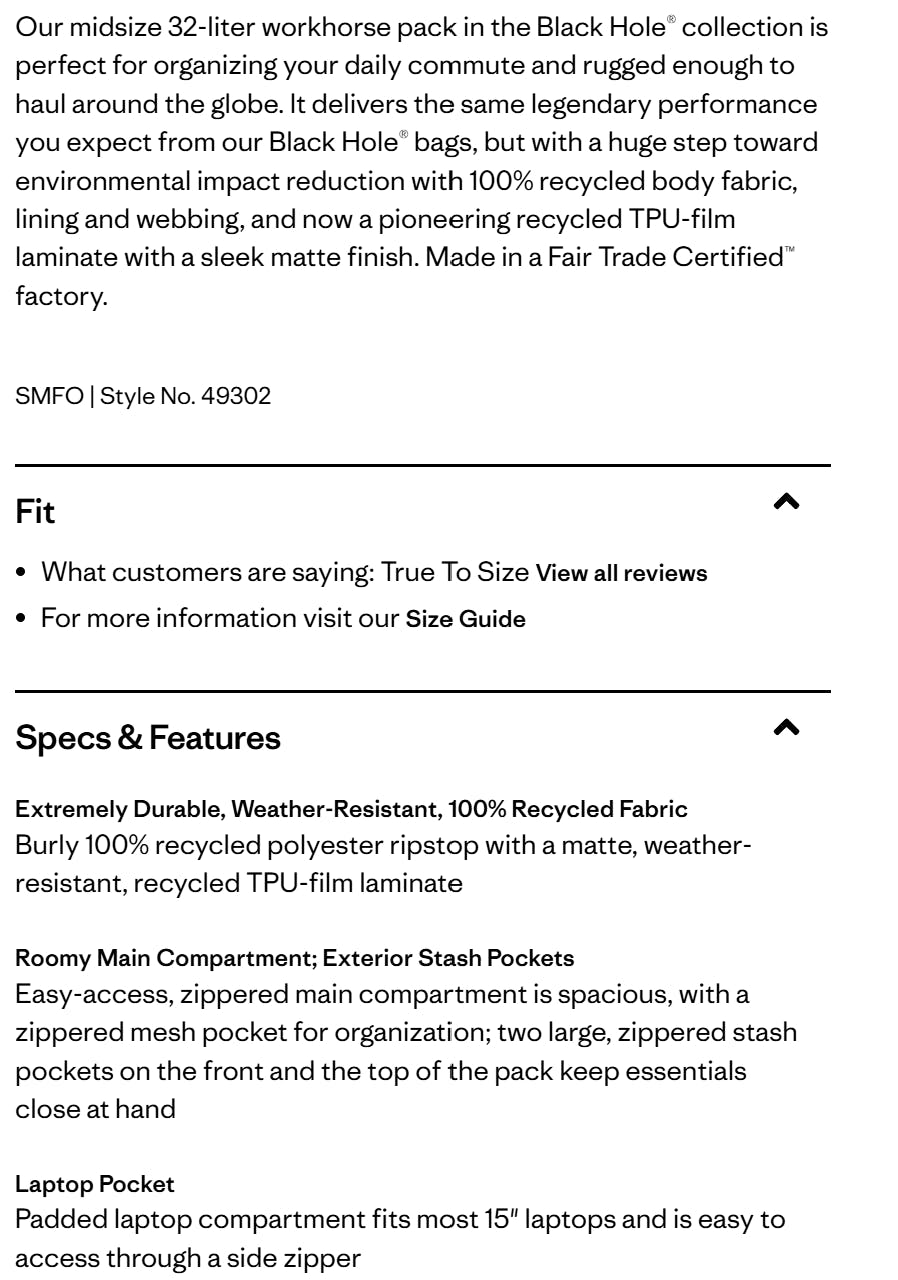
Image 2: Patagonia Product Page, Source: Patagonia
Why it achieves elite AI visibility
Patagonia turns its product page into an exhaustive database. Scroll down their page, and you find an explicit Specs and Features breakdown. It details the exact denier of the fabric, the presence of a recycled TPU-film laminate, and precise gear capacity in litres. If a user asks an AI assistant for a water-resistant commuter pack with a separate side-zipper laptop compartment made of recycled material, the LLM reads these flat-text parameters and serves the Patagonia link with maximum factual confidence.
REI
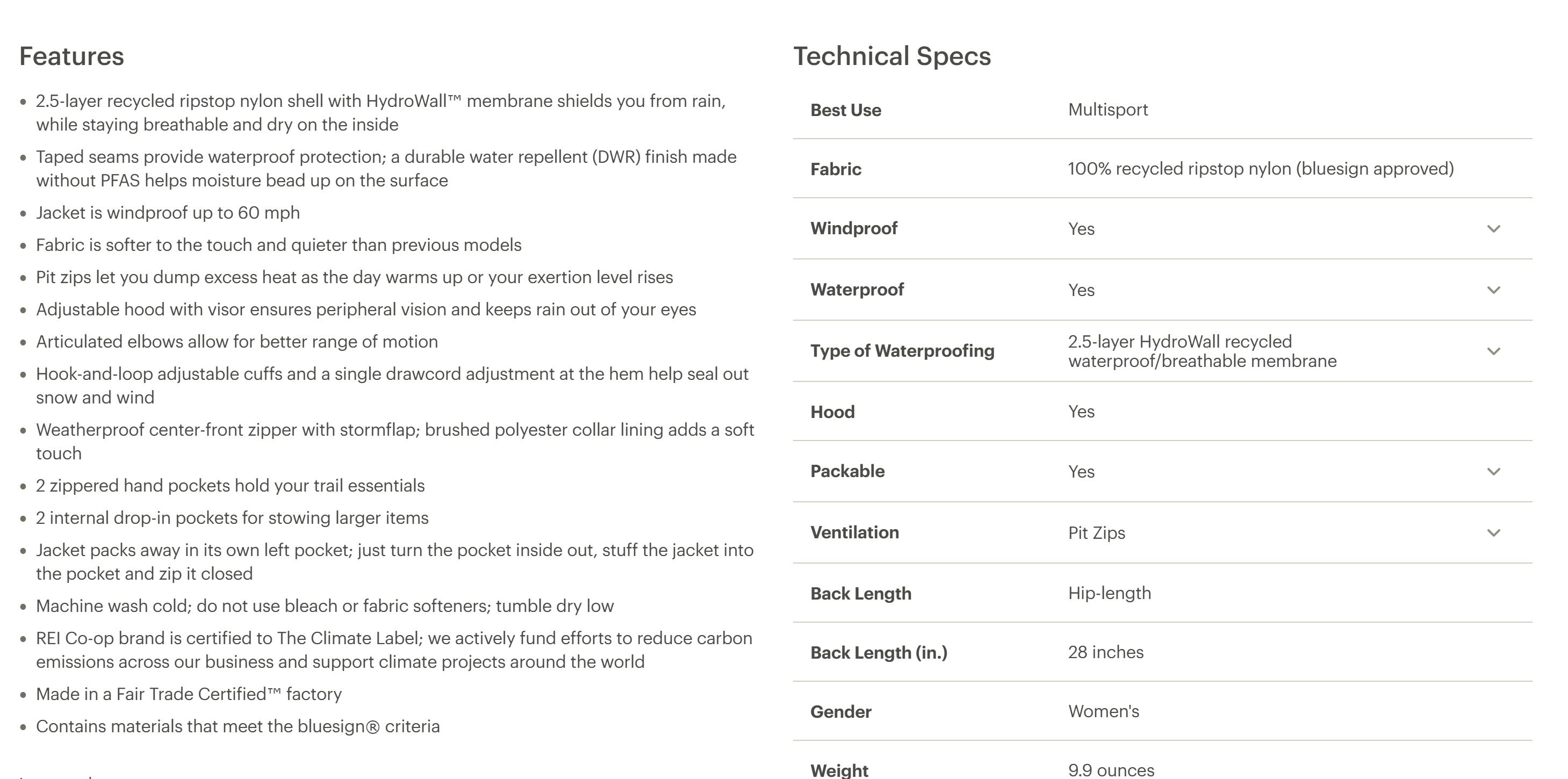
Image 3: REI Product Page, Source: REI
Why it achieves elite AI visibility
REI uses a highly structured technical specs matrix that lists attributes in clear, scannable text keys. It outlines categories like Windproof (Yes), Ventilation (Pit Zips), and Weight (9.9 ounces). Beneath the surface, this data is reinforced with clean backend JSON-LD Schema markup. When an AI bot crawls the page, it instantly ingests these attributes without needing to parse complex sentences. This allows the page to win highly specific conversational queries regarding weight thresholds and precise weatherproofing metrics.
Logitech
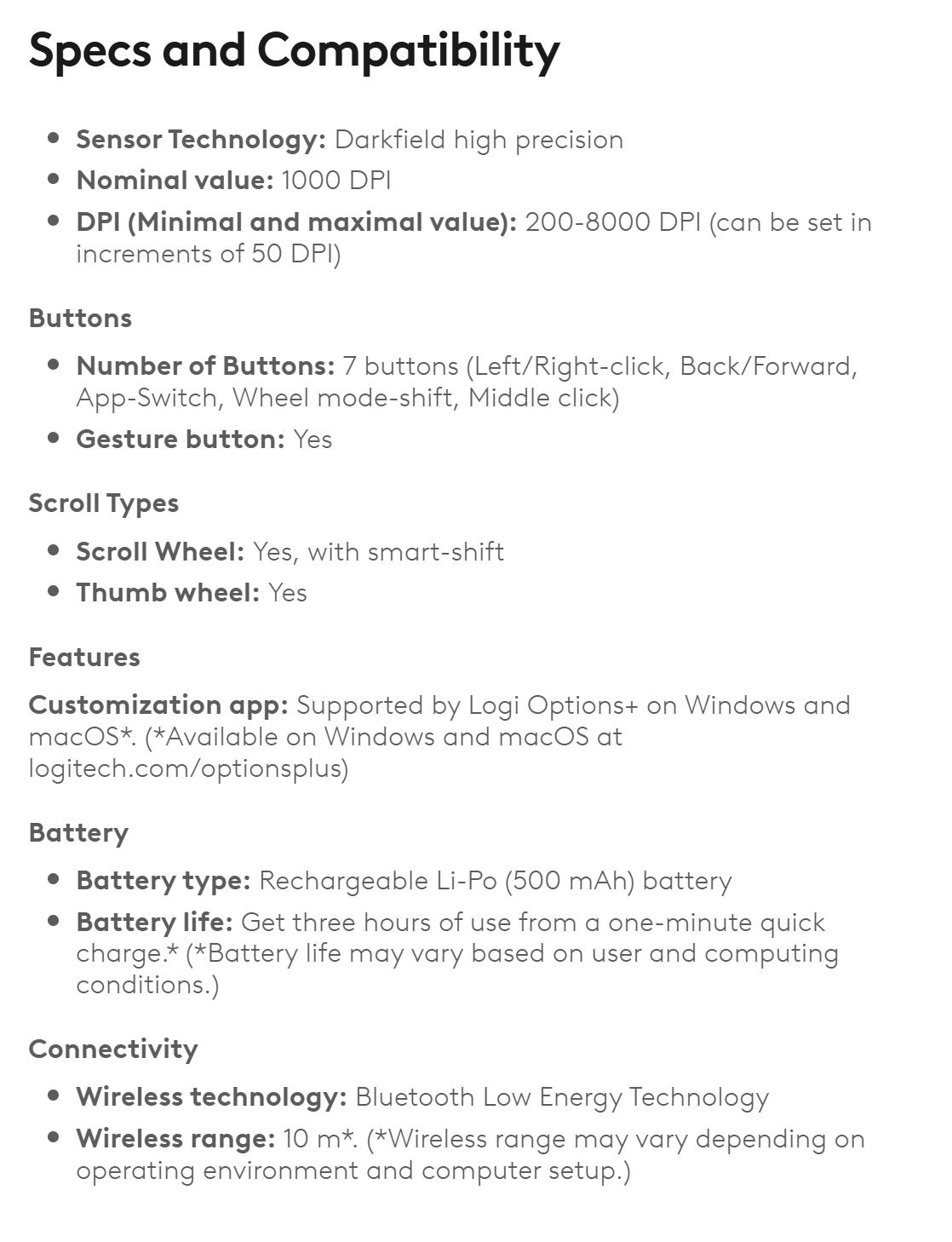
Image 4: Logitech Product Page, Source: Logitech
Why it achieves elite AI visibility
Logitech structures its product pages to answer technical questions before they can cause an AI hallucination. The page explicitly outlines sensor technology, tracking sensitivity up to 8000 DPI, wireless connectivity types, and exact battery milliamp hours. When an AI shopping agent is tasked with finding a quiet-click wireless mouse compatible with macOS that works perfectly on glass surfaces, Logitech's precise specification layout provides the exact parameters the bot needs to make a definitive recommendation.
Lululemon
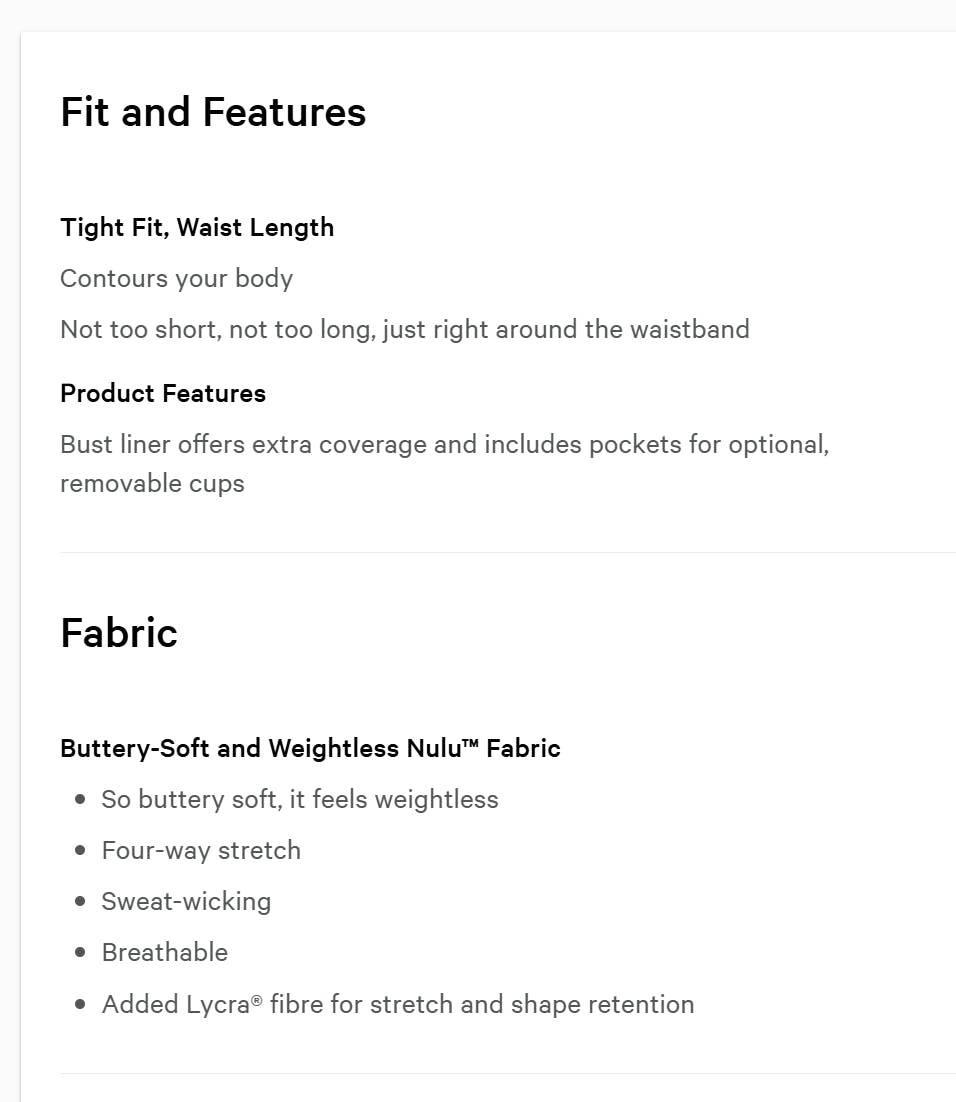
Image 5: Lululemon Product Page, Source: Lululemon
Why it achieves elite AI visibility
Fashion pages often fall into the trap of purely poetic descriptions, but Lululemon provides a masterclass in combining high-end design with rich product data. Each page breaks down proprietary fabric properties, explicitly naming traits like weightless Nulu fabric, four-way stretch, sweat-wicking capabilities, and added Lycra fibre for shape retention. By documenting the exact fabric components and intended low-impact workout use cases, the brand ensures its pages are easily categorised by LLMs conducting context-specific wardrobe searches.
Hoka
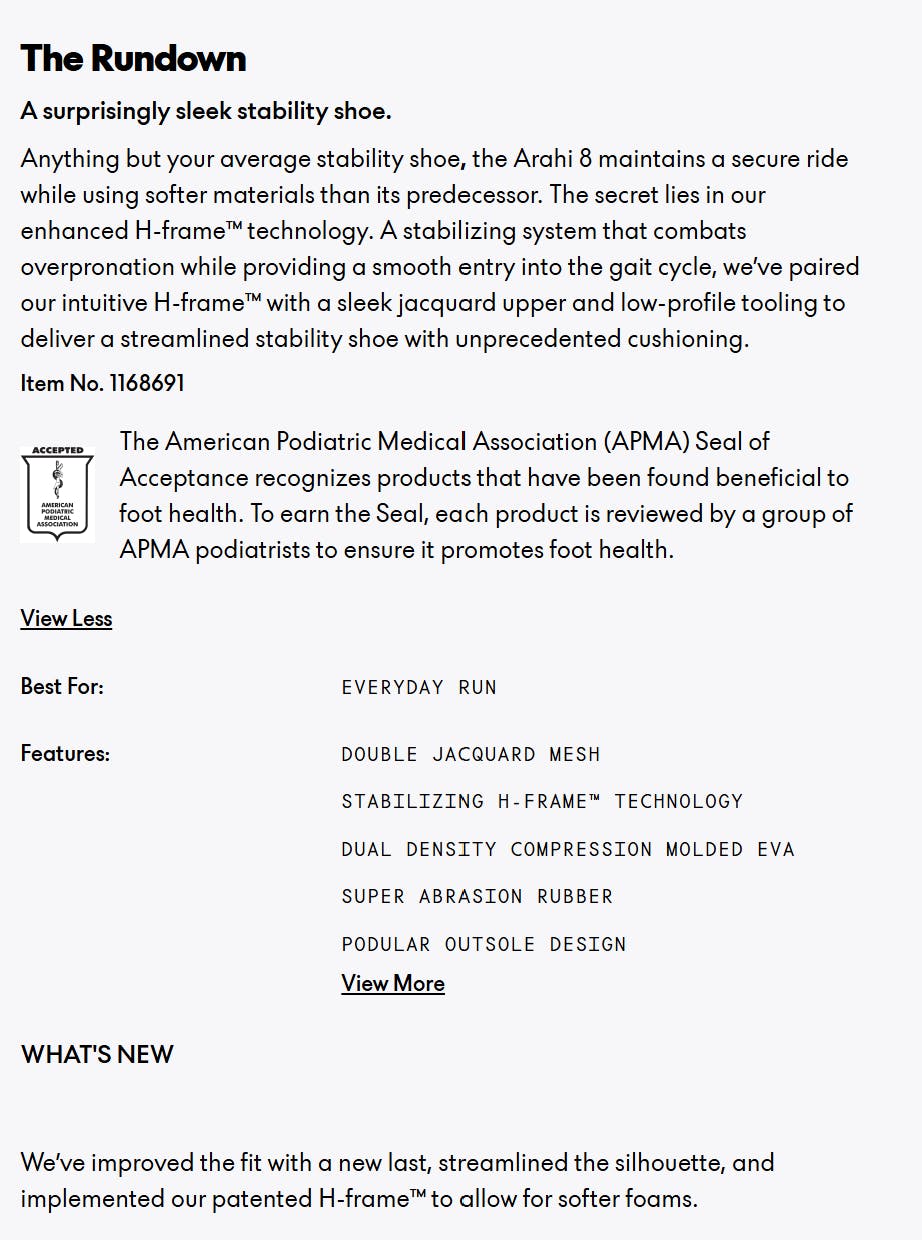
Image 6: Hoka Product Page, Source: Hoka
Why it achieves elite AI visibility
Hoka completely removes the guesswork for AI recommendation engines by detailing the exact biomechanical specs of their shoes. Their product pages feature direct listings of shoe weight in grams, heel-to-toe drop metrics, and precise stack height cushioning details. If a user inputs a complex conversational query like, "Find me a maximally cushioned road running shoe with a low drop to help with knee pain during marathon training," the LLM can instantly extract Hoka's exact sole measurements and confidently prioritise it over brands that merely describe their shoes as comfortable.
Zara Brand and AI Case Study
Zara is a very interesting example to observe for marketers. When a user makes a prompt, Zara, while a world-famous high-fashion brand, will rarely show up as a recommendation.
Below, you can see an example of one of their product pages.
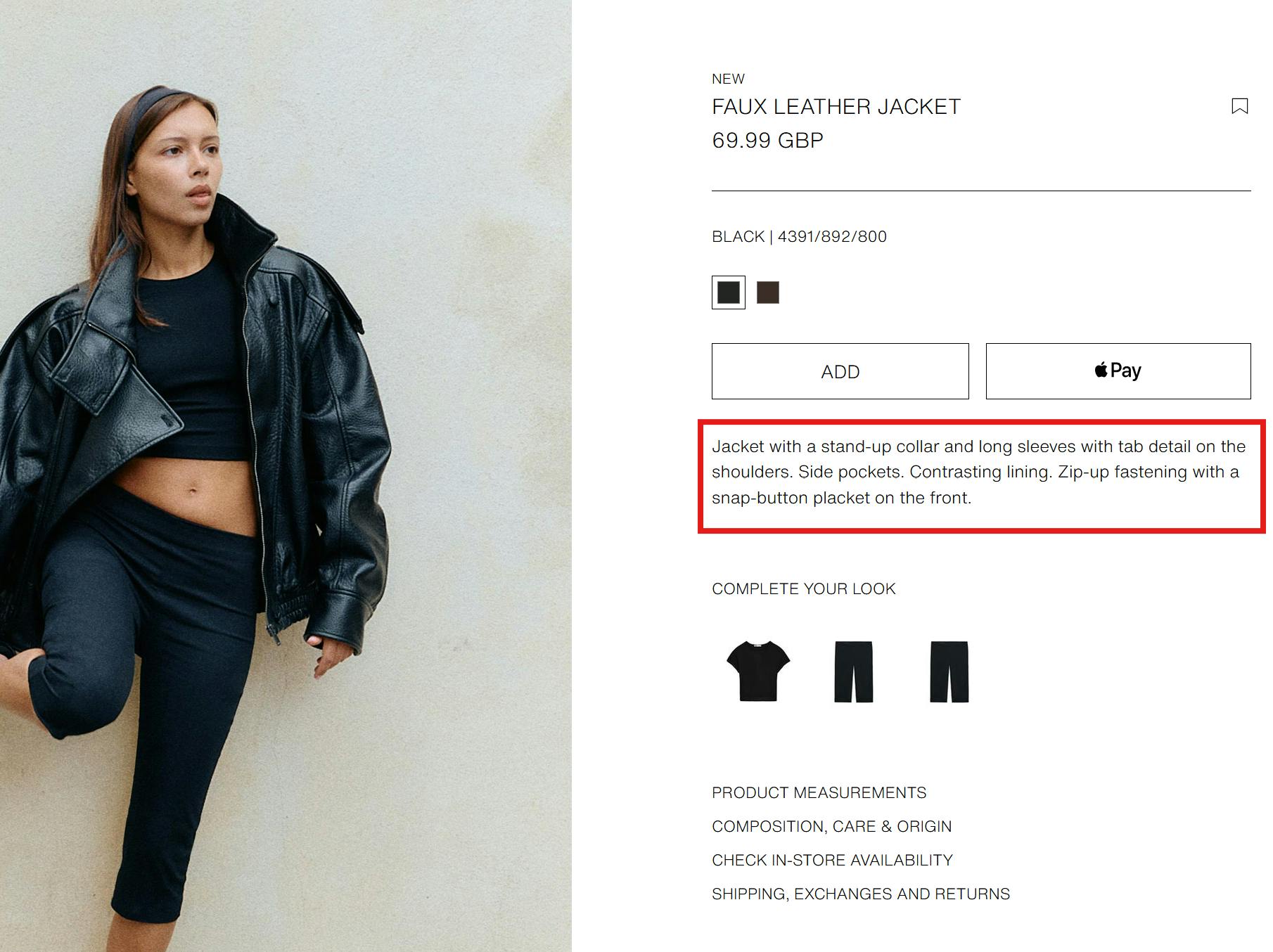
Image 7: Zara apparel product page, Source: Zara
We can argue that some pages still choose poetic descriptions made exclusively for the human eye (i.e. more so for entertainment purposes than being actually useful), but Zara does describe its product. While they do not lack a description, they lack a detailed one.
However, when a user asks for a highly specific recommendation, such as a machine-washable blazer with specific internal passport pockets for travel, the AI lacks data to be able to recommend the same piece of clothing, even if it actually does match the prompt.
What makes Zara's case interesting is the fact that, while this is not a desirable outcome even for them, this is something they can survive. Thousands of people visit Zara every day directly, and their traffic is likely not taking a major hit despite the growing popularity of AI referrals.
The Power of Baseline Training Material
Zara possesses a massive structural advantage because its historical global brand equity is deeply embedded in the static training models of top LLMs. The foundational data of these AI engines contains millions of pre-existing references to Zara trends, styling guides, and fashion reviews. Broad, unstructured lifestyle queries allow Zara to stay visible through pure historical brand gravity.
Challenger brands do not possess a multi-billion-pound safety net of legacy training data. If your company relies on real-time web retrieval via RAG to secure customers, a minimalist, text-light page design will render your store completely invisible to modern search bots.
Optimise for AI (GEO) and Build a Brand
Betting on your old traffic, which was mainly likely organic, is not a game you should opt to play. SEO is no longer the only optimisation technique that should be a part of your marketing plan. GEO is a must if you want to stay visible to AI and to the millions of people using it on a daily basis.
However, you should also focus on building a brand, as you cannot rely solely on AI recommending you.
Winning in this changed e-commerce landscape requires a dual-track framework. You must structure your product text, schema tags, and internal databases to give AI agents the absolute data confidence they need to display your links today. Simultaneously, you must use that foundational AI traffic to deliver an exceptional customer experience, ultimately cultivating the direct brand loyalty and community required to safeguard your independence tomorrow.
FAQ
Frequently Asked Questions
References
[1] Adobe Digital Insights. "2026 Q2 AI Traffic Report: Sourced Traffic Insights and Retail Trends". Adobe for Business. 2026. https://business.adobe.com/resources/sdk/2026-q2-ai-traffic-report.html
[2] Business Wire. "Riskified Study Finds Consumers Aren't Ready to Hand Over Control as AI Transforms Shopping". Riskified Ltd. 2026. https://www.businesswire.com/news/home/20260427900819/en/Riskified-Study-Finds-Consumers-Arent-Ready-to-Hand-Over-Control-as-AI-Transforms-Shopping-with-Over-Half-Afraid-of-Online-Fraud
[3] Patagonia. "Black Hole Pack 32L Product Detail Page". Patagonia Europe. https://eu.patagonia.com/hu/en/product/black-hole-pack-32-liters/49302.html
[4] REI Co-op. "Rainier Rain Jacket Product Detail Page". REI. https://www.rei.com/product/227614/rei-co-op-rainier-rain-jacket-womens
[5] Logitech. "MX Master 3S Wireless Mouse Product Detail Page". Logitech UK. https://www.logitech.com/en-gb/products/mice/mx-master-3s.910-006559.html
[6] Lululemon. "Align High-Rise Pant 25" Product Detail Page". Lululemon UK. https://www.lululemon.co.uk/en-gb/p/lululemon-align%E2%84%A2-high-rise-pant-25%22/prod10440057.html
[7] Hoka. "Men's Bondi 8 Road Running Shoe Product Detail Page". Hoka UK. https://www.hoka.com/en/gb/men-road-running/bondi-8/1123202.html
[8] Zara. "Women's Blazers and Outerwear Collection". Zara International. https://www.zara.com/
[9] S. Shivani Mohan. "How AI Mode is changing the way people search in the U.S.". Google Product Blog. 2026. https://blog.google/products-and-platforms/products/search/ai-mode-us-insights/
[10] S. Melnikov, A. Grigoryan. "Generative Engine Optimisation: Benchmark Metrics for E-Commerce Referral Data". SE Ranking Research. 2026.
[11] J. Zu, M. Jin, et al. "GEO: Generative Engine Optimization". Princeton University, Georgia Tech, and IIT Delhi. 2024.
[12] R. Fishkin. "The Zero-Click Search Study and the Rise of AI Overviews". SparkToro & Datos. 2024.