




The Best Way to Recover an Abandoned Cart? Prevent It.
Cart abandonment is primarily an information gap. Placing a real-time conversational AI agent at the point of intent resolves this gap and secures the sale.
The first thing you'll find when searching for advice on shopping cart abandonment is reassurance.
"A 70% abandonment rate is normal."
"You'll never recover every abandoned cart."
"Some people were never going to buy anyway."
To some extent, that's true.
Just like people entering a physical store, many website visitors are simply browsing. They may add products to their cart as part of their research process, without any immediate intention of completing the purchase. That is why no amount of optimisation can turn every website visit into a sale.
Perhaps that's why the average cart abandonment rate has remained remarkably consistent for over a decade. At around 70%, it's become less of a problem to solve and more of a benchmark the industry has learned to accept.
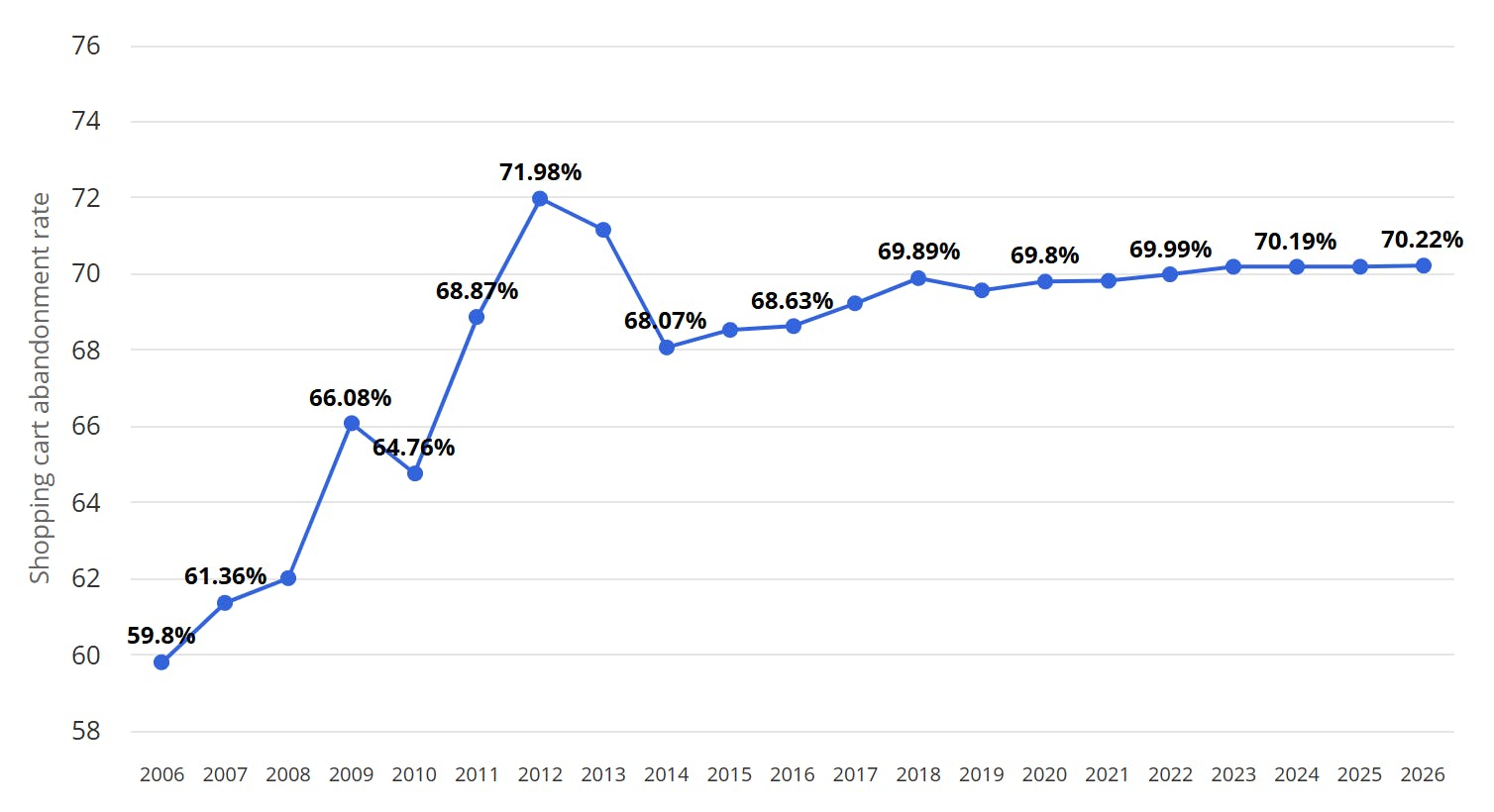
Image 1: Cart Abandonment Rates 2006-2026, Source: Statista
But accepting that not every abandoned cart is recoverable doesn't mean accepting that 70% of carts should always be abandoned.
Maybe we've simply been asking the wrong question.
Instead of asking: “How do we recover abandoned carts?”
we should first ask: “Why did customers hesitate before abandoning them?”
That small shift in perspective changes the conversation entirely. This is exactly where Conversational Commerce changes the discussion. Instead of trying to convince customers to return after they've already left, it focuses on helping them make confident purchasing decisions while they're still on your website.
Again, just like in a physical store, even if someone is just browsing, a great salesperson can help them actually purchase something.
What Causes Shopping Cart Abandonment?
Not every abandoned cart has the same cause. While some visitors were simply browsing and never intended to purchase, others fully intended to buy but encountered friction along the way.
Some obstacles are purely technical and can be resolved on the backend by implementing better e-commerce practices, such as removing mandatory account creation, expanding payment options, fixing website errors, or simplifying the checkout process.
Those are important improvements, and every e-commerce business should make them.
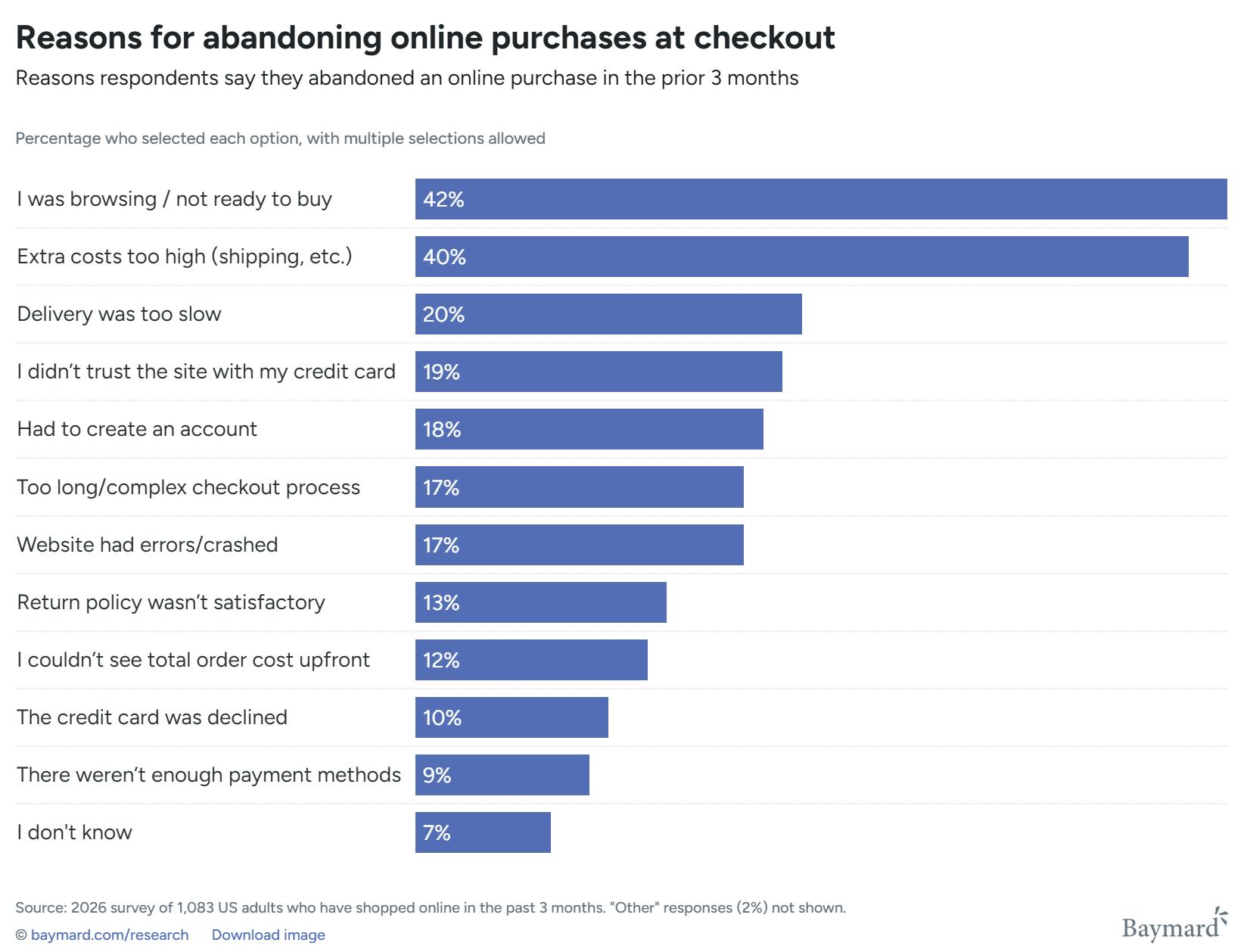
Image 2: Cart Abandonment Reasons, Source: Baymard Institute
But another large group of shoppers leaves for a different reason: they still have unanswered questions:
Can I return it?
Will it arrive before the weekend?
How does it compare to another product?
Is this compatible with what I already own?
Is the premium version actually worth paying more for?
These aren't checkout problems. The customer lacks information that would make them more certain of completing the purchase. And these questions your customers may have go way beyond the questions of technical nature that used to be the focal point of optimisation processes. Your customers are not only interested in shipping fees and dates, they want to know about the product.
This is where you activate your online all-knowing salesperson, i.e. your conversational agent.
Why Traditional Cart Abandonment Strategies Only Solve Part of the Problem
For two decades, e-commerce teams have focused solely on making checkout easier.
- Remove a form field.
- Offer Apple Pay.
- Simplify payment.
- Display shipping costs earlier.
All of these changes matter, and all of them reduce friction during the final stages of the purchase journey. Yet cart abandonment stubbornly remains around 70%.
That's because customers don't abandon their carts simply because checkout is difficult. They abandon because, somewhere along the journey, uncertainty outweighs confidence.
Think about the most common reasons for abandonment: Unexpected fees, shipping information, account creation, and long checkout flows. These are usually treated as isolated problems with isolated solutions, but if you look one level deeper, they all point to the same underlying issue. Unexpected fees matter because customers become uncertain. Shipping information matters because customers have questions. Account creation creates another opportunity to pause and reconsider. Long checkout processes introduce more moments of hesitation.
Everything comes back to uncertainty.
Every unanswered question increases the likelihood that a customer leaves your website to find the answer elsewhere - whether that's Google, Reddit, YouTube, AI search, or, in the worst-case scenario for your brand, a competitor's website.
And every time they leave, the chances of them returning decrease.
At the same time, marketers built entire strategies around recovering abandoned carts after customers had already left. According to Klaviyo's ecommerce benchmarks, traditional abandoned cart email campaigns recover an average of just 3.33% of abandoned sales [2].
Abandoned cart emails, discount codes, retargeting campaigns and reminder notifications have all become standard. This, while surely effective in certain cases, is reactive problem-solving. If you wait for the customer to leave your website, even your best efforts (or offers) of trying to get them back may be futile.
By the time an email arrives in a customer's inbox, they have already interrupted their buying journey. They may have searched Google, read Reddit discussions, compared competitors, watched YouTube reviews, or simply forgotten about the purchase altogether.
Recovery becomes significantly harder once uncertainty has taken customers away from your website.
How Conversational Commerce Reduces Cart Abandonment
Conversational Commerce approaches the problem from a completely different perspective. Instead of asking customers to navigate a static website and search for information themselves, it brings answers directly into the buying experience.
Imagine a customer looking at a running shoe. Instead of leaving to search Google for sizing advice, they ask:
"Is this model suitable for wide feet?"
Here are some more examples. A customer wonders whether a premium version is worth paying an extra £40. Someone else wants to know whether the product works with something they already own.
Rather than forcing customers to search elsewhere, conversational commerce provides immediate answers without interrupting the purchase journey.
Modern AI shopping assistants can explain product differences, recommend the most suitable option based on customer needs, answer questions about shipping and returns, surface relevant reviews, compare products side by side and explain technical specifications in plain language. In many ways, as we mentioned before, it replicates what a knowledgeable salesperson would naturally do in a physical store: answer questions, reduce uncertainty and build confidence before asking for the sale.
Instead of treating product pages as static catalogues, conversational commerce turns them into interactive sales experiences.
Using Conversational Commerce for Upselling and Cross-Selling
Conversational commerce not only ensures you make the sale, but it also increases the value of shopping carts. Focusing entirely on customers’ intent, it allows recommendations to become contextual, which is also how it differs from traditional product recommendations (such as “Others also bought”).
The assistant works in the present moment, discussing with the customer about their needs and preferences. The suggestions it has are presented as helpful advice in a conversation rather than promotional banners or pop-ups, which is why they do not feel like upselling, but more like helpful assistance.
Customers gain confidence that they’re making the right and necessary purchase, while retailers increase Average Order Value (AOV).
Next Steps
Not every abandoned cart can be recovered. Some customers were never going to buy, but the harsh truth is that many leave because they lack information, both the basic product information and the detailed one, depending on each particular case.
The main advice for solving cart abandonment is approaching the problem before the abandonment. After your customers leave the website, bringing them back is extremely difficult. Rather than waiting until someone leaves to send an email or offer a discount, conversational commerce addresses hesitation while the customer is still engaged. It answers questions, resolves objections, guides product discovery, recommends complementary products and helps shoppers move from curiosity to confidence without leaving the website.
The goal isn't simply to make checkout easier.
It's to make saying "yes" easier.
FAQ
Frequently Asked Questions
Resources
[1] Statista. "Online Shopping Cart Abandonment Rate Worldwide from 2006 to 2026." Statista. 2026. https://www.statista.com/statistics/477804/online-shopping-cart-abandonment-rate-worldwide/
[2] Shopify. "Abandoned Cart Emails: Best Practices and Examples." Shopify. 2026. https://www.shopify.com/uk/blog/abandoned-cart-emails
[3] Baymard Institute. "Cart Abandonment Rate Statistics." Baymard Institute. 2026. https://baymard.com/lists/cart-abandonment-rate
[4] Baymard Institute. "Reasons for Cart Abandonment." Baymard Institute. 2025. https://baymard.com/lists/cart-abandonment-rate
[5] United Nations Conference on Trade and Development (UNCTAD). "Digital Economy Report." UNCTAD. 2024. https://unctad.org/publications-search?search_api_fulltext=Digital+Economy+Report
[6] Organisation for Economic Co-operation and Development (OECD). "OECD Digital Economy Outlook 2024." OECD. 2024. https://www.oecd.org/en/publications/oecd-digital-economy-outlook-2024.html
[7] National Institute of Standards and Technology (NIST). "Artificial Intelligence Risk Management Framework (AI RMF 1.0)." NIST. 2023. https://www.nist.gov/itl/ai-risk-management-framework
[8] European Commission. "Consumer Conditions Scoreboard 2025." European Commission. 2025. https://commission.europa.eu/publications/consumer-conditions-scoreboard_en
[9] World Economic Forum. "Future of Jobs Report 2025." World Economic Forum. 2025. https://www.weforum.org/publications/the-future-of-jobs-report-2025/
[10] Pew Research Center. "How Americans Use AI in Everyday Life." Pew Research Center. 2025. https://www.pewresearch.org/