




Chatbots vs. AI Agents: What's the Difference?
Compare AI agents and chatbots side by side - capabilities, costs, and real D2C use cases. Find which one fits your customer experience strategy.
An AI chatbot can answer. An AI agent can act. Old chatbots follow scripts. AI chatbots use a language model to talk. AI agents add tools so they can log into Shopify, Zendesk, or your warehouse and finish the job. Direct Ferries used this in 15 weeks to handle 7,000 monthly inquiries. Firney builds that agent layer for D2C.
Opening a website and seeing that slightly intrusive bubble at the bottom right corner usually meant starting a conversation that would end in an endless loop of "I’m sorry. I don’t understand the question," or simply directing you to some link on the website that is just as useless to your inquiry.
The bad chatbot experiences of the past might cause today’s D2C brands to fear frustrating their users and thus refuse to implement a new digital helper. But there is good news: the technology has matured. We have moved from simple scripts to genuine intelligence, and for many brands, the first step into AI has already been a game-changer.
What's the Difference between Chatbots and Agents
The main difference between chatbots, AI chatbots and AI agents lies in the technology behind it, and, consequently, the role they play based on it. Chatbots rely on pre-written scripts meaning it works only in expected scenarios. An AI chatbot uses LLMs which makes it possible to answer complex questions, but is strictly informational. An AI agent is the final stage of the evolution, combining the conversational aspect of AI chatbots with direct task execution.
Level 1: Chatbots
Chatbots are essentially glorified flowcharts. They operate on rigid “if/then” rules, which is what leads your users to often get stuck in a loop. During its development, the human behind it had to predict every possible question a customer might ask and write a script for it so that the chatbot could send a reply.
If the customer went “off script” in any way (asked a new question, used slang, made a typo, or even asked more things at once), the bot would hit a dead end. It didn’t have a brain. It had a map it followed blindly.
Era: 2010–2020
The Tech: Rigid scripts and buttons.
How it works: If the customer clicks "A," say "B."
The Flaw: It is dumb. If you say "I want my money back" instead of clicking "Refund," it breaks.
Level 2: AI Chatbots
This is where many brands are today. They plugged ChatGPT into their FAQs, and now their bot is incredibly talkative and smart. It can answer any question, no matter how complex it is, it understands slang and typos, and isn’t even limited to a single language.
If your primary goal is to answer questions instantly, a standard AI Chatbot is a massive upgrade from Level 1. It solves the frustration of "I don't understand," drastically improving user satisfaction regarding support queries.
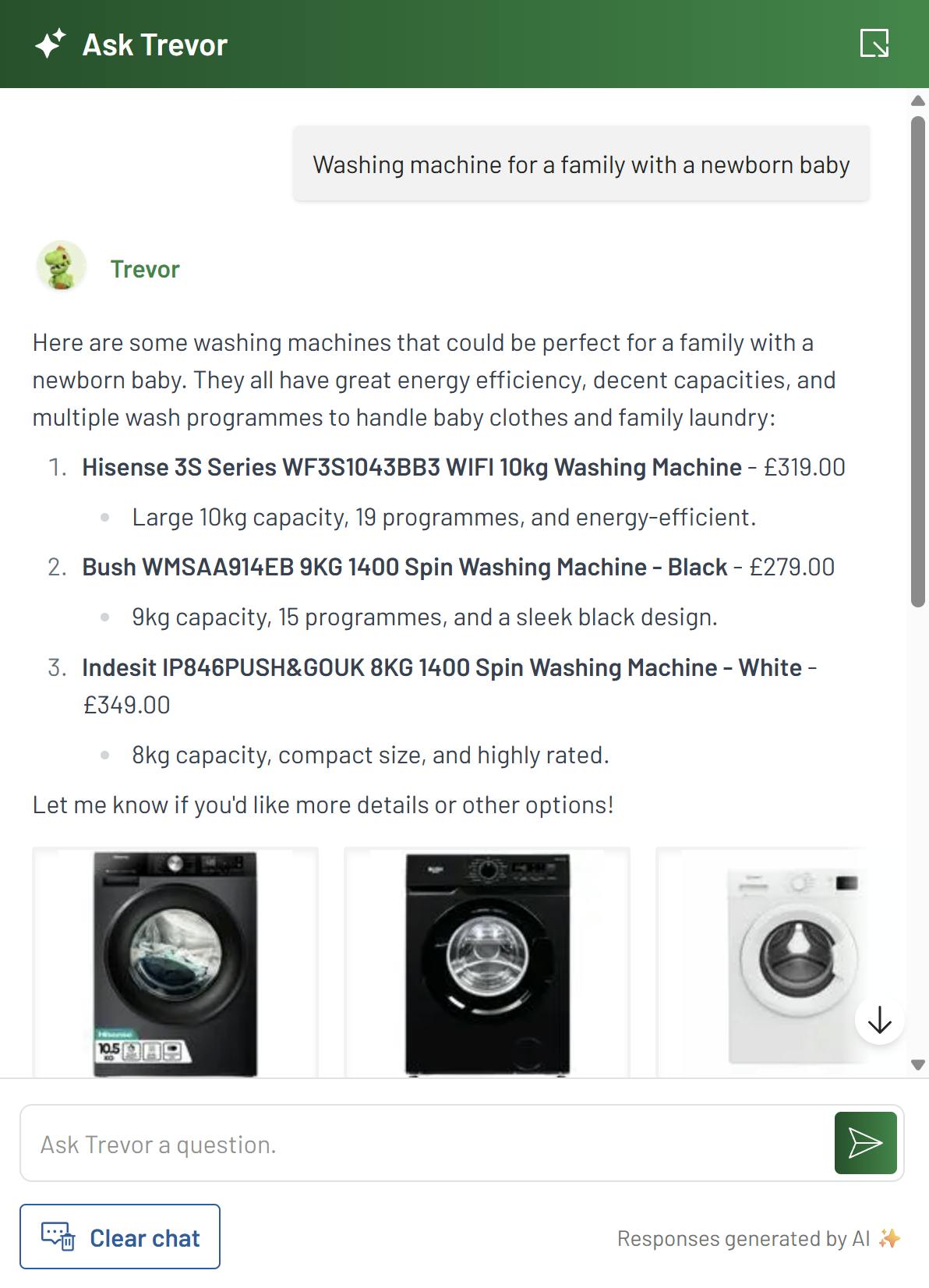
Image 1: Argos AI Chatbot, Source: Argos.co.uk
There are many UK retailers that have already implemented this solution for their customers, helping them avoid unnecessary filtering and time-consuming searches.
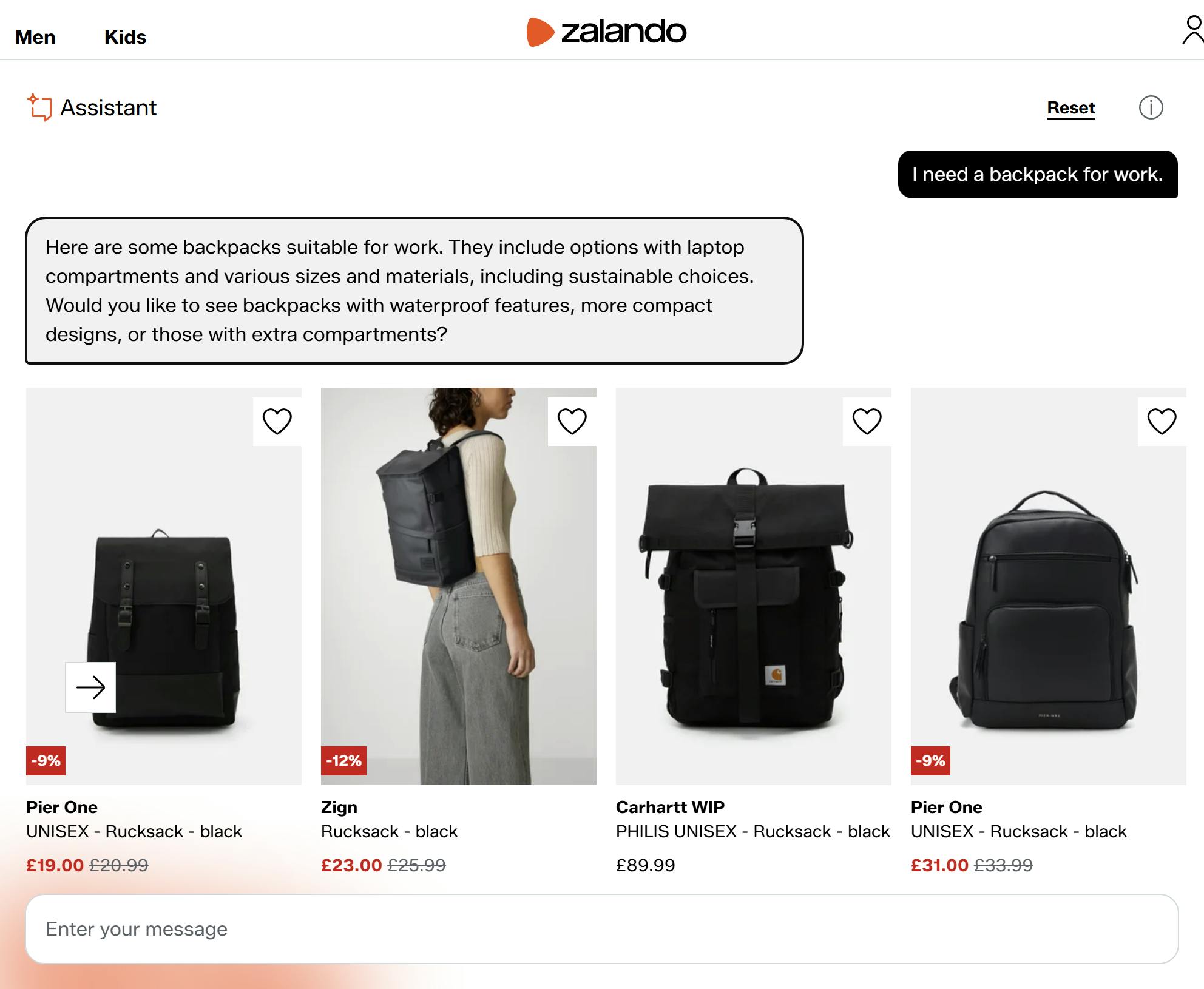
Image 2: Zalando AI Chatbot, Source: Zalando.co.uk
However, customer expectations are moving targets.
As users get comfortable with AI that understands them, they are beginning to expect AI that can help them. While it is a major step forward and can drastically improve user satisfaction, its role remains limited, albeit quite smart, to a conversation. It can tell a customer in great detail what they have to do. It can even make a poem out of your returns policy. However, when it comes to doing, its hands are tied.
Era: 2023–2024 (The ChatGPT Boom)
The Tech: LLMs (Large Language Models).
How it works: It reads your manuals and FAQs. It can answer any question fluently. It understands slang, typos, and context.
The Flaw: It has no hands. It can tell you how to get a refund, but it cannot process the refund for you. It is "Read-Only."
Level 3: AI Agent
This is the necessary evolution for brands wanting to future-proof their customer experience.
An agent combines the smart conversational aspect of an AI chatbot with the “hands” of a software integration. It has permission to access different tools like your CRM, your order management system or your inventory, which allows it not only to give replies to your customers, but to actually do something to help them.
Why does this matter? Because your customers are rapidly getting used to "Agentic" experiences elsewhere on the web. They no longer want to just find the answer, they want to fix the problem.
Era: 2026+
The Tech: LLM + Tools (APIs) + Memory.
How it works: It understands the request (like AI Chatbots) BUT it also has permission to log into your software (Shopify, Salesforce) to do the work.
The Advantage: It is "Read-Write." It doesn't just talk, it acts.
Comparison
As mentioned earlier, the main difference lies in the technology behind each tool. While traditional chatbots are built using scripts, both AI Chatbots and AI Agents rely on Large Language Models (LLMs), with AI Agents going a step further with additional APIs that allow them to perform actions.
Feature | Old Chatbot | AI Chatbot | AI Agent |
Technology | Scripts (If/Then) | LLM (Language Model) | LLM + Tools (APIs) |
Behaviour | Robotic | Conversational | Autonomous |
Capability example | Links to Policy | Explains Policy | Executes Policy |
User Effort | High | Medium | Zero |
Role | Digital Signpost | Digital Librarian | Digital Employee |
Autonomy | None (Rule-bound) | Low (Prompt-dependent) | High (Goal-oriented) |
Learning | Static (Requires manual script updates) | Session-based (Adapts within the chat) | Continuous (Updates memory from past outcomes) |
Integration Depth | Shallow (Basic links or triage) | Moderate (Read-only access to Knowledge Base) | Deep (Two-way APIs, Read/Write access to CRM/Shopify) |
Best Use Case | Out-of-hours routing | Level 1 Support & answering FAQs | End-to-end ticket resolution & proactive sales |
Typical ROI | Low (High deflection, low resolution) | Medium (Saves human agent time on repetitive queries) | High (Completes tasks autonomously, drives revenue) |
Table 1: Digital Employees Comparison
When to Use a Chatbot vs. an AI Agent
While the future clearly points toward agentic commerce, not every DTC brand needs a fully autonomous digital employee on day one. In fact, research indicates that 74% of consumers still expect a seamless escalation to a human agent if an AI cannot solve their problem instantly [9].
Understanding your immediate business bottlenecks is the key to choosing the right level of an agent you should implement, as is the case with any new technology you are implementing.
Here is a simple decision framework based on real e-commerce scenarios to help you determine which tool fits your current needs.
Scenario A: The "information first" store
If your customer support team spends 80% of their time answering repetitive questions about sizing charts, shipping times, or the specifics of your return policy, a standard AI Chatbot (Level 2) is highly effective.
- The Verdict: Use an AI Chatbot. It acts as a powerful digital librarian that instantly reads your manuals and FAQs to serve up perfect answers, eliminating the "let me check our website" delay.
However, even though your goal is to use AI to help with customer support, it is important you always have the option of contacting actual human agents.
Scenario B: The "WISMO" crisis
"Where is my order?" (WISMO) is the bane of e-commerce support, accounting for up to 30% of all inbound e-commerce queries [7]. An AI chatbot can tell a customer how to track an order by providing a link to the carrier. An AI Agent (Level 3) connects to your Shopify backend, reads the live carrier API, checks the warehouse dispatch status, and tells the customer exactly where the package is, without human intervention.
- The Verdict: Use an AI Agent. It turns a multi-step customer chore into an instant resolution.
Scenario C: Complex returns and exchanges
A customer wants to return a shirt because it is too small, but they bought it using a discount code that has since expired. A standard chatbot will simply direct them to the returns portal. An AI Agent will understand the context, automatically generate a return label, check live inventory for the next size up, and apply the original discount code to the exchange order.
- The Verdict: Use an AI Agent. It executes the policy rather than just quoting it.
Scenario D: Proactive cart recovery
When a high-intent shopper stalls at checkout, traditional marketing relies on delayed cart recovery emails, which typically only convert at around 4-9% [12]. An AI Agent can intervene in real-time directly on the page, understand the hesitation (e.g., shipping costs), and autonomously generate a one-time free shipping code to close the sale.
- The Verdict: Use an AI Agent. It shifts the AI from a defensive support tool to an offensive sales driver.
How to Choose the Right Solution for Your Brand
Transitioning from legacy tech to an AI Agent can feel daunting. If you are a D2C leader evaluating solutions for 2026, you first need to cut through the hype. A mistake many brands make is implementing technology for the sake of technology, instead of identifying and focusing on solving the issue they have with that technology. Oftentimes, the cases of brands using conversational AI technology tend not to positively affect ROI as they had not been implemented to solve a friction point either their users or their teams faced.
In fact, according to statistics, only 5% of companies actually see return on their investments in AI, and this is the reason why.
Follow this three-step user’s guide to ensure you choose the right digital employee for your store.
Step 1: Audit your friction points
This is number one. Look at your last 1,000 customer service tickets. Are your customers asking for information (e.g., "Do you ship to Canada?") or are they asking for action (e.g., "Can you change my shipping address on order #1234?"). If your tickets are primarily action-based, a standard chatbot will only frustrate your customers further. You need an agent that actually completes actions and does a service your users require.
Step 2: Assess your tech stack’s readiness
An AI Agent is only as powerful as the tools it is allowed to touch. Before purchasing an agentic solution, audit your backend systems. Ensure your e-commerce platform (Shopify, BigCommerce), your Helpdesk (Zendesk, Gorgias), and your inventory management software have open, robust APIs. If your data lives in siloed, outdated software, an AI Agent will not be able to execute tasks.
Step 3: Demand a "human-in-the-loop" failsafe
If the Klarna example taught the industry anything, it is that the "human in the loop" is not a temporary training wheel. Having the option of including a human when an agent cannot handle the task is a permanent, necessary feature. When evaluating vendors, ask to see their escalation protocols. If a customer is highly frustrated, or if an edge-case scenario arises that the AI cannot solve, the agent must be able to seamlessly hand the conversation over to a human operator. Crucially, the AI should pass along a concise summary of the conversation and the actions already attempted, ensuring the human agent can solve the problem immediately without making the customer repeat themselves.
AI Agent vs. Chatbot: ROI Comparison
When pitching new tech to the C-suite, the conversation inevitably turns to Return on Investment (ROI). The ROI profile of a chatbot differs vastly from that of an AI agent, primarily because chatbots measure success in deflection, while agents measure success in resolution and revenue.
- Deflection vs. resolution: According to recent industry benchmarks, a standard AI Chatbot typically resolves only 15% to 30% of customer inquiries before handing them off to a human [15]. AI Agents, because they have "write" access to your systems, routinely resolve 60% to 80% of L1 support tickets entirely on their own [10].
- Cost per interaction: Chatbots lower the cost of initial triage, but human agents still spend time completing the actual tasks. Agents perform the task end-to-end, drastically cutting the operational cost per ticket. McKinsey estimates that applying generative AI and agentic workflows to customer care can increase productivity by 30% to 45% [8].
- The scale and the ceiling: The most staggering ROI data in the industry comes from Klarna. In its first month, their OpenAI-powered agent handled 2.3 million conversations (two-thirds of their total volume), doing the equivalent initial work of 700 full-time agents and driving a projected $40 million profit improvement [1]. However, this massive ROI also revealed the "ceiling" of pure automation. While the AI was flawless at routine tasks, Klarna quickly learned that an AI cannot replace human empathy, judgment, and negotiation in complex financial disputes, which r esulted in them opting for a hybrid human-AI solution instead.
While most D2C brands do not have Klarna’s volume, the proportional ROI remains identical: faster resolutions for routine tasks and a massive drop in overhead, provided the system is designed correctly.
Will AI Agents Replace Chatbots?
The short answer is yes. The longer answer is that they are already absorbing them.
While there certainly are still many scenarios in which a simpler conversational chatbot is enough for a particular use case, with the further technological advancements, as well as the changes in user behaviour (particularly their trust in AI agents), there simply won't be a need for a conversation-only agent. Gartner predicts that by 2026, over 80% of customer service and support organizations will have transitioned from basic conversational AI to agentic workflows [6]. In the software world, technologies rarely coexist when one is simply a restricted version of the other. An AI Agent possesses all the conversational fluency, multilingual capabilities, and contextual awareness of an AI Chatbot.
The chatbot is simply the "brain" and the "mouth," while the agent adds the "hands."
As the cost of API integrations drops and large language models become faster, there will be no financial or strategic reason for a brand to deploy a "read-only" chatbot. As noted by Harvard Business Review, modern consumers suffer from "chat blindness" and actively avoid tools that create extra work for them [11]. The conversational interface will remain, but the technology powering it will be entirely agentic.
What Technology Offers Maximum Value in 2026?
For today’s DTC brands and CMOs, the ground is shifting faster than most realise. While the industry has rightfully abandoned the clunky, scripted chatbots of the past, many brands are now settling for standard AI Chatbots, models that act as polite librarians. They answer FAQs fluently and handle basic service queries. For many, this feels like a victory. While it offers major progress from the original chatbot, in the eyes of the tech giants who are driving consumer behaviour, this "informational" AI is already a legacy technology.
We are rapidly entering the era of Agentic Commerce, a fundamental shift where the AI is no longer just a conversation partner, but the actual point of sale.
Just in the last couple of months, we saw Google and OpenAI raising the stakes.
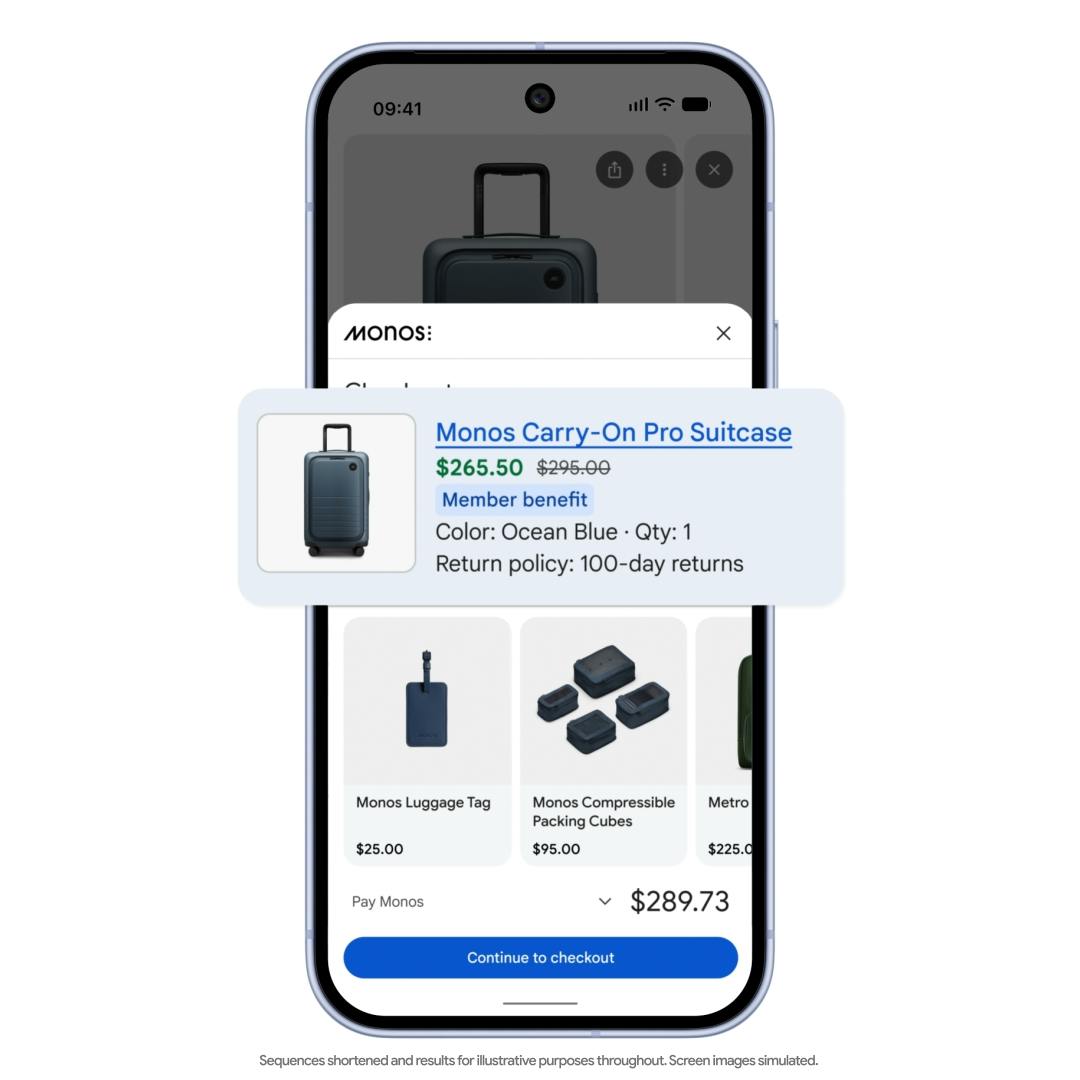
Image 3: Google Agentic Commerce, Source: Google Blog
Google is actively integrating "checkout" capabilities directly into Gemini and its ecosystem, effectively turning the search bar into a transaction layer. Similarly, OpenAI is developing agentic workflows that allow their models to browse the web and execute tasks across different sites autonomously.
This means the "Sales Funnel" is collapsing into a single conversation.
Why does this make simple AI Chatbots insufficient for the years to come?
Because consumer expectations operate like a ratchet, in that they only turn one way. The moment a customer experiences an Agent that can modify a subscription, process a complex return, or buy a product directly within a chat interface without ever visiting a product page, the old way of doing things (clicking links, filling out forms, and navigating sitemaps) will feel broken.
If your brand relies on a simple AI chatbot that only offers text-based answers, you are effectively building a wall between your customer and the transaction. To survive in an Agentic Commerce world, you cannot just have an AI that talks. You must build a "Digital Employee" that acts.
Real-World D2C Examples
We are no longer speaking in hypotheticals. Agentic commerce is already operating in the wild, transforming how modern brands handle both frontend sales and backend logistics.
Klarna
Klarna’s journey is the ultimate case study in AI maturity. After initially relying almost entirely on their AI agent to replace hundreds of roles, Klarna pivoted to a "hybrid" model. They realised that when AI is left alone to handle highly sensitive, complex, or emotional customer issues, quality drops and frustration spikes. Today, their AI agent successfully handles the massive volume of transactional, routine queries (like refunds and tracking), while seamlessly routing nuanced, high-stakes issues to a newly hired fleet of specialized human agents. It proves that AI's true value isn't human replacement, but human allocation.
Perfect Corp
In the cosmetics space, AI Beauty Agents are actively guiding product discovery. Instead of relying on static filters, these agents ask clarifying questions about skin type and routine, pull real-time inventory data, and dynamically bundle products, acting as hyper-personalized digital sales associates.
Direct Ferries
A travel-industry case study of our own, Direct Ferries resolved an issue of having 7,000 monthly user inquires, which put a major strain on their customer support. With the conversational agent we implemented, we aimed at simplifying travel discovery. Within a rapid 15-week deployment, the new conversational AI system successfully automated 7,000 monthly inquiries.
This drastically lighten the load on human customer service agents and provided travelers with a frictionless, instant user experience.
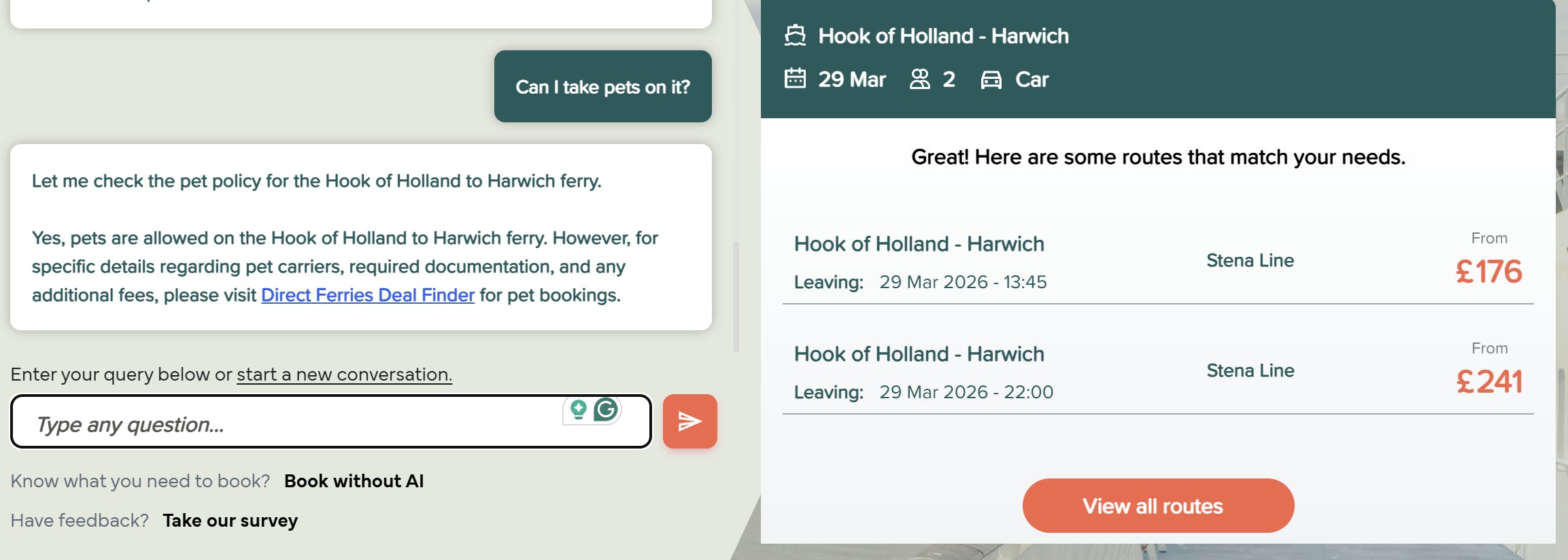
Image 4: Direct Ferries conversational AI
Conclusion
As a marketer, you don’t need to understand the complex Python code that powers a Large Language Model. You don't need to know how Google’s Universal Commerce Protocol works under the hood. But you do need to know what your customers want.
With tech giants like Google and OpenAI actively training users to expect "Agentic" experiences, where a single sentence triggers a purchase, a return, or a subscription update, the bar has been permanently raised.
If you are planning your strategy for the coming year, look at your customer journey. Are you building tools that just talk, or are you building digital employees that do?
FAQ
Frequently Asked Question
References
[1] Klarna. "Klarna AI assistant handles two-thirds of customer service chats in its first month". Klarna Press. 2024. https://www.klarna.com/international/press/klarna-ai-assistant-handles-two-thirds-of-customer-service-chats-in-its-first-month/
[2] Google Cloud. "A new era of agentic commerce is here". Google Cloud Blog. 2026. https://cloud.google.com/transform/a-new-era-agentic-commerce-retail-ai
[3] Perfect Corp. "Perfect Corp. Showcases AI-Powered Beauty Agents and API Innovations Driving the Future of Retail". National Law Review. 2026. https://natlawreview.com/press-releases/perfect-corp-showcases-ai-powered-beauty-agents-and-api-innovations-driving
[4] Prediko. "AI Inventory Forecasting for Shopify To Reduce Stockouts". Prediko. 2026. https://www.prediko.io/blog/ai-inventory-forecasting-shopify
[5] Firney. "Case Study: How Conversational AI Improves UX and Lightens the Load on Customer Service". Firney. 2026. https://www.firney.com/news-and-insights/case-study-how-conversational-ai-improves-ux-and-lightens-the-load-on-customer-service
[6] Gartner. "Gartner Predicts 80% of Customer Service and Support Organizations Will Apply Generative AI to Improve Productivity by 2026". Gartner. 2024. https://www.gartner.com/en/newsroom/press-releases/gartner-predicts-80-percent-of-customer-service-organizations-will-apply-generative-ai
[7] Zendesk. "Zendesk Customer Experience Trends Report 2026: The Era of Intelligent Agents". Zendesk. 2026. https://www.zendesk.com/blog/cx-trends-report-2026/
[8] McKinsey & Company. "The economic potential of generative AI: The next productivity frontier". McKinsey Global Institute. 2023. https://www.mckinsey.com/capabilities/mckinsey-digital/our-insights/the-economic-potential-of-generative-ai-the-next-productivity-frontier
[9] Salesforce. "State of the Connected Customer: How AI is Reshaping E-Commerce Expectations". Salesforce. 2025. https://www.salesforce.com/resources/research-reports/state-of-the-connected-customer/
[10] Forrester Research. "The ROI of Agentic AI in Retail: Moving Beyond the Chatbot". Forrester. 2025. https://www.forrester.com/report/the-roi-of-agentic-ai-in-retail/
[11] Harvard Business Review. "Why Your Customers Are Ignoring Your Chatbot (And What to Do About It)". HBR. 2025. https://hbr.org/2025/03/why-your-customers-are-ignoring-your-chatbot
[12] Shopify. "The Future of Commerce: AI and the Checkout Experience". Shopify Enterprise. 2026. https://www.shopify.com/enterprise/future-of-commerce-ai
[13] NRF (National Retail Federation). "Consumer Survey: Trust and Automation in Online Shopping". NRF. 2026. https://nrf.com/research/consumer-survey-trust-automation-online-shopping-2026
[14] MIT Sloan Management Review. "Human-in-the-Loop: The Necessary Safeguard for Autonomous Commerce". MIT SMR. 2026. https://sloanreview.mit.edu/article/human-in-the-loop-safeguard-autonomous-commerce/
[15] Intercom. "The State of AI in Customer Service: Deflection vs. Resolution". Intercom. 2025. https://www.intercom.com/blog/state-of-ai-customer-service-resolution/