




The 5-Minute Leak: How Delayed Sales Follow-Ups Cost Brands Their Revenue
Tired of leaky pipelines? Discover the math behind AI sales qualification and how implementing an always-on AI agent cuts your B2B CAC by 30%.
The traditional Sales Development Representative (SDR) model seems to be financially broken. Building a team of junior reps to manually call, email, and chase down inbound website leads is incredibly slow and expensive. It’s expensive both in terms of man-hours, as well as the ultimate cost of losing a potential customer/client.
Human reps require hefty base salaries, commissions, benefits, and expensive software licenses, yet their actual productivity is deeply limited by business hours, time zones, and administrative burnout. This is not to say that AI should replace all human SDRs, but rather that the entire process can and should be optimised with the help of AI, leaving humans to complete more complex work that requires a human touch.
This fundamental restructuring allows you to split your go-to-market execution into two distinct tracks: continuous automated qualification at the top of the funnel, and high-impact relationship management at the bottom.
This includes both:
- Qualifying leads (instantly at the exact millisecond of interest).
- Being an always-on-call sales agent.
When a high-value prospect fills out an inbound form, they want an answer immediately. Cross-industry data reveals a brutal operational disconnect: many companies still fail to respond to inbound web leads at all, while those that do often take around 42 hours to make first contact, which is a number that hasn’t changed since 2011 [1].
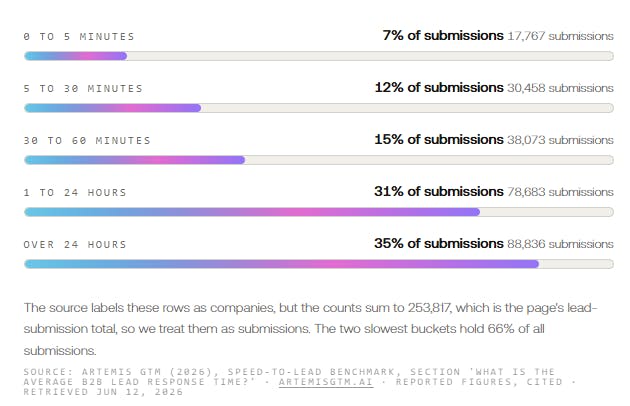
Image 1: Average Lead Response Times, Source: Tenbound
If your human team takes hours (or days) to reply, that lead leaks out of your funnel.
The solution is implementing lead qualification automation to build a flawless, 24/7 qualification pipeline.
Modern AI Sales Agents
The phrase "AI agents" may not ring a positive bell, as most will likely connect them with the traditional pop-up windows of the past. The negative memories are understandable. The old rule-based systems (if-this-then-that) would often hit a dead end since they had a limited number of options for replies, which would result in losing the lead and, ultimately, decreasing conversion rates.
Unlike those old chatbots, modern intelligent and autonomous AI agents are driven by advanced NLP (Natural Language Processing), meaning these digital workers don't rely on rigid, pre-written scripts. They understand context, human nuance, and specific business intent. Rather than keyword matching, they operate with semantic understanding. This means they are able to read an unstructured email or a vaguely filled-out contact form and determine (in a matter of seconds) who the sender is - and how valuable a lead they are.
How AI Sales Agents Can Work for You
AI Sales Agents easily become a part of your business and operations.
Through seamless AI integration directly into your existing tech stack (like HubSpot, Salesforce, or your ERP), these conversational AI systems can read an inbound inquiry, cross-reference it with your historical data, and execute hyper-personalised email or text outreach in under 45 seconds.
Picture their workflow as follows:
- The exact millisecond a prospect submits a form via your website, an automated workflow triggers to scrape public registries, LinkedIn data, and financial profiles to build a complete picture of the company.
- Instead of a human guessing if a lead is worth pursuing, the system applies automated scoring to calculate the mathematical probability that this prospect will buy, based on your historical closed-won data. Even if a human were to follow the same scoring rules, the amount of time it would take them to do it would be an expensive endeavour.
- Finally, the closing actions are started. The agent evaluates the buyer's pain point, drafts a custom response answering their exact technical question, and drops a live booking link to secure a meeting.
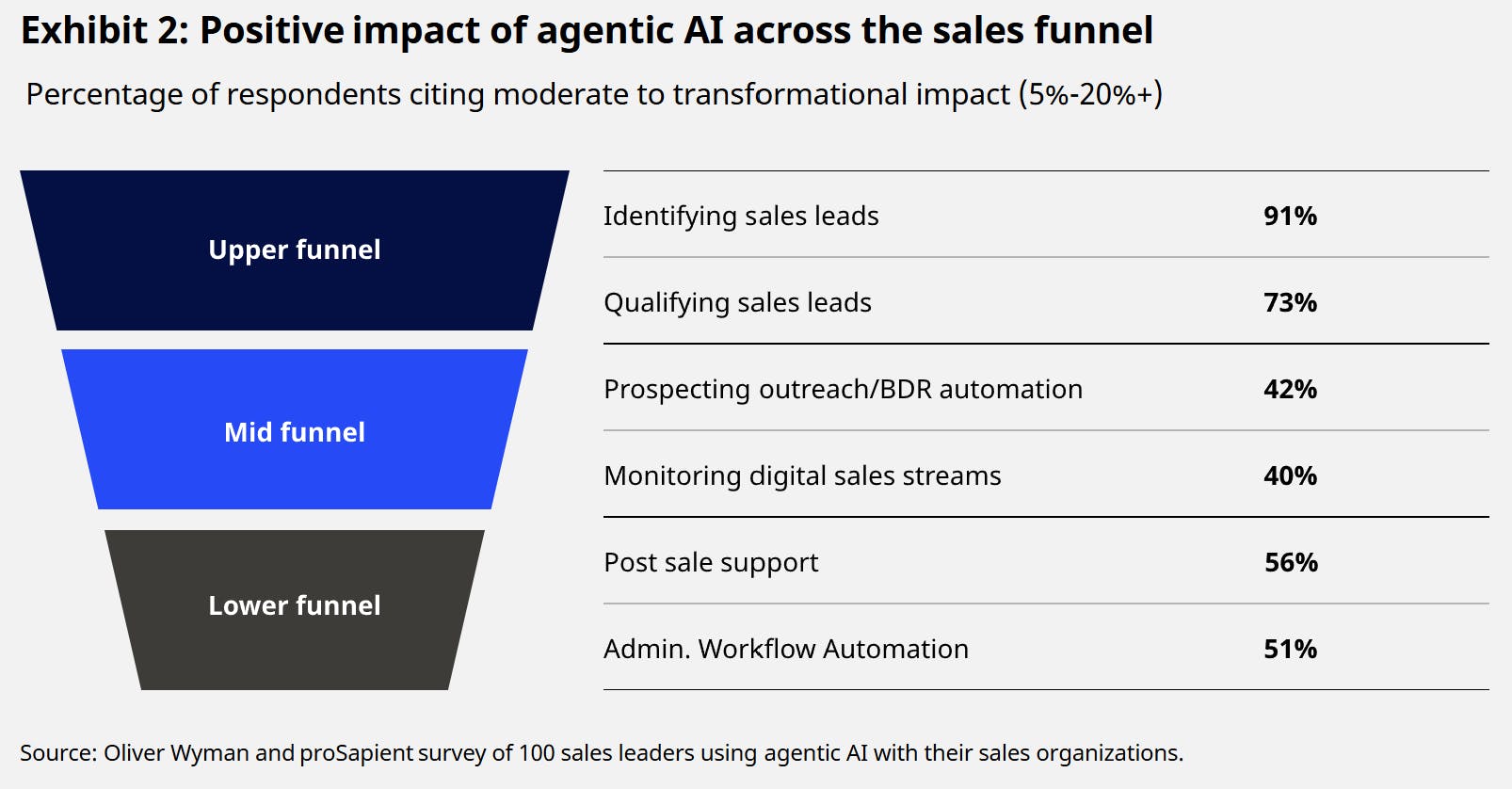
Image 2: Agentic AI Impact Across the Funnel, Source: Oliver Wyman
Implementing agentic AI in your sales workflow thus positively impacts not only your lead generation and conversion rates, with 61% of brands reporting strong impact on this metric [3], but it also affects the productivity of your sales representatives who now have time for other tasks.
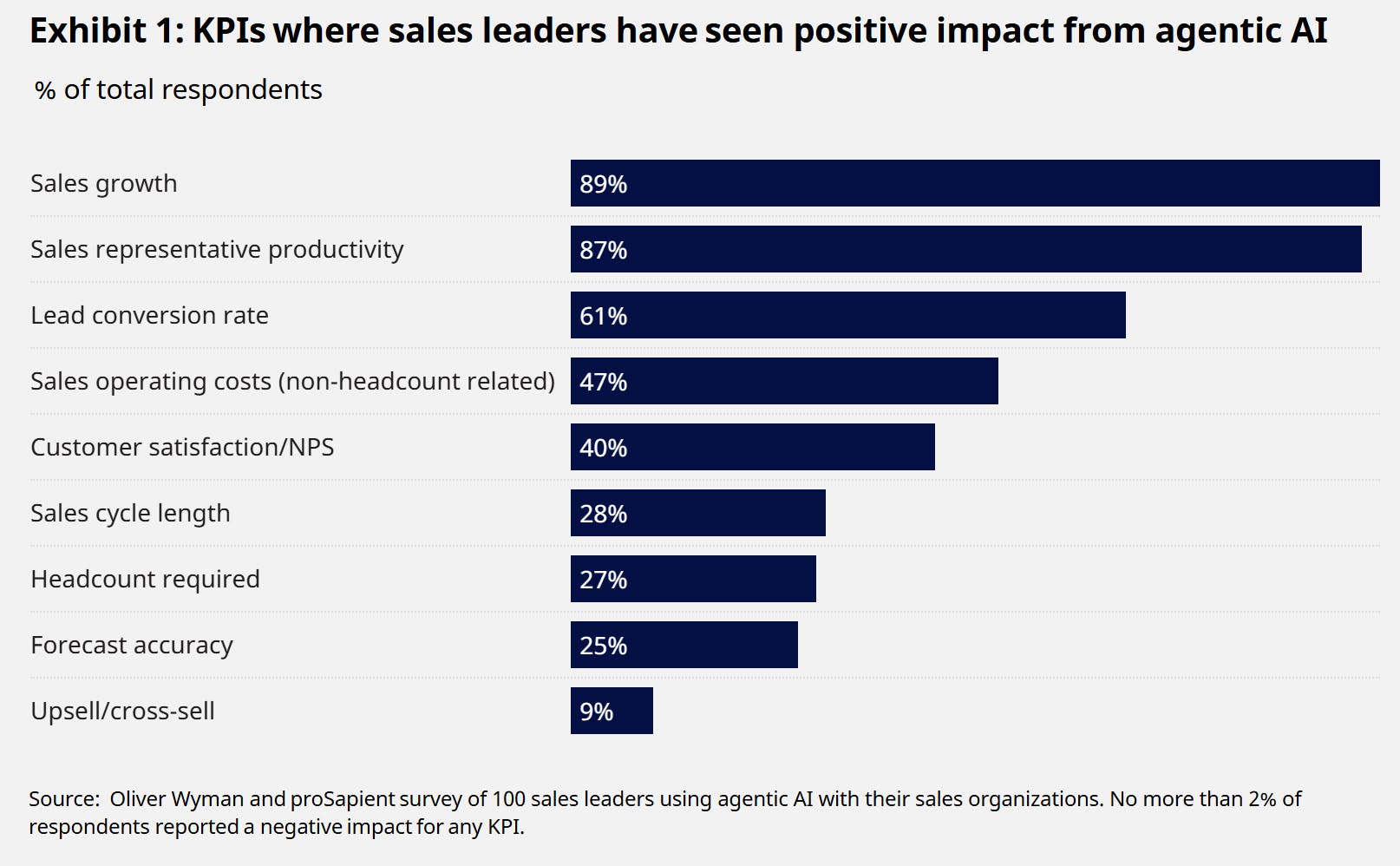
Image 3: KPIs with Positive Agentic AI Impact, Source: Oliver Wyman
How Automation Deploys Across B2B, D2C, and B2B2C Pipelines
The strategic benefit of an autonomous qualification engine scales fluidly across every modern commercial business model, solving distinct bottlenecks for each.
Simply put:
B2B Pipeline ───> “Shields” expensive AEs from raw inbound noise
D2C Wholesale ───> Locks down high-margin commercial contracts 24/7
B2B2C Funnels ───> Fast-tracks channel partner and distributor onboarding
AI Sales Agents for B2B Brands
In pure business-to-business settings, AI Agents act as your gatekeepers. Through a meticulous process completed at any point in time, tirelessly, it is ensured that only high-quality and high-intent leads are forwarded to the people in charge of closing the deals.
Account Executives (AEs) command your highest payroll expenses and commission structures. Constantly putting them in situations where they waste time on dead-end discovery calls with unqualified prospects is a massive misallocation of your capital.
By qualifying leads before they reach your team, AI reduces wasted sales effort and ensures your Account Executives spend their time speaking to highly qualified, decision-ready prospects.
AI Sales Agents for D2C Brands
While D2C brands may not completely rely on new leads as such (being focused directly on consumers), losing them once they do visit your website is a risk worth avoiding. When a wholesale buyer, retail partner, or high-value corporate client fills out a "Contact Us" or "Inquire About Bulk Pricing" form on a D2C site, they are at peak buying intent.
These are the accounts that move the needle on your profits. If you, i.e. your sales team, fail to contact them at the exact moment of their interest, your chances of closing the deal drastically decrease, as the lead in question is likely already visiting a competitor brand.
AI Sales Agents for B2B2C Brands
For hybrid B2B2C networks, businesses that scale by onboarding secondary platforms, independent merchants, or affiliate distributors to reach the end user, onboarding speed is everything. In this ecosystem, your inbound leads are potential revenue multipliers.
If a merchant applies to join your B2B2C marketplace or distribution network, they expect instantaneous authorisation. If an automated AI agent can vet their business legitimacy, verify their digital compliance, and approve their partner portal access in under a minute, you capture their immediate trading volume. If you make them wait 4 days for manual review, they will take their entire consumer audience straight to a competing network.
What is Speed-to-Lead
The name is pretty self-explanatory: the total elapsed time between the moment a prospect submits an inbound inquiry form on your website and the exact moment your brand’s representative responds with a message. A relevant and a personal message.
This one very simple metric is one of the most reliable predictors of eventual customer acquisition success. And in times of rising CACs, this is a metric worth paying attention to, especially when we have the means to optimise it completely.
Why Speed-to-Lead Matters
When contacting leads, every minute matters. While different studies have been conducted on what the best day of the week and time of the day are to contact leads, the answer that beats all those suggestions is: as soon as possible. Or rather, immediately.
This is the clearest proof of the need to implement AI in your sales workflow. Put the cost of the sales team aside, humans simply cannot compete with an all-active computer on this one. The AI agent works 24/7/365 and is there to reply immediately every single time - with a personalised message.
Take a look at the visuals below that prove the importance of minutes when contacting leads:
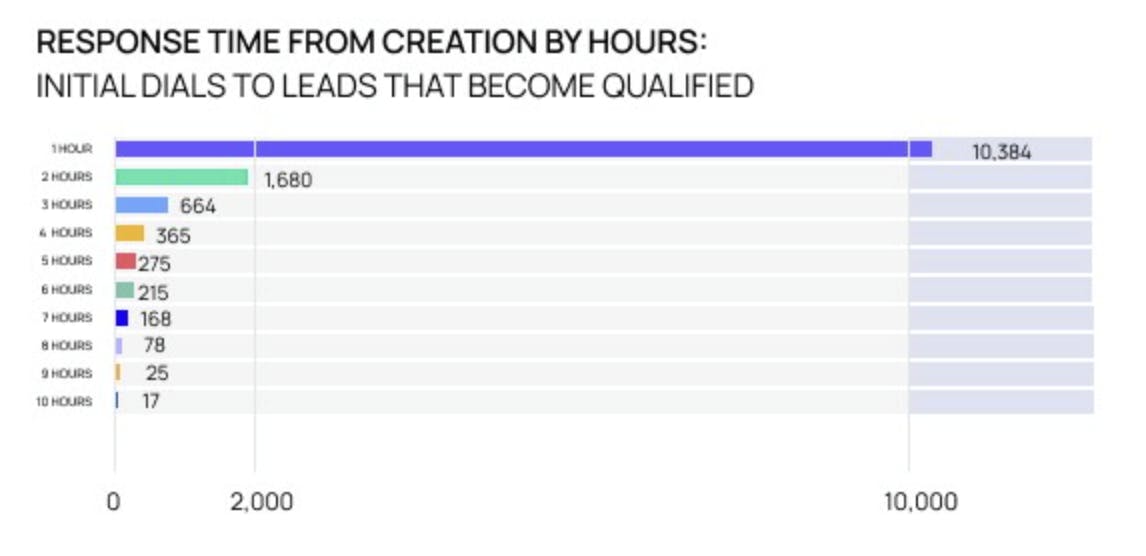
Image 4: Response time by hours, Source: L.R.M
The success of contacting leads dropped more than tenfold after the first hour. Not only that, but the success dramatically decreases after the first 5 minutes within those hour.
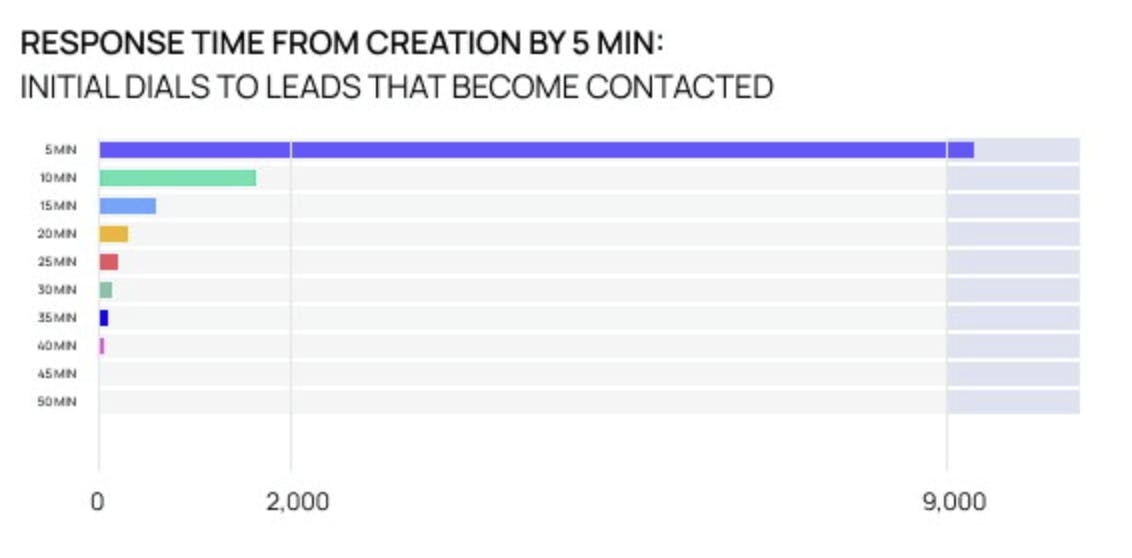
Image 5: Response time by 5 minutes, Source: L.R.M
When your speed-to-lead drops from days to under 45 seconds via automation, your lead-to-meeting conversion rate spikes. You capture 100% of the lead's active intent window, allowing fast-responding companies to secure more closed sales than slower peers not using AI agents.
AI Automation in Sales
As we’ve already mentioned, it is not about replacing your current staff and taking their jobs. AI agents work alongside your sales teams, helping them speed up the process of qualifying leads by basing it on automated scoring (i.e. propensity modelling), while at the same time working the hours to be constantly available for leads that come to you.
FAQ
Frequently Asked Questions
Resoruces
[1] Tenbound. "The 42-Hour Problem: B2B Lead Response Times and the Impact of Sales Development Latency." Tenbound Insights. 2024. https://tenbound.com/issue-01/the-42-hour-problem/
[2] Dr. James Oldroyd & InsideSales.com. "The Lead Response Management Study: Testing the Relationship Between Response Time and Contact-to-Qualification Ratios." MIT Research Repository. 2007 (Revised 2021). https://www.leadresponsemanagement.org/lrm_study/
[3] Oliver Wyman. "Agentic AI Drives Sales Growth and Productivity: How Generative Sales Workflows Impact Enterprise GTM Budgets." Oliver Wyman Insights. 2026. https://www.oliverwyman.com/our-expertise/insights/2026/jun/agentic-ai-drives-sales-growth-productivity.html
[4] Drift & Heinz Marketing. "The State of Conversational Marketing: Real-Time Engagement and the Speed-to-Lead Problem." Drift Resources. 2018 (Revised 2021). https://leadresponse.co/blog/speed-to-lead-statistics
[5] PepperEffect. "B2B SaaS CAC & LTV Financial Modeler: Optimising Customer Acquisition Costs Across GTM Playbooks." PepperEffect Interactive. 2026. https://peppereffect.com/hubfs/cac-calculator-b2b-saas.html#s=450000&c=30&i=saas_mid&cur=USD
[6] EOI Digital GTM Advisory. "Understanding CAC Payback and Unit Economic Payback Timelines in High-Ticket Sales Operations." EOI Digital Glossary. 2025. https://www.eoi.digital/glossary/cac-payback
[7] Digital Applied GTM Operations. "Speed-to-Lead Benchmarks 2026: Direct Response-Time Data, SLAs, and the ROI of Automated Qualification." Digital Applied Blog. 2026. https://www.digitalapplied.com/blog/speed-to-lead-response-time-benchmarks-2026-data-playbook
[8] Gitnux Research. "The Definitive Speed-to-Lead Statistics Report: How Response Latency Impacts Sales Conversion Rates." Gitnux Market Reports. 2026. https://gitnux.org/speed-to-lead-statistics/
[9] James B. Oldroyd, David Elkington, and Neil L. Shortlidge. "The Short Life of an Inbound Lead: Why Slow Sales Outlines Kill B2B Funnels." Harvard Business Review. 2011. https://ainora.lt/blog/lead-response-time-statistics-every-study-2026
[10] Velocify. "The Ultimate Lead Response Study: 3.5 Million Leads Analyzed Across Follow-Up Timing and Conversion Rates." Velocify Whitepaper Series. 2020. https://ainora.lt/blog/lead-response-time-statistics-every-study-2026
[11] GreetNow GTM Team. "Speed to Lead Statistics 2026: 47 Crucial Data Points That Drive Pipeline Velocity." GreetNow Blog. 2026. https://greetnow.com/blog/speed-to-lead-statistics
[12] Plura AI GTM Intelligence. "Lead Response Time Statistics 2026: Why Real-Time Automation Wins the Deal in High-Stakes Pipelines." Plura AI Articles. 2026. https://www.plura.ai/articles/lead-response-time-statistics-2026