




Why High-Traffic E-Commerce Periods Kill Your Conversion
Peak traffic periods expose hidden conversion killers. Learn why site speed, mobile UX, and checkout friction cost D2C brands up to 30% of seasonal revenue.
As November and December ad bids climb, you invest heavily to capture the shopping season’s richest traffic. You pour budget into your creative, both copy and visuals, more into UX, and more into the very ads.
If all goes to plan, you sit back and watch as traffic reaches its yearly peak, and hope for an equally successful and lucrative Return on Ad Spend (ROAS) and profit in general. This is likely where you are right now: glued to the dashboard, watching the numbers climb.

Holiday Traffic Peak, Source: Statista
But here is the surprise: that expensively acquired traffic isn't converting into the profit you modelled. Instead, visitors are bouncing, and your investment is going down the holiday drain.
So, where lies the problem?
It’s neither with your creative nor your targeting: the people are already there.
It’s a failure of your infrastructure.
In the high stakes of a shopping-rich holiday season, even the slightest mistake is guaranteed to take your customers elsewhere - likely straight to your competitors.
The Mathematics of Your Traffic
The uncomfortable truth about modern e-commerce is that marketing success often triggers engineering failure. Engineering may be something in the background, often overlooked by marketers, so seemingly “minor” things like a 1-second delay in speed may go unnoticed, and undealt with.
This becomes even more obvious when you push heavy traffic to a site, like the holiday peak we are currently in the middle of. The load on your server infrastructure increases, which creates latency on unoptimised sites. Your site doesn't necessarily crash fully (which would trigger an alert). It just slows down, which, oftentimes, can be even worse, considering the high bounce rates it results in.
Why? To a Marketing Director, a 1-second delay sounds negligible. To a user, it is a dealbreaker.
Data from late 2024 and early 2025 indicates that a single second of load lag can reduce conversions by 7%. Even a micro-delay of 0.1 seconds can hurt conversion rates by up to 8% in high-intent categories.
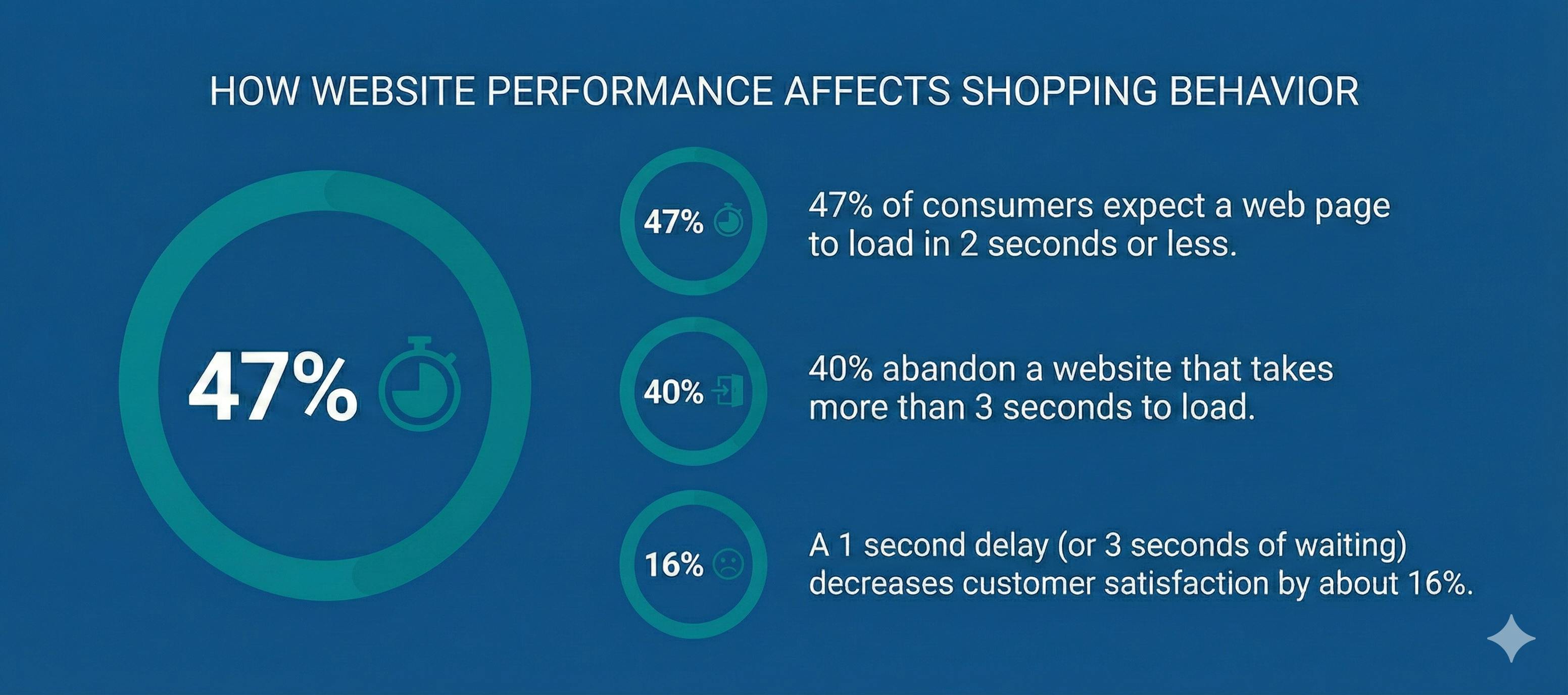
If your holiday campaign drives 100,000 visitors, but your site performance effectively rejects 7% of them due to lag, you are paying a "traffic tax" on every single click. You are paying to acquire customers, only to have your website’s performance hand them over to Amazon, whose infrastructure never blinks.
The Mobile-first Agenda
The problem is compounded by the reality of how your customers actually shop.
While you review your campaign creatives on a high-speed laptop connected to fibre-optic office Wi-Fi, over 65% of your customers are accessing your site on smartphones. They are often on 4G or 5G networks in crowded areas with distractions competing for their attention.
Current data shows mobile cart abandonment rates hovering near 85% during the holiday season. The primary driver of this friction is not price. It is experience.
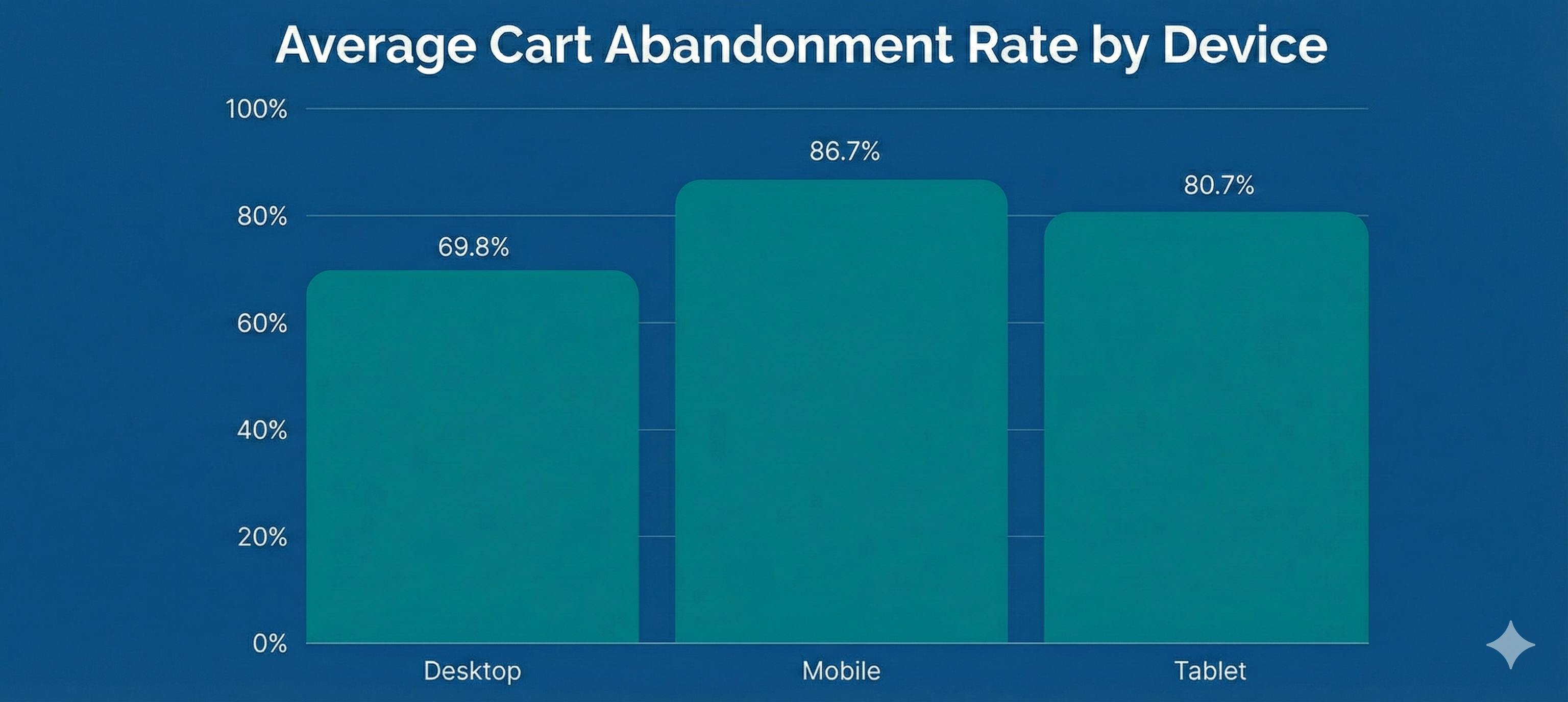
This friction is not just about raw speed. It is about the total load on the user.
Many modern e-commerce sites are built with heavy, desktop-first designs that demand too much from a mobile device. Complex visual effects, shifting layouts, and clunky navigation might look impressive on a 27-inch monitor, but on a mid-range smartphone with a low battery, they feel broken.
When the interface is sluggish, the buttons are unresponsive, or the page jumps while loading, you are not just frustrating the user. You are actively pushing them to abandon the cart.
Performance Web Engineering
So, how do you stop paying the Traffic Tax? It starts by shifting your perspective: site performance isn't a maintenance ticket for the IT department; it is a fundamental revenue strategy.
The solution lies in Performance Web Engineering.
This approach moves beyond basic "speed optimisations" to build an infrastructure that actively scales with your ambition. It is about engineering a digital ecosystem designed to handle pressure, ensuring that when marketing opens the floodgates, the platform not only survives the spike but thrives on it.
The value is simple: reliability at scale.
It ensures that whether you have 100 visitors or 100,000 concurrent users, every single customer experiences the same seamless, instant path to purchase. You stop losing revenue to hidden friction and start capturing the full value of the traffic you paid for.
This is the only true insurance policy against the volatility of the holiday season.
The Wake-Up Call
You cannot optimise your ROAS if your foundation is cracking under the weight of the traffic.
Before you authorise the next budget increase for the sales push in January, working on all the newly acquired customers, ask your team the hard question: Is our infrastructure ready to convert the traffic we are about to buy?
If the answer is "I think so," you are already paying the tax.
At Firney, we specialise in high-performance web engineering that ensures your site is as fast as your marketing. Don't let latency steal your Q4 bonus. Let's fix the pipes before you turn on the tap.