



Buy Now, Buy More, Buy Again: A Guide to the Intelligent Ecosystem
The traditional marketing funnel is dead. Discover how AI-driven personalisation, intelligent entry points, and dynamic CRO strategies transform your website into an adaptive ecosystem that boosts conversions, AOV, and retention.
In our previous discussion on Conversion Rate Optimisation (CRO), we established the "Buy Trifecta", i.e. the critical framework of Buy Now, Buy More, and Buy Again. We explored how removing friction and engineering trust are the levers that turn a digital brochure (your website) into a revenue engine.
But a framework is only as good as the reality it operates in. And the reality for CMOs in late 2025 is stark: the traditional mechanism used to feed that trifecta - the linear marketing funnel - is broken.
For decades, the model was tidy and made sense. You poured traffic into the top (Awareness), guided them through the middle (Interest), and caught the sales at the bottom (Action). But today’s customer does not walk in a straight line. They loop, they skip, and they dwell in what Google calls the "Messy Middle," often requiring between 20 and 50 touchpoints before a purchase.
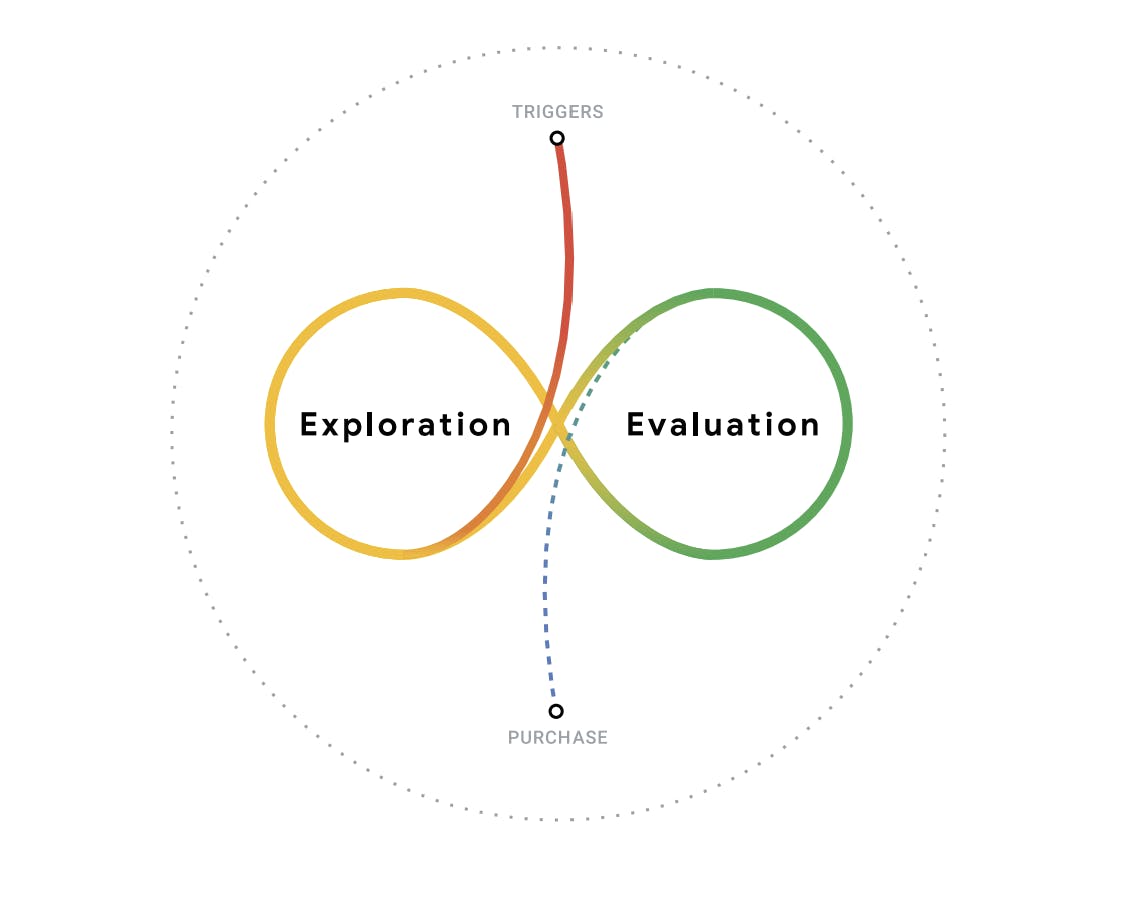
The Messy Middle, Source: Google Business
If you are still optimising for a linear funnel, you are optimising for a world that no longer exists. The goal today is not to force customers down a path, but to engineer an Intelligent Ecosystem that adapts to them, wherever they enter.
Here is how we evolve the "Buy Trifecta" from a static strategy into a dynamic, AI-driven reality.
The "Leaky Bucket" Reality
Let’s look at the mathematics of the current landscape. Despite record spending on acquisition, the average e-commerce conversion rate has stalled at approximately 2.35%. This means that for every 100 visitors you pay to acquire, nearly 98 leave without generating value.
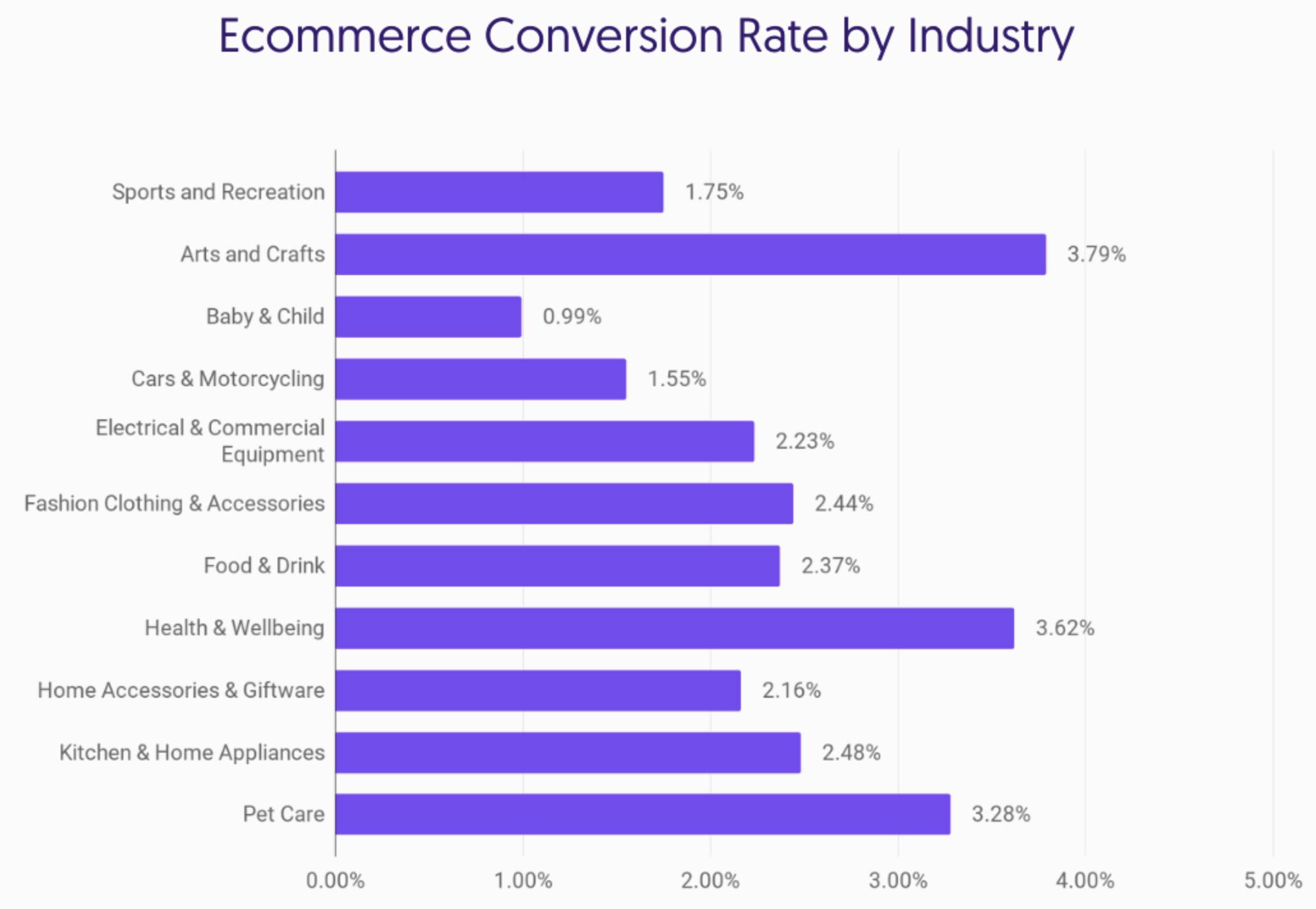
Source: Smart Insights
Why? Because the "funnel" assumes a generic journey. It assumes every visitor landing on a product page is ready to buy, or that every visitor on the blog is just browsing.
The data tells a different story. In 2025, a cold prospect isn’t just "browsing". Instead, they are engaging in a complex, non-linear evaluation process. They might land on a product page via Google Shopping, jump to a review site, check your Instagram, and then return to a blog post about sustainability.
If your site treats them like a generic demographic segment, you lose them. Approximately 75% of consumers now explicitly state that they become frustrated when a brand's experience feels generic. That frustration is the primary driver of your bounce rate.
To fix this, we must stop building funnels and start engineering Intelligent Entry Points.
1. The New "Buy Now": AI-Powered Entry Points
In the old model, navigation was structural: a menu bar and a search box. In the Intelligent Ecosystem, navigation is conversational.
The search bar is no longer just a utility. In its brand new AI-powered form, it becomes your best and most hardworking salesperson. Recent data reveals that visitors who use AI-powered search on a site convert 23x better than traditional browsing visitors. This is not a typo.
The reason is "intent." A user doesn't want to click "Men > Accessories > Winter." They want to type, i.e. speak to you, "warmest waterproof gloves under £50."
Standard keyword search fails this query. It looks for "warmest" and returns zero results. AI-powered search understands the intent, filters the catalogue, and presents the exact solution. It removes the cognitive load we discussed in our last article, fast-tracking the user from "Interest" to "Action" in seconds.
Furthermore, Conversational Commerce, the integration of AI agents and chatbots, is no longer just a simple customer support tool. It is a conversion tool. Shoppers who interact with an AI agent have a 12.3% conversion rate, compared to just 3.1% for those who don't. By answering questions instantly ("Does this run true to size?"), AI removes the hesitation that kills the "Buy Now" moment.
2. The New "Buy More": Hyper-Personalisation
Once a user is engaged, how do you maximise the value of that visit?
Historically, marketers relied on segmentation: grouping users by age, location, or gender. But segmentation is static. A 35-year-old woman might be buying a gift for her father, meaning her "segment" is irrelevant to her current intent.
The evolution is Hyper-Personalisation. This shifts the focus from who they are to what they are doing right nowright now.
Using real-time behavioural data, we can now engineer the site to adapt its layout, pricing, and product grid in milliseconds.
- Dynamic recommendations: Instead of a static "People Also Bought," AI analyses the user's current session to predict their next need. Implementing this level of AI-driven recommendation has been shown to increase revenue by up to 300% in specific use cases.
- Contextual CTAs: Even the words on your buttons can and should adapt. A user who has read your sizing guide three times doesn't need a "Sign Up" button. They need a "Find Your Fit" button. Personalised CTAs convert 202% better than generic ones.
This is the engine of the "Buy More" pillar. It anticipates the user's need before they articulate it, increasing Average Order Value (AOV) without aggressive upselling.
3. The New "Buy Again": The Retention Loop
The funnel ends at the sale. The ecosystem thrives on the return.
We know that it is 5x cheaper to retain a customer than to acquire a new one. Yet, many brands leave retention to generic email flows. In an intelligent ecosystem, retention is proactive.
AI models can now predict "churn risk" based on subtle digital body language, such as a decline in visit frequency or a specific support query. By triggering a hyper-personalised "win-back" offer at that precise moment (not 30 days later), you protect the relationship. This is not just marketing, it is revenue engineering.
Conclusion: Stop Renting, Start Engineering
The "marketing funnel" was a model for an era of low competition and simple paths. That era is over. To succeed in late 2025 and beyond, you cannot simply pour more money into the top of a leaky bucket. You must view your digital presence as a living, breathing ecosystem.
This means moving beyond static pages and standard segments. It means deploying AI that understands intent and design that adapts to behaviour, and engineering to make it all work.
It is time to stop viewing your website as a destination for traffic, and start treating it as an intelligent agent for growth. The old funnel is likely dead, but for the brands that adapt, the opportunity has never been more alive.