




E-Commerce CRO: Why Most D2C Brands Leave Revenue Behind
Most D2C brands optimise for traffic, not conversion. See the CRO framework that turns existing e-commerce visitors into measurable revenue without more ad spend.
Your website is your digital brochure.
You've heard it before. This is what you will find in almost every and any social media or blog post discussing the importance of having a website. However typical of AI to make this statement, it is correct, and the discussion on whether you need it and whether you need to work on it to look good and function properly seems futile. You do.
Your website has one particular goal. While it truly is a digital brochure of your company, its value is in its ability to convert. If the website does not convert, be it a purchase, a new subscription, or a simple click, you are not gaining the most from it.
With e-commerce websites, the challenge today is no longer just gaining website traffic. It’s become an extremely expensive endeavour that ultimately drains the budget with little final result if the traffic you receive is just wandering around not making a purchase, or worse yet - bouncing immediately. To gain the most out of the budget, Conversion Rate Optimisation (CRO) appears as a logical strategy and a bridge between the ever-rising Pay-Per-Click (PPC) costs, continuously working on multiplying every pound already spent.
The Market Changes and Erosion of Acquisition Efficiency
The contemporary e-commerce landscape is marked by escalating costs, growing competition pressure, as well as major changes in consumer behaviour. While CMOs used to spend most of their budgets on expensive and aggressive customer acquisition campaigns, which were also oftentimes ineffective, this day and age favours the optimisation of existing costs.
In fact, from 2023 to today, Customer Acquisition Cost (CAC) has risen by approximately 40%. While these numbers are a drain to the budget, the fact is that most CMOs are still focusing their efforts on this one metric, even though 97 out of 100 visitors leave without converting (for reference, the average conversion rate is between 2.7 and 2.9%).
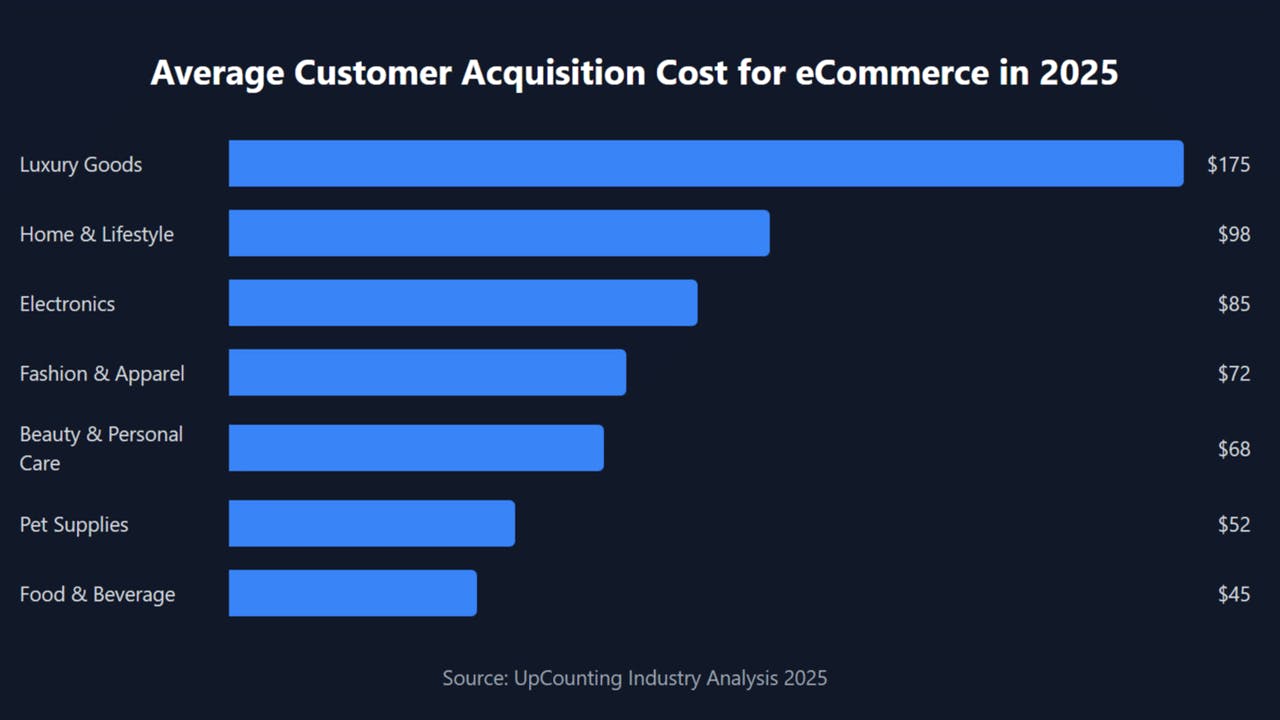
This creates a clear mandate for CRO as an ideal way to protect revenue by maximising the profit from traffic that the company has already invested in, automatically impacting the CAC and Return on Ad Spend (ROAS).
In simple terms, the effective process of CRO acts as a multiplier for your marketing campaigns. If you double your current conversion rates from 2% to 4% you get double the customers for the same price, halving your CAC. This additionally leaves more room in the budget to bid more aggressively.
CRO is not a separate process. It works in unison with your SEO strategies, PPC and paid social campaigns, making all these other efforts work harder and ultimately achieve more.
What CRO Actually Is (And Why It Isn't a DIY Job)
It is critical to distinguish real strategic optimisation from the common misconception that CRO is merely a list of "best practices" or aesthetic tweaks. Real optimisation is not about changing a button colour because a blog post said so, nor is it about blindly applying what worked for Amazon to your specific brand.
True CRO is a rigorous, technical discipline executed by specialists. It moves beyond the "what" (data from Google Analytics) to uncover the "why" behind user behaviour. This process is generally broken down into three expert-led areas:
1. Heuristic Analysis: This is an expert review where specialists audit a site against hundreds of established usability parameters. They are not looking for "ugly" design, but for high cognitive load. They identify where a user has to think too hard, where trust is broken, or where the information architecture creates friction.
2. Qualitative Research: Quantitative data tells you where people are leaving, but qualitative research tells you why. This involves technical methods like session recording analysis, heatmaps, and "Drivers, Barriers, and Hooks" studies. It requires analysing the psychological state of the user to understand if they are leaving due to price, confusion, or a lack of trust signals.
3. Technical Engineering: Often, the barrier to conversion is invisible to the marketing team but obvious to an engineer. This includes site speed optimisation, server-side data handling, and ensuring that the mobile checkout flow is technically seamless.
This is why CRO is rarely a task for the generalist marketer. It requires an engineering mindset to diagnose the friction and a psychological mindset to solve it.
The "Buy Trifecta": A Holistic Strategy
To fully realise the value of CRO, we must look beyond the initial sale. A mature strategy focuses on the entire lifecycle of revenue generation, often referred to as the "Buy Trifecta."
Buy Now (Conversion Rate)
This focuses on the immediate removal of friction. Research shows that 18% of users abandon orders solely due to overly complex checkout processes. The goal here is to engineer a path of least resistance, reducing "field bloat" and ensuring that trust signals outweigh user anxiety.
Buy More (Average Order Value)
CRO is not just about getting a sale, but about maximising the value of that sale. By implementing intelligent thresholds, such as "Spend £15 more for free shipping," and strategic bundling, you increase the Revenue Per Visitor (RPV). This allows you to extract more margin from the same traffic.
Buy Again (Retention & LTV)
Acquisition is 5 to 25 times more expensive than retention. So, the first step is having the expensively acquired visitor to actually make a conversion. But beyond that, the user experience is the brand experience. If a customer struggles through a slow, buggy, or confusing checkout today, they are unlikely to return tomorrow. Optimisation ensures the first interaction is seamless, building the trust required for high Lifetime Value (CLTV).
Why E-commerce Demands This Focus
While every website benefits from clarity, e-commerce sites are unique ecosystems that die without it. Unlike a B2B site where a "conversion" might be a vague contact form, an e-commerce site is a high-volume transactional engine.
In this environment, friction has an immediate financial cost. A 0.5% drop in conversion due to a slow page load or a confusing checkout is not just a vanity metric, it is direct revenue lost every single hour your ads are running. Because e-commerce traffic is predominantly paid traffic, the cost of inaction is literal money wasted. You are paying for visitors to come to your store and leave empty-handed.
Conclusion
CRO is a non-stop process. Even if you are satisfied with your existing conversion rates, the competition is fierce, and the market is constantly changing. This means that you cannot just sit and watch, hoping for your current website and customer journey to keep producing the desired results. Instead, you must view your website as a living product that requires continuous engineering.
Investing in CRO is the decision to stop renting your growth from ad platforms and start engineering it on your own terms. It shifts the focus from "how do we find more customers?" to "how do we better serve the ones we already have?" It also means making sure that the expensive visitors that come to your website perform the action that you had invited them to perform. By prioritising technical rigour and understanding the multiplier effect, you transform your website from a digital brochure into your company's most profitable revenue engine.